Powell's Advice for Next Fed Chair: "Stay Out of Elected Politics" During FOMC Press Conference
Unlock More Features
Login to access AI-powered analysis, deep research reports and more advanced features
About us: Ginlix AI is the AI Investment Copilot powered by real data, bridging advanced AI with professional financial databases to provide verifiable, truth-based answers. Please use the chat box below to ask any financial question.
Related Stocks
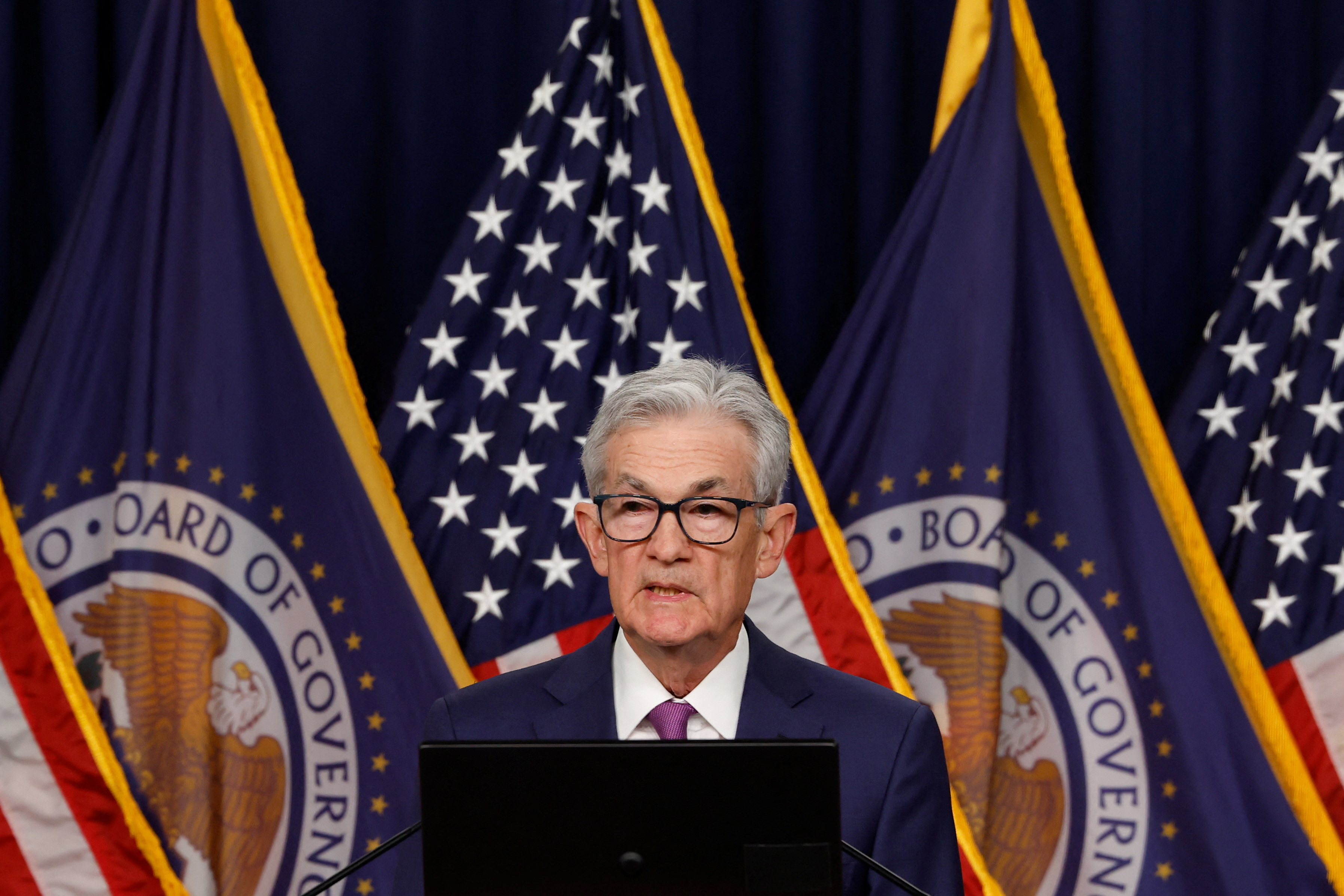
Federal Reserve Chair Jerome Powell’s public advice to his successor, delivered during his January 28, 2026 post-FOMC press conference, represents a significant moment in the transition of leadership at the nation’s central bank. According to multiple news sources covering the live press conference [1][2][3], Powell’s primary guidance centered on the principle of maintaining institutional independence from political interference, encapsulated in his concise directive: “Stay out of elected politics.” This five-word maxim [1] was not merely casual commentary but rather a carefully articulated position given the current geopolitical context surrounding the Federal Reserve.
The timing of this advice carries particular weight considering several concurrent developments. Powell’s term as Fed Chair expires in May 2026, yet President Trump has not yet announced a nominee for the position [1], creating a period of uncertainty that markets will likely monitor closely. The advice was offered in response to a reporter’s question during his regularly scheduled press conference following the January FOMC meeting, making it an official communication from the sitting Fed Chair rather than a private conversation or off-the-record remark. This public framing suggests Powell intended the message to reach multiple audiences, including the eventual nominee, the Senate Banking Committee that will oversee confirmation hearings, and the broader financial community seeking clarity on the Fed’s institutional trajectory.
Beyond the headline-making phrase, Powell expanded on his guidance to include working constructively with Congress and developing a genuine appreciation for the Federal Reserve as an institution [2]. These additional elements provide context for understanding Powell’s vision of effective Fed leadership—not merely avoiding political entanglements but actively engaging with the legislative branch in a manner that preserves the central bank’s operational autonomy while maintaining accountability through appropriate oversight.
The intersection of Powell’s advice with the current regulatory and legal landscape reveals deeper implications for Federal Reserve governance. Concurrent with the press conference, a Department of Justice investigation into Powell’s congressional testimony has drawn scrutiny to the relationship between Fed leadership and political institutions [4]. This investigation, combined with ongoing Supreme Court hearings regarding the removal power concerning Fed Governor Lisa Cook [4], creates an unprecedented environment of legal and institutional challenges that will shape whatever successor assumes leadership.
Powell’s decision to offer this advice publicly rather than through private channels suggests a strategic communication approach designed to set expectations before a nomination occurs. By articulating the core principle of Fed independence in such direct terms, Powell establishes a benchmark against which potential nominees and their confirmation testimony will inevitably be measured. This positioning may influence how the Trump administration approaches candidate selection, as any nominee will need to demonstrate commitment to the independence Powell has championed while also satisfying a White House that has reportedly expressed frustration with the Fed’s recent policy decisions.
The symbolic significance of “Stay out of elected politics” extends beyond its literal meaning to encompass broader questions about the role of unelected technocratic institutions in American governance. As debates continue about the appropriate balance between political accountability and policy expertise in central banking, Powell’s advice crystallizes one perspective—that effective monetary policy requires insulation from the short-term political pressures that elected officials inevitably face.
The analysis reveals several risk considerations that warrant attention from market participants and policy observers. Political risk emerges as the primary concern, as Powell’s direct advice to avoid elected politics may be interpreted as a subtle critique of the current administration’s approach to the Federal Reserve, potentially escalating existing tensions between the central bank and the executive branch [1][3]. Such escalation could manifest through more aggressive oversight during the confirmation process, delayed appointments to the Board of Governors, or policy disagreements that create market volatility during an already uncertain transition period.
Succession uncertainty represents another significant risk factor, as the absence of a publicly announced nominee extends the timeline for market参与者 to assess the direction of monetary policy under new leadership [1]. Historical precedent suggests that extended confirmation battles can create volatility in Treasury yields and equity markets as investors price in uncertainty about future policy paths.
Institutional autonomy concerns remain salient given the multiple concurrent challenges facing the Fed, including the DOJ investigation and Supreme Court proceedings on removal power [4]. These developments create legal ambiguity that could affect the operational independence of whatever successor assumes the chairmanship, potentially constraining their ability to conduct monetary policy without regard to political considerations.
For engaged observers, the transition period presents opportunities to assess candidates’ views on Fed independence and monetary policy philosophy before confirmation hearings begin. Powell’s public guidance provides a framework for evaluating whether potential nominees demonstrate genuine commitment to institutional continuity or signal willingness to accommodate political pressure.
Financial institutions and market participants can use this period to engage with the confirmation process through appropriate channels, ensuring that their perspectives on monetary policy and regulatory matters are represented as the Senate considers nominees. The clear articulation of independence as a core value creates space for productive dialogue about the appropriate boundaries between elected politics and technocratic governance.
The fundamental takeaways from Powell’s January 28, 2026 press conference statements center on the principle of Federal Reserve independence as a non-negotiable institutional value. His five-word maxim “Stay out of elected politics” [1] and accompanying guidance to work with Congress and appreciate the Fed [2] collectively define what Powell considers essential qualities for effective central bank leadership. These statements occurred against a backdrop of significant transition, with Powell’s term expiring in May 2026 and no successor yet nominated by the Trump administration [1].
Multiple concurrent developments shape the context for this transition, including a DOJ investigation into Powell’s congressional testimony and Supreme Court hearings on removal power regarding Fed Governor Lisa Cook [4]. These factors create an unprecedented environment for the leadership transition that extends beyond typical succession considerations.
Market participants should monitor incoming nomination announcements from the White House, Senate Banking Committee confirmation process timelines, and any developments related to the ongoing legal proceedings affecting the Fed. Powell’s advice, while seemingly straightforward, carries significant implications for how the confirmation process unfolds and what expectations will be set for the next Fed Chair’s approach to institutional leadership.
The guidance serves as a signal that regardless of who assumes the Fed’s top position, the current leadership considers preservation of institutional independence a priority worthy of public articulation at a critical juncture in the central bank’s governance.
Insights are generated using AI models and historical data for informational purposes only. They do not constitute investment advice or recommendations. Past performance is not indicative of future results.
About us: Ginlix AI is the AI Investment Copilot powered by real data, bridging advanced AI with professional financial databases to provide verifiable, truth-based answers. Please use the chat box below to ask any financial question.