UK-China Diplomatic Summit: Tariff Progress, Travel Liberalization, and Migration Cooperation Mark Strategic Diplomatic Reset
Unlock More Features
Login to access AI-powered analysis, deep research reports and more advanced features
About us: Ginlix AI is the AI Investment Copilot powered by real data, bridging advanced AI with professional financial databases to provide verifiable, truth-based answers. Please use the chat box below to ask any financial question.
Related Stocks
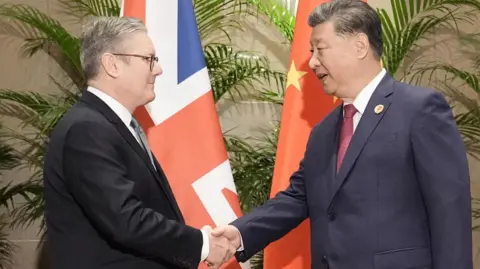
This analysis is based on the Reuters report [1] published on January 29, 2026, which documented the first UK-China summit-level meeting in eight years. British Prime Minister Keir Starmer met with Chinese President Xi Jinping at the Great Hall of the People in Beijing, marking a significant diplomatic milestone in bilateral relations that have been strained since 2018. The meeting addressed three core议题: tariff reductions on Scotch whisky, visa-free travel arrangements for UK business travelers, and enhanced cooperation on irregular migration control. Starmer characterized the outcomes as representing a relationship now in a “strong place” with “some really good progress” achieved [1][4].
The timing of this diplomatic engagement carries particular significance, occurring against the backdrop of shifting global alliances under the new Trump administration. Starmer has positioned the UK as pursuing a “more sophisticated” relationship with China, neither aligning automatically with US positions nor distancing from valuable trade and cooperation opportunities [3]. Chinese officials, including President Xi, used the occasion to note that “twists and turns” in the historical relationship have been detrimental to British interests—a subtle commentary on the more confrontational approach taken by previous UK administrations regarding Hong Kong, technology restrictions, and human rights concerns [5].
The progress on Scotch whisky tariffs represents one of the most tangible economic outcomes of the summit. China has maintained elevated tariff rates on Scotch whisky imports for several years, creating significant barriers for UK exporters in one of the world’s fastest-growing spirits markets [1][2]. Starmer’s confirmation of “good progress” suggests potential near-term relief for British distillers, though specific percentage reductions and implementation timelines remain to be formally announced. The whisky industry has been a consistent advocate for diplomatic engagement with China, viewing tariff reduction as essential for market access and growth.
The economic implications extend beyond the immediate tariff concerns. China represents a substantial long-term growth opportunity for premium Scotch whisky brands, with expanding middle-class consumption and growing appreciation for imported luxury goods. Tariff reductions would lower consumer prices, increase competitiveness against locally-produced spirits and competitors from other whisky-producing nations, and potentially catalyze broader UK-China trade relationship improvements.
Agreement on visa-free travel for UK business travelers addresses a long-standing friction point in bilateral relations [1][4]. Chinese visa application processes have historically created administrative burdens for UK executives, investors, and trade representatives seeking to conduct business in China. The implementation of visa-free access would streamline commercial engagement, reduce transaction costs for businesses, and signal China’s openness to increased economic integration with the UK.
This development aligns with China’s broader strategy of expanding visa waiver programs with major trading partners, aimed at boosting tourism, business travel, and cultural exchange. For UK companies with China operations or supply chain dependencies, improved travel accessibility enhances management oversight, relationship maintenance, and operational flexibility.
The migration cooperation element represents perhaps the most politically sensitive outcome from Starmer’s domestic perspective. The UK government has faced persistent challenges with irregular migration via small boats across the English Channel, a politically contentious issue that has shaped UK immigration policy debates [1][4]. Enhanced “information exchange cooperation” with China suggests potential intelligence sharing regarding migration networks, smuggling routes, and identity verification processes.
The scope and privacy implications of this cooperation warrant careful examination. While information sharing could assist UK authorities in identifying and intercepting migration facilitators, it raises questions about data protection, individual rights, and the ethical dimensions of cooperation with a government criticized for its own human rights record. The practical effectiveness of such arrangements also remains to be demonstrated through implementation.
Starmer’s diplomatic approach reflects a deliberate strategy of avoiding forced choices between the US and China amid escalating great power competition [2][3]. The UK Prime Minister has articulated a position that Britain “doesn’t have to choose” between the two powers, seeking instead to maintain productive engagement with Beijing while preserving the traditional UK-US alliance relationship. This balancing act requires careful navigation as US-China tensions escalate across trade, technology, and security domains.
The strategic calculus for the UK involves weighing substantial economic opportunities in Chinese markets against potential diplomatic friction with Washington. Trump’s tariff policies and demands for allied alignment on China have created pressure on European nations to reassess their relationships with Beijing. Starmer’s successful summit suggests a determination to preserve UK autonomy in foreign policy decision-making while pursuing pragmatic cooperation where interests align.
This summit marks a clear break from the confrontational approach that characterized UK-China relations under the Sunak and Johnson governments [2][3]. Tensions escalated over Hong Kong’s autonomy, Chinese technology restrictions, COVID-19 origins disputes, and human rights concerns in Xinjiang. The deterioration resulted in reduced high-level engagement, investment barriers, and mutual suspicion that constrained economic cooperation.
Starmer’s approach represents a values-pragmatism recalibration, attempting to maintain positions on human rights and security concerns while pursuing economic engagement. The characterization of the desired relationship as “more sophisticated” suggests recognition that categorical confrontation or unconditional accommodation both carry costs, with a middle path requiring continuous calibration.
The immediate economic beneficiaries of summit outcomes concentrate in the Scotch whisky sector, travel and hospitality industries, and companies with significant China market exposure. UK whisky exporters, including major producers like Diageo and Pernod Ricard, would benefit from tariff relief that improves price competitiveness and market access. The industry’s advocacy for diplomatic engagement with China has been vindicated, though formal implementation of tariff reductions remains pending regulatory approval [2].
Business travel facilitation creates broader, though diffuse, economic benefits. Reduced visa requirements lower transaction costs for companies of all sizes seeking to develop Chinese market opportunities. This accessibility could accelerate UK company market entry, partnership development, and supply chain optimization, though measurable economic outcomes will materialize gradually as travel patterns adjust.
Improved market access for UK exports could contribute positively to the UK trade balance, though the magnitude depends on tariff reduction levels and Chinese consumer demand responsiveness. Scotch whisky exports to China, while growing, have been constrained by price premiums created by tariffs that make UK products less competitive against domestic competitors or tariff-free alternatives. Tariff relief would expand addressable market segments and potentially increase UK export volumes.
The migration cooperation component carries potential cost implications for UK border security and immigration processing, though these remain difficult to quantify without details on cooperation scope and implementation. Information sharing arrangements could reduce enforcement costs if they enable more efficient identification and interdiction of irregular migration networks.
Despite the positive framing of summit outcomes, significant implementation details remain unconfirmed [2][5]. Specific tariff reduction percentages, visa-free travel eligibility criteria, and migration cooperation protocols require formal regulatory processes and potential legislative approval. Businesses should treat announced progress as encouraging but await official regulatory announcements before making significant operational changes or investment commitments.
The gap between diplomatic statements and binding agreements represents a persistent challenge in UK-China relations. Past experience suggests that announced intentions sometimes fail to translate into implemented policies due to bureaucratic delays, political complications, or changing circumstances. Verification of finalized, enforceable agreements should precede major business decisions based on summit outcomes.
Enhanced UK-China cooperation may generate diplomatic friction with Washington, particularly if perceived as undermining US-led coordination on China policy [2][3]. The Trump administration has signaled expectations for allied alignment on tariffs, technology restrictions, and security positioning. Starmer’s balancing strategy requires ongoing management to prevent either relationship from suffering due to developments in the other.
UK policymakers must anticipate potential US reactions and prepare diplomatic responses that reassure Washington while maintaining the benefits of improved China relations. The trajectory of US policy toward both the UK and China will influence the sustainability of Starmer’s approach.
The positive summit atmosphere should not obscure persistent sources of tension in the UK-China relationship [2][5]. Hong Kong governance, human rights conditions in Xinjiang, technology security concerns, and differing positions on international issues continue to divide the two nations. The absence of these topics from the positive progress announcements reflects their continued sensitivity rather than resolution.
These underlying tensions create potential vulnerability for the improved relationship. Developments in Hong Kong, sanctions disputes, or security incidents could reignite tensions and potentially reverse cooperation gains. Businesses and policymakers should maintain awareness of these risk factors when assessing the durability of relationship improvements.
The January 29, 2026 UK-China summit represents a significant diplomatic milestone with measurable economic implications across multiple sectors. Starmer and Xi achieved demonstrable progress on Scotch whisky tariff reductions, visa-free business travel arrangements, and migration information cooperation—concrete outcomes that distinguish this engagement from previous rounds of dialogue that produced fewer tangible results.
The strategic significance extends beyond immediate economic benefits to encompass UK positioning amid great power competition. Starmer’s success in securing productive engagement with Beijing while maintaining the traditional UK-US alliance demonstrates diplomatic capability, though the sustainability of this balancing approach depends on evolving circumstances in both relationships.
Implementation of announced agreements requires continued monitoring. Specific regulatory details for tariff reductions and visa-free travel remain to be formalized, and businesses should await official announcements before adjusting market entry strategies or operational plans. The migration cooperation scope and privacy implications also warrant clarification as protocols develop.
Overall, the summit marks a positive turning point in UK-China relations after years of deterioration, though the durability of improvements will depend on consistent implementation, management of external pressures, and navigation of underlying tensions that remain unresolved.
Insights are generated using AI models and historical data for informational purposes only. They do not constitute investment advice or recommendations. Past performance is not indicative of future results.
About us: Ginlix AI is the AI Investment Copilot powered by real data, bridging advanced AI with professional financial databases to provide verifiable, truth-based answers. Please use the chat box below to ask any financial question.