Loloi Rugs Navigates Tariff Pressures: Inventory Depletion and Supply Chain Strain
Unlock More Features
Login to access AI-powered analysis, deep research reports and more advanced features
About us: Ginlix AI is the AI Investment Copilot powered by real data, bridging advanced AI with professional financial databases to provide verifiable, truth-based answers. Please use the chat box below to ask any financial question.
Related Stocks
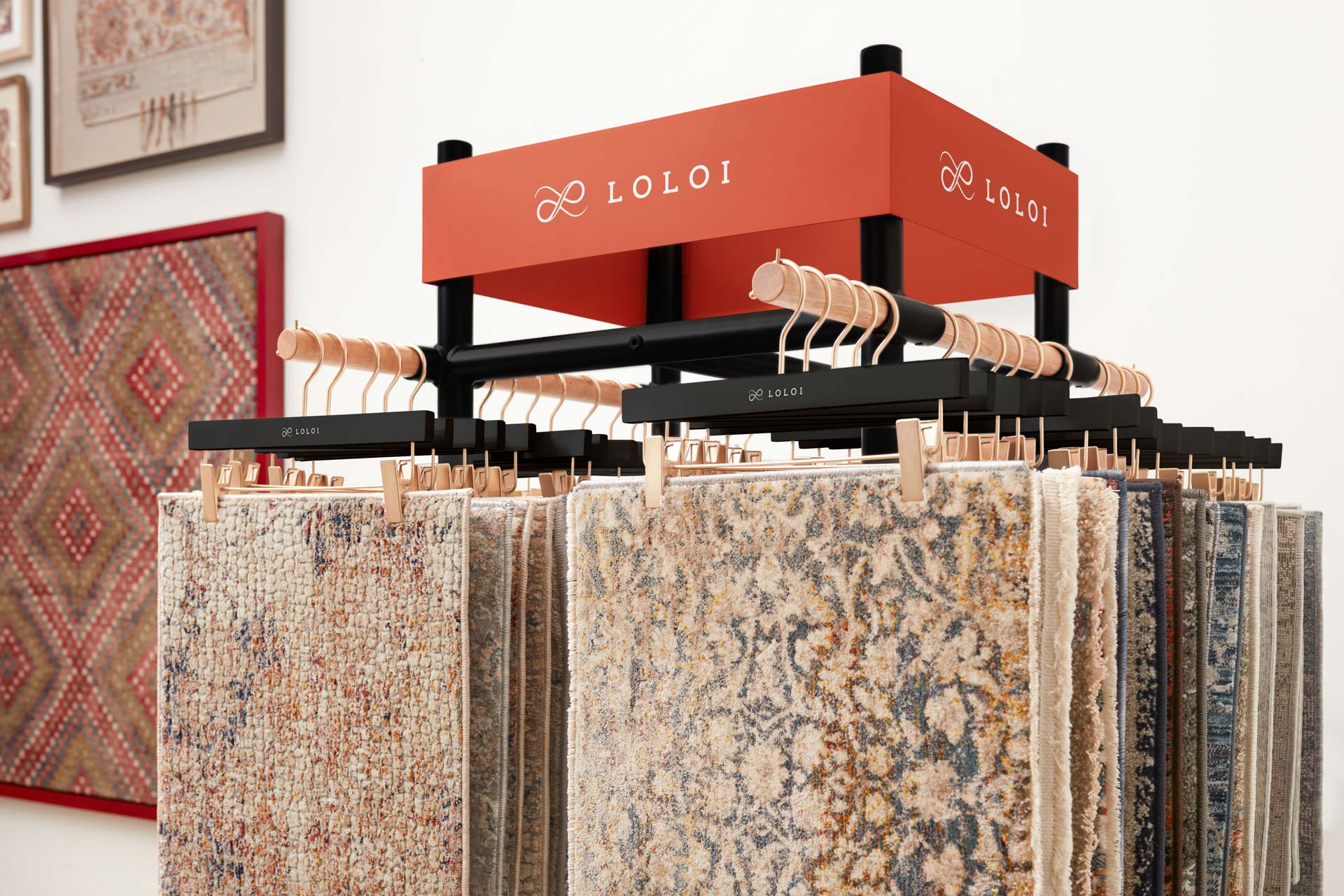
Loloi Rugs, a privately-held family business founded in 2004 by Amir Loloi and headquartered in Dallas, Texas, represents a compelling case study in tariff resilience within the home furnishings import sector [1][8]. The company imports all of its rugs from India, Turkey, and other countries, making it highly sensitive to changes in trade policy. According to import data, Loloi received 7,142 shipments from India through December 2025, establishing India as its primary sourcing destination, while Turkey contributed 1,062 shipments during the same period [2].
The tariff landscape has evolved significantly since the Trump administration’s trade policies took effect. India faces a 50% tariff rate effective August 27, 2025, representing one of the steepest tariff measures imposed under the current administration [3]. Turkey operates under a 10% base tariff implemented April 5, 2025, with potential exposure to additional 25% tariffs on countries trading with Iran, creating further uncertainty for Turkish supply chains [4]. Loloi’s strategy of stockpiling inventory ahead of tariff implementation provided a one-year buffer, but this protective measure is now showing signs of exhaustion as the company confronts sustained tariff pressures [1].
The tariff environment has generated notable volatility in publicly-traded companies within the home furnishings and retail sectors. Wayfair (W) has demonstrated remarkable recovery, with shares rising +130.47% over the period from September 2024 to January 2026 [0]. The stock’s sensitivity to tariff developments was evident when news of tariff delays prompted a 6.5% single-day gain, with Wayfair currently trading at $108.69 against a 20-day moving average of $110.61 [0][5]. Similarly, RH (Restoration Hardware), trading at $204.55 with a market capitalization of $3.84 billion, experienced a 9.3% gain on tariff pause news but retreated 2.51% in recent trading, reflecting the sector’s uncertainty [0][5].
The broader consumer sector has shown weakness in response to tariff pressures, with Consumer Cyclical stocks declining 1.16% and Consumer Defensive stocks falling 0.68% in recent sessions [0]. This sector performance reflects market concerns about consumer spending power erosion and the potential demand destruction resulting from sustained price increases in imported goods.
Loloi’s import profile reveals significant supply chain concentration risk, with India accounting for the vast majority of its shipments [2]. This dependency creates substantial vulnerability to tariff policy changes and limits the company’s short-term alternatives for mitigating cost increases. The 50% tariff on Indian imports represents a transformative challenge that forces difficult decisions about pricing strategy, margin compression, or supply chain diversification.
The situation extends beyond Loloi to the broader Indian export community. Welspun Living, India’s largest home textiles exporter with 65% of revenue derived from the U.S. market, faces significant tariff pressure leading to order cancellations [9]. Across Indian industries, approximately ₹1,500 crore in cancelled chemical orders have been reported, illustrating the cascading effects of tariff policies on export-dependent businesses [9]. Some exporters are pivoting to alternative markets with more favorable trade agreements, including the UK, UAE, Germany, and Brazil, while the India-UK Free Trade Agreement offers 99% zero-duty access to certain markets [9].
Loloi’s exhaustion of pre-tariff inventory marks a critical inflection point that necessitates fundamental strategic adjustments. The company must now choose between passing substantial tariff costs to consumers, absorbing margin compression, or accelerating supply chain diversification. KPMG research indicates that 77% of consumer goods companies have passed up to 50% of tariff costs to consumers, establishing industry precedent for price pass-through strategies [7]. However, the Rug Import industry faces unique competitive dynamics that may limit pricing flexibility.
The tariff framework remains fluid, with key catalyst dates approaching that could further reshape the competitive landscape. February 19, 2026, represents a significant date for furniture tariff decisions, while higher tariffs on cabinets and furniture have been delayed until 2027, providing partial relief for certain home furnishings categories [10]. For Loloi specifically, the uncertainty surrounding potential additional tariffs on Turkey-Iran trade creates planning complexity that extends beyond current tariff rates [4].
Loloi’s experience reflects a broader pattern across multiple industries facing tariff pressures. The auto components sector has experienced a 22% decline, while chemical industry margins have eroded by 15% due to tariff-related cost increases [9]. This cross-sector pattern suggests that tariff effects are not isolated to specific industries but represent a systemic challenge for U.S. importers dependent on global supply chains.
The analysis identifies several significant risk indicators warranting attention. First, Loloi’s supply chain concentration on India creates pronounced vulnerability, as the 50% tariff on primary imports fundamentally challenges the company’s cost structure [1][2]. Second, sustained margin pressure threatens profitability unless offset through pricing adjustments or operational efficiency improvements. Third, the broader industry-wide strain evident across multiple sectors—including auto components and chemicals—suggests structural headwinds that may persist beyond short-term volatility [9]. Finally, policy uncertainty regarding potential additional tariffs, particularly the 25% rate threatened for countries trading with Iran, introduces planning challenges that complicate strategic decision-making [4].
Despite challenging conditions, several opportunity windows emerge from the current environment. The delayed implementation of furniture tariffs until 2027 provides a window for strategic repositioning within certain product categories [10]. Supply chain diversification to countries with favorable trade agreements—such as those benefiting from the India-UK FTA—offers potential margin improvement [9]. Companies that successfully navigate the transition to diversified supply chains may emerge with competitive advantages relative to rivals slower to adapt.
The inventory depletion timeline creates urgency for strategic decisions, though the precise exhaustion date remains unspecified in available reporting [1]. Companies with similar tariff exposure should prioritize supply chain assessment and diversification planning to avoid reaching similar inflection points without alternatives prepared.
The tariff regime implemented under the current administration continues to reshape the competitive landscape for U.S. importers of home furnishings and textiles. Loloi Rugs’ experience illustrates both the effectiveness of proactive inventory management as a temporary mitigation strategy and the limitations of such approaches when facing sustained tariff pressures. The 50% tariff rate on Indian imports, combined with the 10% rate on Turkish imports and potential additional tariffs, creates a challenging environment that forces fundamental business model adjustments.
Market data indicates that publicly-traded competitors Wayfair and RH have experienced significant stock volatility correlated with tariff developments, with both stocks showing sensitivity to policy updates and delays [0][5]. Industry analysis projects average household purchasing power erosion of $3,800 annually from tariff policies, with clothing and textiles expected to face 10-20% price increases [6]. The consumer goods sector’s typical response—passing approximately 50% of tariff costs to consumers—provides a framework for understanding potential price trajectory [7].
The evolving situation requires attention to several key developments, including the February 19, 2026 catalyst date for furniture tariff decisions, the 2027 furniture tariff delay implementation, potential trade agreement developments with affected countries, and consumer response to sustained price increases in home textiles and related goods [10]. Companies with significant exposure to tariff-affected countries face urgent imperatives to evaluate supply chain diversification and develop sustainable pricing strategies for the evolving trade environment.
Insights are generated using AI models and historical data for informational purposes only. They do not constitute investment advice or recommendations. Past performance is not indicative of future results.
About us: Ginlix AI is the AI Investment Copilot powered by real data, bridging advanced AI with professional financial databases to provide verifiable, truth-based answers. Please use the chat box below to ask any financial question.