Federal Reserve Holds Rates Steady at 3.50%-3.75% as Powell Declares Labor Market Stabilization
Unlock More Features
Login to access AI-powered analysis, deep research reports and more advanced features
About us: Ginlix AI is the AI Investment Copilot powered by real data, bridging advanced AI with professional financial databases to provide verifiable, truth-based answers. Please use the chat box below to ask any financial question.
Related Stocks
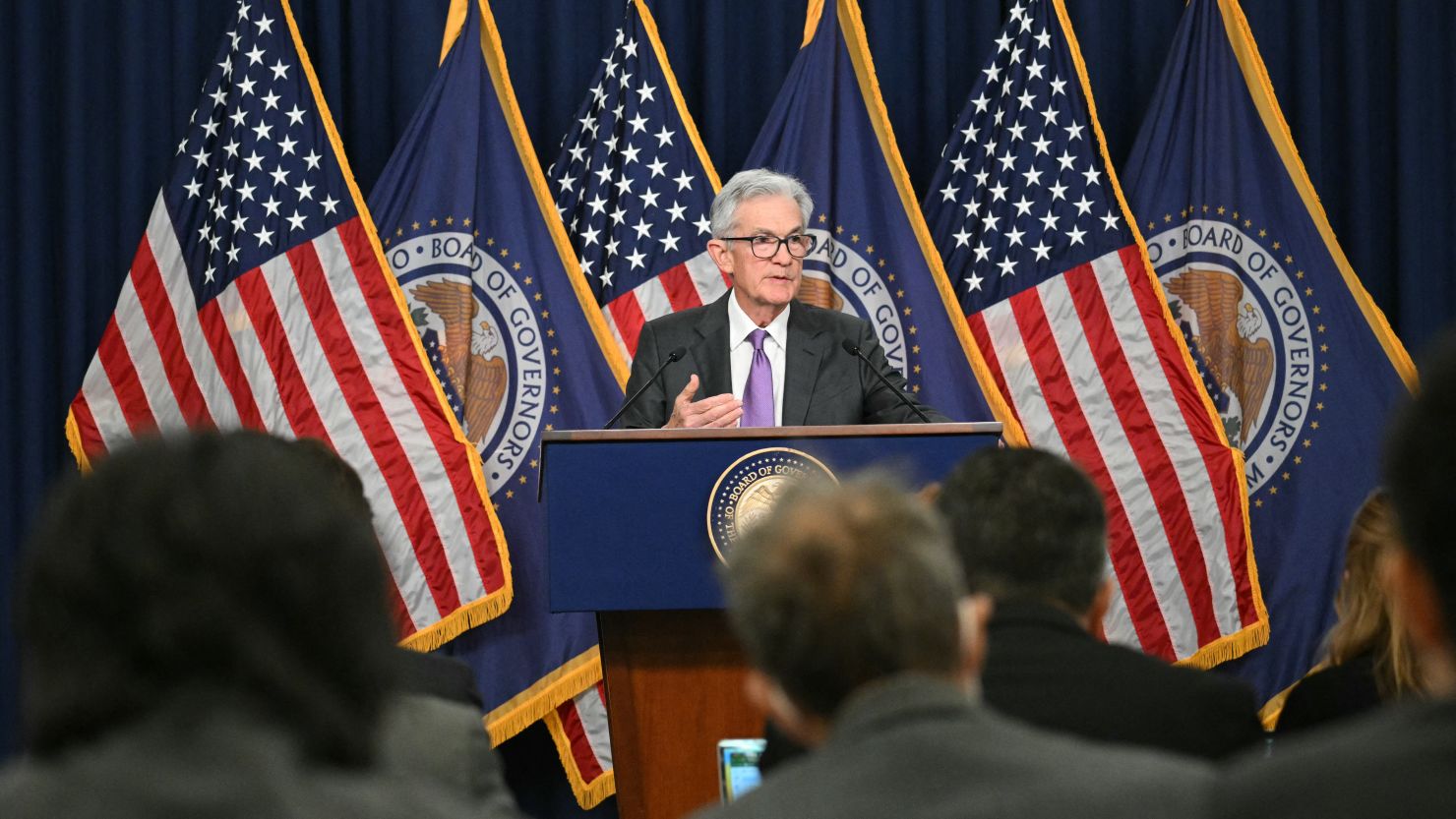
The Federal Reserve’s January 2026 FOMC meeting resulted in a 10-2 vote to maintain the federal funds rate at 3.50%-3.75%, marking the first policy decision of the year and continuing a cautious approach to monetary policy adjustment [2][3]. This decision aligns with the Fed’s three consecutive rate cuts implemented in late 2025, which brought rates down from higher levels as inflation pressures began to moderate [2]. Chairman Powell’s post-meeting press conference emphasized that the central bank’s assessment of the labor market had improved sufficiently to justify a “wait-and-see” stance on further rate adjustments.
The timing of this decision carries particular significance given the evolving economic landscape. Throughout 2025, concerns about labor market weakness had dominated Fed communications, with policymakers expressing willingness to cut rates to support employment growth. The apparent stabilization in labor market conditions—as evidenced by improving employment data and declining jobless claims—has shifted the calculus toward maintaining the current policy stance [1][2]. This recalibration reflects the Fed’s dual mandate considerations, balancing its employment and inflation objectives.
The jobless claims data cited by Powell provides concrete support for the labor market stabilization narrative. Initial claims for unemployment insurance totaled 209,000 for the week ending January 24, falling below consensus expectations and representing one of the lowest readings in approximately two years [4]. This metric, which tracks new applications for unemployment benefits, serves as a timely indicator of workforce conditions and hiring momentum. The below-expectation reading suggests that layoffs remain limited and that the labor market continues to absorb workers effectively.
Powell’s characterization of the labor market as having stabilized follows a period of elevated concern during 2025, when various employment indicators suggested softening in job creation and worker demand [1]. The Federal Reserve’s enhanced scrutiny of labor market conditions during this period reflected the central bank’s recognition that employment outcomes significantly influence both economic growth trajectories and inflation dynamics. The apparent improvement in labor market conditions provides the Fed with greater flexibility to maintain its current policy stance while awaiting further data confirmation.
The emergence of two dissenting votes represents a notable development in FOMC dynamics and signals potential policy divergence within the committee [3]. Federal Reserve Bank of Philadelphia President Stephen Miran and Federal Reserve Governor Christopher Waller voted in favor of an immediate rate cut, arguing that the economic outlook warranted more accommodative monetary policy. Their dissent highlights the ongoing debate within the Fed regarding the appropriate balance between supporting economic growth and maintaining sufficient policy restraint to ensure inflation returns sustainably to the 2% target.
Internal dissent at FOMC meetings, while not unprecedented, carries particular weight when it involves multiple policymakers. The Miran-Waller dissent suggests that at least some Fed officials remain concerned about economic headwinds and prefer a more aggressive approach to rate adjustments. This internal disagreement introduces an element of uncertainty regarding future policy trajectories, as investors and market participants must assess whether dissent may expand or persist in subsequent meetings. The split decision underscores the genuine uncertainty surrounding the economic outlook and the legitimate differences in judgment among Fed policymakers.
The FOMC decision occurs against a backdrop of heightened institutional and political considerations affecting the Federal Reserve. Chairman Powell’s term expires in May 2026, creating a leadership transition that introduces additional uncertainty into the policy outlook [2]. The Trump administration is expected to nominate a successor, with Kevin Hassett reportedly favored for the position, though the confirmation process and potential policy priorities remain subjects of speculation and market attention.
Additionally, reports of a Department of Justice investigation into Powell and Federal Reserve building renovations have introduced reputational and institutional considerations into the Fed’s operating environment [2]. While the investigation’s ultimate outcomes remain uncertain, its existence during the leadership transition period adds complexity to the Fed’s external relationships and may influence the political dynamics surrounding the succession process. These external factors do not directly alter the economic fundamentals driving policy decisions but contribute to the broader context within which the Fed operates.
The Fed’s decision to maintain rates while highlighting labor market stabilization creates a conditional framework where future policy adjustments will depend heavily on sustained improvement in employment conditions [2][3]. Powell’s assertion that rate hikes are “not the base case” for anyone on the FOMC suggests the committee’s current concerns are oriented toward avoiding unnecessary economic restraint rather than addressing inflationary overheating [3]. This positioning implies that additional rate cuts remain possible if labor market data deteriorates, while rate increases would require a significant and persistent resurgence in inflationary pressures.
The sustainability of labor market stabilization represents a critical variable for policy continuity. Market participants should recognize that the Fed’s characterization of stabilization must be validated by subsequent data releases, particularly the monthly nonfarm payrolls report and subsequent jobless claims readings. If labor market indicators begin to show renewed weakness, pressure for rate cuts would likely intensify, potentially reversing the current pause in accommodation.
The modest market declines observed following the FOMC decision—with the S&P 500 falling 0.34%, the Nasdaq declining 0.45%, and the Russell 2000 dropping 1.02%—indicate that investors largely anticipated the rate maintenance outcome [0]. The limited volatility suggests that market participants had priced in a high probability of no rate change and were primarily focused on forward guidance and policy trajectory signals. The relatively flat performance of the Dow Jones, which declined only 0.02%, further reflects the subdued reaction to a decision that aligned with market expectations.
The Russell 2000’s relative weakness may reflect small-cap sensitivity to interest rate levels, as these companies tend to be more reliant on floating-rate debt and external financing. Continued elevated rates present greater challenges for smaller businesses, potentially explaining the index’s more pronounced decline. However, the overall market reaction indicates that participants view the Fed’s current stance as appropriate given the economic data and do not anticipate significant near-term policy shifts.
The approaching expiration of Powell’s term introduces a structural uncertainty factor that extends beyond the immediate policy decision [2]. The succession process—regardless of who ultimately becomes Fed Chair—will involve Senate confirmation hearings that may probe the nominees’ views on monetary policy, regulatory approach, and institutional governance. These proceedings could provide signals regarding future policy priorities and potential shifts in the Fed’s framework.
The combination of an ongoing DOJ investigation and the leadership transition creates a complex operating environment for the Federal Reserve. Market participants should monitor developments on both fronts, as either factor could influence policy communications, committee dynamics, and the broader trajectory of monetary policy in the coming months.
The Federal Reserve’s January 2026 FOMC meeting produced a 10-2 vote to maintain interest rates at 3.50%-3.75%, with Chairman Powell characterizing the U.S. labor market as having stabilized after weakness in 2025 [1][2][3]. Recent jobless claims data totaling 209,000 for the week ending January 24 provides supporting evidence for this assessment, though two dissenting votes from Miran and Waller signal internal policy divergence [3][4]. The Fed’s three consecutive rate cuts in late 2025 established a foundation for the current pause, with inflation remaining above the 2% target contributing to the cautious approach [2].
The decision occurs amid unique institutional circumstances, including Powell’s approaching term expiration in May 2026, a DOJ investigation into Powell and building renovations, and the Trump administration’s anticipated successor nomination [2]. Kevin Hassett has been reported as the favored nominee, though confirmation process details and potential policy implications remain to be determined [2]. Market reaction was modest, with the S&P 500 declining 0.34% and the Nasdaq falling 0.45%, reflecting the decision’s alignment with market expectations [0].
Critical monitoring priorities include the upcoming February nonfarm payrolls report for labor market validation, Fed official speeches for policy signals, and developments regarding the leadership transition process [1][2]. The durability of labor market stabilization and the trajectory of inflation toward the 2% target will determine the policy path forward, with rate hikes characterized as “not the base case” for FOMC participants [3].
Insights are generated using AI models and historical data for informational purposes only. They do not constitute investment advice or recommendations. Past performance is not indicative of future results.
About us: Ginlix AI is the AI Investment Copilot powered by real data, bridging advanced AI with professional financial databases to provide verifiable, truth-based answers. Please use the chat box below to ask any financial question.