Dollar Weakens to Near Four-Year Low: ETF Strategies and Market Implications
Unlock More Features
Login to access AI-powered analysis, deep research reports and more advanced features
About us: Ginlix AI is the AI Investment Copilot powered by real data, bridging advanced AI with professional financial databases to provide verifiable, truth-based answers. Please use the chat box below to ask any financial question.
Related Stocks
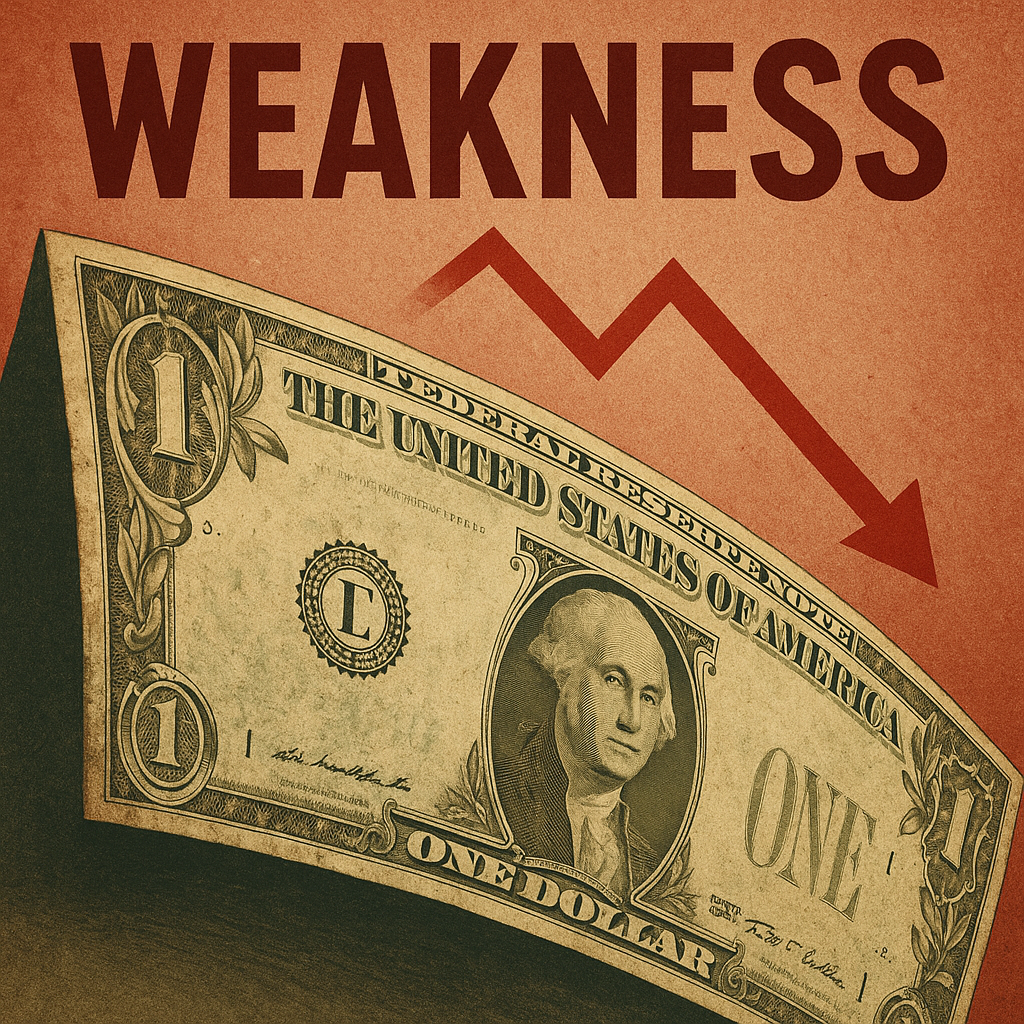
This analysis is based on the Zacks Investment Research report published on January 29, 2026, which documented the U.S. Dollar Index (DXY) declining to approximately 96.16—a level not seen since February 2022, representing a near four-year low [1]. The dollar’s weakness has been driven by a confluence of factors including Japanese yen strength, policy uncertainty surrounding U.S. political developments, and accelerating de-dollarization trends among global central banks.
The DXY’s descent to the 96.00 level represents what analysts describe as a “watershed moment for global markets in 2026,” marking the convergence of political dynamics, monetary easing expectations, and shifting capital flow patterns [3]. According to Trading Economics data, the Dollar Index decreased to 96.16 on January 27, 2026, with the index having lost 1.89% over the preceding four weeks and 10.83% over the trailing twelve-month period [2]. The index traded at $96.37 on January 29, 2026, demonstrating a modest bounce after approaching critical technical support levels [4].
The technical significance of the 96.00 level cannot be overstated. Market analysts note that a sustained break below this threshold could trigger momentum-based selling and stop-loss positioning, potentially accelerating the dollar’s decline [4]. Current Federal Reserve policy expectations are pricing in approximately two rate cuts for 2026, which would traditionally provide further downward pressure on the currency [5].
The dollar weakness has created distinct opportunities across currency-hedged and commodity-linked ETFs [0]:
| ETF | Ticker | January 2026 Performance | Primary Function |
|---|---|---|---|
SPDR Gold Shares |
GLD | +23.14% ($401.62 → $494.56) | Gold as dollar hedge |
Invesco Japan Yen Trust |
FXY | +2.27% ($58.62 → $59.95) | Long yen exposure |
Invesco DB USD Bear |
UDN | +2.19% ($18.23 → $18.63) | Short USD vs. developed currencies |
GLD’s exceptional performance—representing a $92.94 price gain—reflects gold’s dual role as both a currency hedge and safe-haven asset amid dollar weakness [0]. The precious metal has attracted significant capital flows as investors seek protection against potential currency debasement concerns stemming from the U.S. national debt topping $38 trillion [8].
FXY’s strength correlates directly with yen appreciation, supported by Bank of Japan policy normalization expectations and the ongoing unwinding of carry trades that had been funded in low-yielding yen [9]. UDN’s gains provide direct exposure to dollar depreciation against major trading partner currencies, making it a viable tool for investors seeking to hedge dollar exposure.
The dollar’s decline has produced sector-specific impacts across the U.S. equity market [0]:
- Energy (+0.82%): Beneficiaries of commodity price inflation resulting from dollar weakness, as commodities priced in U.S. dollars become more affordable for foreign buyers
- Real Estate (+0.29%): Mixed signals from rate expectations, with some support from anticipated Fed easing
- Technology (-0.60%): Potential earnings headwinds from stronger foreign competitors whose products become relatively cheaper
- Consumer Cyclical (-1.16%): Consumer purchasing power concerns as imported goods become more expensive
- Industrials (-1.59%): Export competitiveness challenges as U.S. goods become relatively more expensive abroad
The Russell 2000 was particularly hard hit, declining 1.02% as smaller-cap companies face increased financing costs and currency translation pressures that disproportionately affect their operations [0]. This small-cap weakness suggests that domestic-oriented businesses are experiencing greater friction from the dollar’s decline than their multinational counterparts.
U.S. equity indices demonstrated volatility in response to dollar movements, with the S&P 500 declining 0.34% on January 28 to 6,978.02, while the NASDAQ Composite fell 0.45% to 23,857.45 [0]. The divergent performance between indices reflects the complex interplay between currency movements and corporate earnings expectations.
Market sentiment has been significantly influenced by evolving U.S. policy priorities, with capital flows demonstrating increased sensitivity to political developments. According to Seeking Alpha analysis, markets are actively “repricing U.S. political risk” as dollar weakness accelerates [6]. This repricing reflects investor concerns about policy consistency and potential shifts in trade or fiscal approaches.
Structural shifts in global reserve asset allocation continue to exert downward pressure on the dollar. While complete de-dollarization remains unlikely in the near term, the trend toward gold and alternative reserve assets provides fundamental support for non-dollar currencies [7]. Central banks worldwide have been diversifying reserves, reducing dollar concentration and increasing gold holdings.
The U.S. national debt exceeding $38 trillion has raised concerns among global investors about fiscal sustainability and potential currency debasement [8]. This fiscal backdrop has accelerated interest in alternative stores of value, including gold and other commodities, as investors hedge against long-term purchasing power erosion.
The Japanese yen’s appreciation has been particularly pronounced, driven by Bank of Japan policy normalization expectations and the unwinding of carry trades that had been funded in low-yielding yen [9]. The carry trade unwinding creates a self-reinforcing dynamic as positions reverse, pushing the yen higher and the dollar lower simultaneously.
The current market environment reveals strengthening correlations between non-dollar assets. Gold’s rally (+23.14% in January) [0], yen strength (+2.27%), and negative dollar positioning in UDN have moved in concert, suggesting systematic capital reallocation rather than idiosyncratic movements. This coordination indicates that the dollar weakness may be structural rather than purely cyclical.
The Russell 2000’s 1.02% decline [0] on the same day as relatively modest S&P 500 and NASDAQ losses highlights the disproportionate impact of dollar weakness on smaller, domestically-focused companies. These firms often lack the currency hedging programs and international revenue streams that help large-cap multinationals navigate dollar fluctuations.
Several critical uncertainties remain that could rapidly alter the dollar trajectory:
- Federal Reserve Response: The extent to which the Federal Reserve may intervene or adjust policy in response to dollar weakness remains unclear [5]
- BOJ Policy Timeline: The specific timing and magnitude of Bank of Japan policy normalization could significantly impact yen dynamics [9]
- Trump Administration Currency Stance: The gap between public rhetoric supporting dollar strength and actual policy implementation remains a key uncertainty [10]
- Capital Flow Sustainability: The duration and magnitude of capital flow adjustments away from U.S. assets requires ongoing monitoring
- Accelerated Decline Risk: A sustained break below the 96.00 level could trigger momentum-based selling and position unwinding [4]
- Import Price Inflation: A weaker dollar increases import costs, potentially feeding into domestic inflation readings and complicating Fed policy
- Foreign Investor Confidence: Sustained dollar weakness may undermine foreign appetite for U.S. assets, potentially affecting Treasury demand
- Commodity Price Volatility: Dollar weakness typically supports commodity prices, creating inflationary pressures that could affect monetary policy paths
- Emerging Market Exposure: Countries with significant dollar-denominated debt face increased servicing burdens as their local currencies weaken against the dollar
- Corporate Earnings Translation: Multinational corporations may face headwinds from unfavorable currency translations when converting foreign earnings to dollars
The dollar weakness has created specific tactical opportunities across asset classes:
- Gold Exposure: GLD’s +23.14% performance demonstrates the tangible benefits of gold as a dollar hedge [0]
- Currency Diversification: FXY and UDN provide institutional-quality tools for implementing currency views
- Export-Competitive Sectors: Industries with significant foreign revenue exposure may benefit from favorable currency translation
- FOMC Meeting Outcomes: Fed policy decisions will significantly influence dollar trajectory [5]
- Treasury Auction Results: Demand for U.S. government debt provides insight into foreign investor appetite
- Gold Price Action: As GLD’s extraordinary rally indicates, gold prices serve as a real-time barometer of dollar sentiment [0]
- Yen Positioning: Carry trade unwinding dynamics could create additional volatility in both currency and equity markets [9]
The U.S. dollar’s decline to near a four-year low represents a significant market development with implications across asset classes. The DXY’s approach to the critical 96.00 support level marks a potential inflection point that warrants close monitoring. ETF performance data demonstrates clear opportunities in currency-hedged and commodity-linked products, with GLD, FXY, and UDN each offering distinct exposures to different aspects of dollar weakness [0][1].
Sector performance divergence highlights the complex nature of currency movements, with export-sensitive industries facing headwinds while commodity-linked sectors benefit. The information gaps surrounding Federal Reserve policy, BOJ timeline, and capital flow sustainability suggest that investors should maintain flexibility in positioning while monitoring key technical and fundamental indicators.
The interaction between yen strength, carry trade dynamics, and structural de-dollarization trends creates a complex environment that requires ongoing assessment. Market participants should remain alert to potential shifts in any of these factors that could rapidly alter the dollar’s trajectory.
Insights are generated using AI models and historical data for informational purposes only. They do not constitute investment advice or recommendations. Past performance is not indicative of future results.
About us: Ginlix AI is the AI Investment Copilot powered by real data, bridging advanced AI with professional financial databases to provide verifiable, truth-based answers. Please use the chat box below to ask any financial question.