NY Open Trading: Professional SL/TP Strategies for First 15-Minute Volatility
Unlock More Features
Login to access AI-powered analysis, deep research reports and more advanced features
About us: Ginlix AI is the AI Investment Copilot powered by real data, bridging advanced AI with professional financial databases to provide verifiable, truth-based answers. Please use the chat box below to ask any financial question.
Reddit traders provide practical, experience-based approaches for NY open volatility:
-
Timing Strategy: HiddenMoney420 advises avoiding the open entirely and waiting 30 minutes for trend establishment Reddit
-
Position Sizing Adaptation: ZanderDogz maintains consistent SL/TP logic but uses smaller position sizes and faster reaction times due to wider stops during high volatility
-
Context-Driven Trading: Available_Lynx_7977 emphasizes that the open’s volatility and volume are beneficial only with proper context, warning against automatically trading every open
-
Structural Analysis: words1918 recommends reviewing overnight structure and identifying liquidity inflection points, acknowledging the high risk/reward nature
-
Absorption-Based Entries: Cautious_Wealth1732 looks for absorption at key levels and places stops at the move’s origin extreme
-
Stop Loss Debate: Bidhitter400 advocates tight stops at the open with 2-3x risk-reward ratios, while Available_Lynx_7977 counters that tight stops without logic cause frustration
-
Gap Risk: Lwilliams8303 reports tight stops can fail due to gaps during NY open, turning planned $200 losses into $500+ losses
-
Consistent Approach: OpenBarTrading applies consistent R-based SL/TP and trades roughly 25% of positions in the first 15 minutes
-
Supply/Demand Method: -Drazer trades demand to supply for entries/exits, targeting minimum 2:1 or 3:1 risk-reward ratios
Professional strategies emphasize systematic approaches to NY open volatility:
-
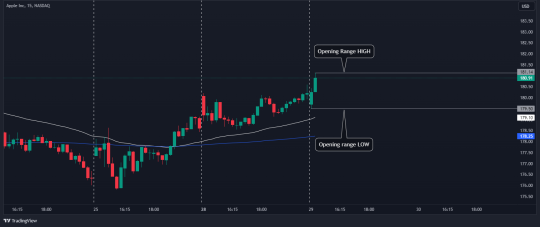
Opening Range Breakout (ORB): The primary approach uses the 15-minute opening range (9:30-9:45 AM) as foundation for SL/TP placement, with stops just outside the range and targets at key technical levels Opening Range Breakout Trading Strategy Design and Implementation
-
ATR-Based Positioning: Volatility-adaptive stop-losses use formulas like Entry ± (1.5 × ATR) to dynamically adjust to market conditions Volatility — Trading Ideas on TradingView
-
Technical Anchoring: Stop-losses are positioned just below support (longs) or above resistance (shorts), with VWAP and pivot levels serving as dynamic indicators Pivot points and levels — Indicators and Strategies - TradingView
-
Risk Management Framework: Professional traders limit position sizing to 1-2% of total capital and maintain minimum 1:2 to 1:3 risk-reward ratios Forex Risk Management: How to Trade Smarter in 2025 - Weltrade
-
Volume Confirmation: Essential before entering breakouts, with short-interval charts (1-5 minutes) used for capturing well-anchored stops during opening volatility Best Time Frame for Intraday Trading: Find Your Ideal Chart Interval
-
Dynamic Indicators: Bollinger Bands and moving averages provide visual reference points for volatility-based stop placement Moving Averages — Indicators and Strategies - TradingView
The Reddit and research findings reveal complementary approaches to NY open trading:
- Both sources emphasize the importance of context and structure rather than mechanical trading
- Risk-reward ratios of 2:1 to 3:1 are consistently recommended
- Position size reduction during high volatility is universally advised
- Technical levels (support/resistance, VWAP) are critical for SL/TP placement
- Reddit traders debate tight vs. wider stops, while research advocates ATR-based adaptive positioning
- Some Reddit users avoid the open entirely, whereas research focuses on ORB strategies to capitalize on the volatility
The optimal approach combines ORB methodology with volatility adaptation:
- Establish the 9:30-9:45 AM opening range
- Use ATR-based stop placement (1.5× ATR from entry)
- Confirm breakouts with volume analysis
- Maintain 1:2 minimum risk-reward with 1-2% position sizing
- Implement trailing stops during strong momentum moves
- Gap risk can invalidate tight stops, as noted by Reddit traders experiencing $200→$500+ losses
- High volatility can trigger premature stop-outs without proper ATR adjustment
- Overtrading during the open without proper context leads to frustration and losses
- The first 15 minutes typically offer the highest volume and liquidity of the trading day
- ORB breakouts with proper confirmation can yield significant intraday moves
- Volatility expansion provides multiple risk-reward opportunities when properly managed
- Pre-market: Identify key support/resistance levels and overnight structure
- 9:30-9:45 AM: Establish opening range and monitor for absorption patterns
- Entry: Confirm breakout with volume and place ATR-based stops
- Management: Use trailing stops and scale out at predetermined technical levels
- Risk: Limit to 1-2% per trade with minimum 2:1 reward ratio
Insights are generated using AI models and historical data for informational purposes only. They do not constitute investment advice or recommendations. Past performance is not indicative of future results.
About us: Ginlix AI is the AI Investment Copilot powered by real data, bridging advanced AI with professional financial databases to provide verifiable, truth-based answers. Please use the chat box below to ask any financial question.