Defense Contractors Enter New Era: Record Backlogs and Government-Backed Capacity Expansion Signal Structural Industry Shift
Unlock More Features
Login to access AI-powered analysis, deep research reports and more advanced features
About us: Ginlix AI is the AI Investment Copilot powered by real data, bridging advanced AI with professional financial databases to provide verifiable, truth-based answers. Please use the chat box below to ask any financial question.
Related Stocks
The February 1, 2026 Seeking Alpha report marks a pivotal characterization of the defense industry as entering a “new era” defined by robust, less cyclical demand supported by government-backed capacity expansion [1]. This structural shift represents a fundamental change in how defense contractors are perceived within the broader industrial landscape, moving from event-driven, cyclical businesses toward stable, predictable revenue pillars backed by long-term government commitments.
The analysis arrives at a strategic moment, coinciding with the passage of the FY2026 defense appropriations bill allocating approximately $838.7 billion in defense spending, including an $8 billion increase above the Pentagon’s original request [2]. Congressional appropriators included $28.8 billion for multiyear munitions procurement contracts and a $6.5 billion boost to the Pentagon’s RDT&E budget, bringing total research and development funding to approximately $185 billion for fiscal year 2026 [3]. This budget environment creates the “less cyclical” demand profile that the Seeking Alpha analysis emphasizes, as government contracts provide predictable, long-term revenue streams that insulate defense contractors from commercial aerospace market volatility.
The defense sector’s fundamental strength is most clearly demonstrated through backlog levels and book-to-bill ratios across major contractors. RTX’s 1.56x book-to-bill ratio and $270 billion backlog position it as the sector leader, with $107 billion specifically tied to defense programs [4][5]. Northrop Grumman reported record backlog exceeding $95 billion at the end of 2025, driven by over $46 billion in net awards during the year, with free cash flow increasing 26% year-over-year to $3.3 billion—the third consecutive year of at least 25% growth [6]. L3Harris maintains $120 billion in backlog with a 1.23x book-to-bill ratio, while General Dynamics holds $70 billion in backlog at 1.18x [1][4].
These ratios—measuring new orders received against orders fulfilled—indicate that all four major contractors are in a strong growth phase, with each company taking in significantly more orders than they are delivering. The consistency of this pattern across multiple companies suggests structural rather than company-specific drivers, supporting the thesis of a fundamental industry shift.
The four major contractors exhibit distinct growth trajectories that create a diversified defense investment opportunity. RTX (Market Cap: $269.4B) achieved full-year 2025 sales of $88.6 billion, representing 10% year-over-year growth [5]. Collins Aerospace generated $30.2 billion in sales, while Raytheon contributed $28.04 billion, and the company secured a landmark $50 billion umbrella contract from the Defense Logistics Agency for Patriot missile defense systems over a 20-year period [5].
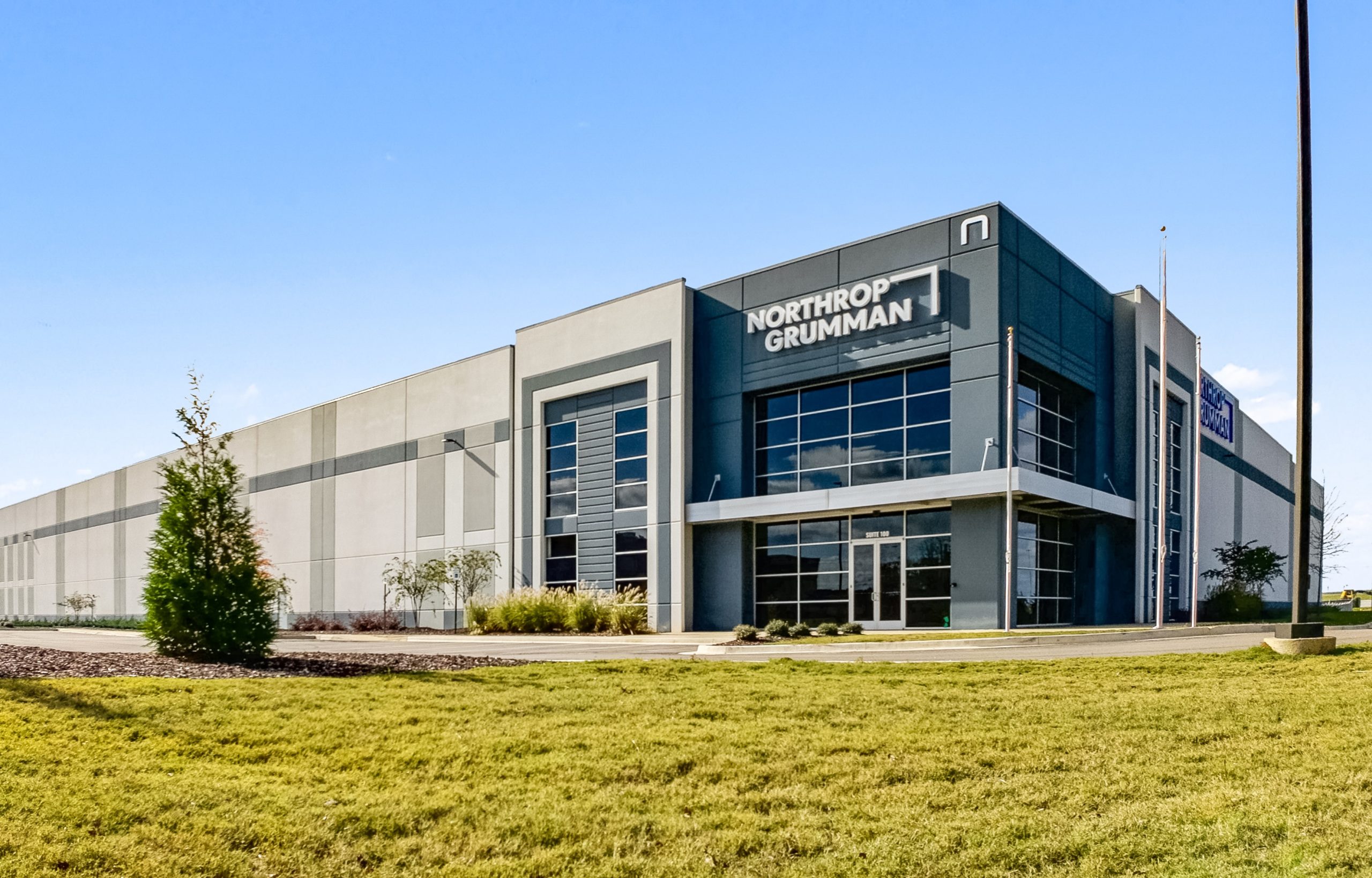
Northrop Grumman (Market Cap: $98.3B) Q4 2025 Aeronautics Systems sales reached $3.9 billion, up 18% year-over-year [6]. The company maintains conservative 2026 guidance with only mid-single-digit growth expected, though accelerated B-21 production rates could positively impact future performance [6]. General Dynamics (Market Cap: $94.8B) Marine Systems projects 2026 revenue of $17.3-$17.7 billion with approximately 7.3% operating margin, while Combat Systems achieved 15% operating margin in Q4 2025 [11]. L3Harris (Market Cap: $64.2B) projects 2026 revenue of $23.0-$23.5 billion, representing approximately 7% organic growth exceeding consensus estimates of $22.5 billion [12].
The FY2026 defense budget represents more than increased spending—it creates a structural shift in demand stability. Congressional additions of $2.3 billion for “emergent requirements” and provisions for multiyear munitions procurement contracts provide suppliers with predictability to invest in capacity expansion [2]. This government backing addresses historical concerns about defense spending volatility, creating a foundation for sustained investment in production capabilities.
The $1.6 billion F135 engine sustainment contract awarded to Pratt & Whitney for F-35 fighter support exemplifies the long-duration, predictable revenue streams available to scaled contractors [8]. With over 1,300 production engines delivered to 20 allied nations, this contract represents the type of recurring, government-backed revenue that reduces earnings volatility and supports higher valuations compared to purely cyclical industrials.
The defense sector faces evolving competitive dynamics from both new entrants and technology transitions. Anduril’s growth illustrates the competitive threat from technology-focused entrants emphasizing software and AI capabilities over traditional hardware-intensive defense manufacturing, recently winning contracts to replace Northrop Grumman’s FAAD C2 system [10]. This represents a potential structural shift toward more technology-focused, software-driven defense solutions.
However, legacy contractors maintain significant advantages in program expertise, security clearances, and existing customer relationships. L3Harris’s success with F-16 electronic warfare system clearance for low-rate production demonstrates opportunities in upgrading existing platforms rather than solely pursuing new development [10]. The company’s focus on communications systems, space and airborne systems (32.6% of revenue), and integrated mission systems (29.6% of revenue) positions it to benefit from the military’s increasing emphasis on network-centric warfare capabilities [13].
Defense contractors maintain significant international revenue exposure that provides diversification benefits. RTX derives 46% of revenue from international markets, with Europe contributing 24% and Asia Pacific 16.4% [14]. Recent contracts awarded to Poland ($197 million MS-110 system), Spain ($1.7 billion Patriot), and Romania ($168 million Patriot) demonstrate continued international demand [9]. This international diversification reduces dependency on U.S. budget decisions alone while exposing contractors to foreign policy dynamics.
The defense industry’s structural shift toward “less cyclical” demand is supported by multiple converging factors: record backlogs across major contractors, government-backed capacity expansion through the FY2026 defense budget, and multiyear procurement authority providing production predictability. RTX’s standout 1.56x book-to-bill ratio and $270 billion backlog exemplify sector strength, while consistent performance across LHX, NOC, and GD supports the thesis of industry-wide rather than company-specific drivers.
The competitive landscape remains favorable for scaled incumbents who can leverage integration benefits and program expertise, though technology disruption from new entrants poses medium-term risks. Defense contractors that successfully balance legacy program execution with technology investment will be best positioned for sustained growth. Current valuations appear to reflect recognized fundamentals, suggesting investors may benefit from market corrections rather than initiating positions at elevated levels.
Key program catalysts including the B-21 Raider, F-35 sustainment, CCA autonomous wingman programs, and Patriot air defense systems provide multiyear revenue visibility. Supply chain constraints in solid rocket motors represent a near-term operational challenge, while the $28.8 billion multiyear munitions procurement allocation provides a pathway to capacity expansion. International revenue exposure, particularly RTX’s 46% international revenue, provides diversification but also introduces foreign policy considerations.
Insights are generated using AI models and historical data for informational purposes only. They do not constitute investment advice or recommendations. Past performance is not indicative of future results.
About us: Ginlix AI is the AI Investment Copilot powered by real data, bridging advanced AI with professional financial databases to provide verifiable, truth-based answers. Please use the chat box below to ask any financial question.