Asian Currencies Mixed as Markets Digest Kevin Warsh's Nomination as Next Fed Chair
Unlock More Features
Login to access AI-powered analysis, deep research reports and more advanced features
About us: Ginlix AI is the AI Investment Copilot powered by real data, bridging advanced AI with professional financial databases to provide verifiable, truth-based answers. Please use the chat box below to ask any financial question.
Related Stocks
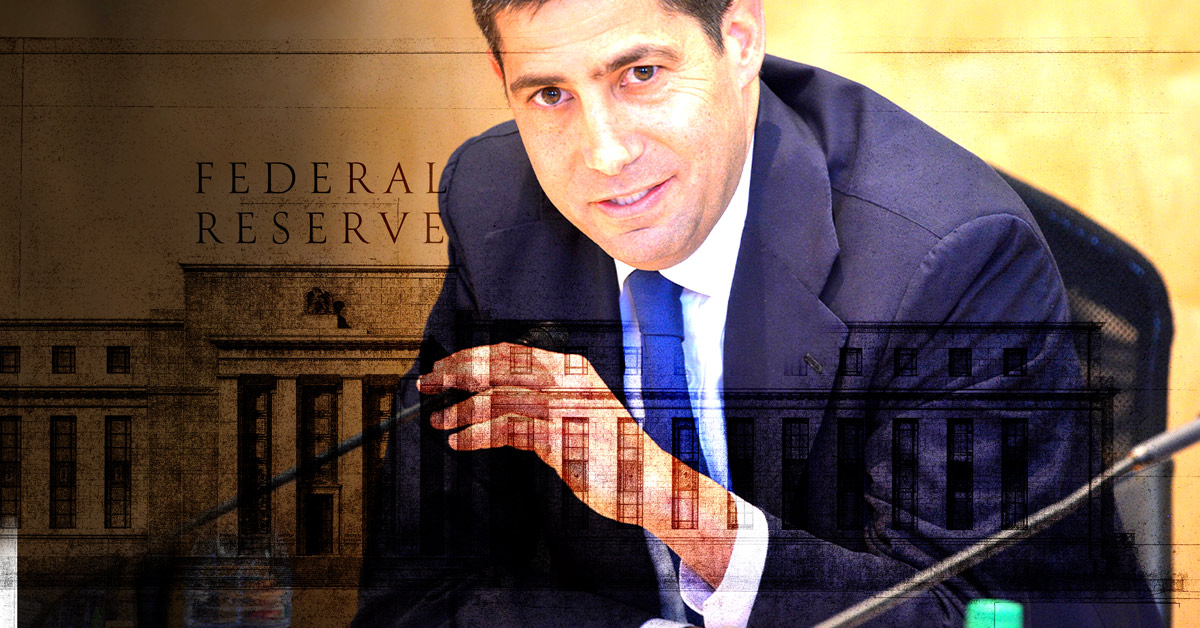
The nomination of Kevin Warsh as the next Federal Reserve Chair represents a significant development in U.S. monetary policy leadership. Warsh, who served as a Fed Governor from 2006 to 2011 and holds positions at the Hoover Institution and Stanford Graduate School of Business, brings a background in both academic economics and practical central banking experience. His previous consideration for Treasury Secretary during the current administration and earlier consideration as Fed Chair during Trump’s first term positions him as a familiar figure within policy circles [1][2].
The market’s initial reaction to the nomination was characterized by volatility across multiple asset classes. Currency markets exhibited the most immediate response, with the U.S. dollar initially selling off sharply before recovering to post gains against major counterparts. This pattern suggests that traders initially priced in concerns about potential policy disruptions but subsequently reassessed Warsh’s credentials as a stabilizing influence on monetary policy [1][3].
Asian currency markets, as reported by the Wall Street Journal, reflected the mixed global sentiment with varied performances against the dollar. The Japanese yen’s sensitivity to U.S. monetary policy developments made it particularly reactive, with the USD/JPY pair testing but holding the critical 154.00 level as technical resistance. The Australian dollar also showed weakness, retracing to the 0.7000 area as risk-off sentiment influenced carry trade dynamics [3].
The currency market reaction to Warsh’s nomination reveals important insights about investor expectations regarding future monetary policy. The dollar’s recovery from initial weakness indicates that market participants view Warsh as a candidate who would maintain Fed institutional independence rather than succumb to political pressure for debasing the currency. This assessment is supported by Warsh’s historical opposition to large-scale quantitative easing programs during his previous Fed tenure and his critical stance on balance sheet expansion [1][2][4].
The EUR/USD pair’s decline of 0.79% to $1.1874, testing key support at the 1.1900 level, reflects broader dollar strength in the immediate aftermath of the nomination. Similarly, the USD/JPY’s 0.89% gain to 154.49 represents a significant movement that tested technical resistance levels. These currency moves suggest that the market is pricing in a potentially higher-for-longer interest rate environment under Warsh’s leadership, which would support dollar valuations relative to major counterparts [1][3].
Bitcoin’s modest decline of 0.16% to $84,264, reaching its lowest level since November 21, indicates that digital asset markets are also sensitive to monetary policy expectations. The cryptocurrency’s performance suggests that traders view a hawkish Fed Chair nominee as potentially limiting the liquidity conditions that have historically supported Bitcoin valuations.
U.S. equity markets displayed choppy, risk-off sentiment following the nomination announcement, with the S&P 500 closing down 0.43% at $6,939.03 and the NASDAQ declining 0.50% to lead sector declines [0]. The Russell 2000’s 0.76% decline among small-cap stocks indicates particular vulnerability among domestically focused companies that may be more sensitive to interest rate expectations.
Sector-level analysis reveals a clear rotation pattern consistent with hawkish monetary policy expectations. The technology sector’s significant decline of 1.42% suggests that market participants are pricing in a potentially higher-for-longer interest rate environment, which disproportionately affects growth stocks with valuations sensitive to discount rates. Similarly, Utilities (-0.70%) and Consumer Cyclical (-0.61%) sectors declined as rate-sensitive areas faced headwinds [0].
In contrast, Energy (+0.95%), Basic Materials (+0.50%), and Communication Services (+0.40%) sectors posted gains, reflecting a rotation toward value and economically sensitive areas. This sector rotation pattern is consistent with expectations that Warsh’s leadership may maintain restrictive monetary policy settings for an extended period, favoring sectors less dependent on low interest rates [0].
The 10-year Treasury yield’s movement to approximately $4.23-$4.24, near the 200-day moving average of $4.23, reflects the market’s ongoing adjustment to changing monetary policy expectations [0]. The yield’s 13.55% increase from September 2024 levels indicates a significant shift in rate expectations over the preceding months.
Federal funds futures pricing indicates that markets expect two quarter-point rate cuts in 2026, moving from the current range of 3.50%-3.75% to approximately 3.25%-3.50%. The first cut is priced for June 2026, suggesting that markets do not anticipate immediate policy easing under the new Fed leadership [1][2][4]. This expectation stands in contrast to the Trump administration’s stated preference for “crisis-level” rates of approximately 1%, representing a significant gap between political preferences and market pricing.
The 20-day moving average of $4.21 and 50-day moving average of $4.15 indicate that yields have been trending higher in the near term, with the current level representing a position of strength relative to shorter-term averages [0]. This technical positioning suggests that the bond market is maintaining a cautiously hawkish stance pending clearer signals from the incoming Fed Chair.
Kevin Warsh’s likely policy approach appears to position him as a hawkish pragmatist who would prioritize price stability and institutional credibility. His historical opposition to large-scale quantitative easing programs and critical stance on Fed balance sheet expansion suggest that he would resist pressure for aggressive monetary easing, even from the administration that nominated him [2][4]. This positioning has important implications for multiple asset classes.
Warsh’s expected approach to forward guidance may involve reducing reliance on near-term forecasts and increasing data-dependence in policy decisions. Such an approach could introduce greater short-term policy uncertainty while potentially providing more flexibility to respond to evolving economic conditions. Markets would need to adjust to a less predictable Fed communication strategy [2].
The dollar’s recovery following initial weakness reflects market assessment that Warsh’s nomination reduces risks of currency debasement through undermined Fed independence. His credentials as an inflation hawk and institutional defender suggest that the dollar may maintain strength under his leadership, particularly if economic data supports continued restrictive policy [1][3].
The most significant insight from this event is the potential for friction between the incoming Fed Chair and the Trump administration regarding monetary policy direction. Trump has advocated for “crisis-level” interest rates of approximately 1%, which is substantially below current market expectations of 3.25%-3.50% for year-end 2026 and far below levels consistent with current inflation data [2][4]. Warsh’s reputation as an independent thinker who defended institutional integrity during the 2008 financial crisis suggests he may resist political pressure, potentially creating a dynamic of productive tension or conflict.
This policy friction risk represents a key variable that could influence market volatility in the coming months. The extent to which Warsh maintains independence while navigating administration relationships will be a critical determinant of market response to his nomination.
The Federal Reserve has evolved into what analysts describe as a “hybrid beast” over two decades, suggesting significant structural hurdles to fundamental policy changes [2]. The sprawling nature of the modern Fed, with its $6.6 trillion balance sheet, multiple regional banks, and established bureaucratic processes, creates inertia that could limit the scope of Warsh’s policy reforms even if he desires significant changes.
The confirmation process itself requires approval from multiple stakeholders, including the Treasury Secretary, the Fed Board of Governors, and potentially Congress for structural reforms. This multi-layered approval process creates checkpoints that could moderate any extreme policy shifts while also creating uncertainty about the ultimate policy direction [2].
The mixed performance of Asian currencies reveals important divergence in regional sensitivity to U.S. monetary policy developments. The Japanese yen’s particular sensitivity reflects Japan’s unique position as a major economy with historically low interest rates, making the currency pair particularly reactive to rate differential expectations. The Australian dollar’s weakness is consistent with carry trade dynamics that are sensitive to risk-off sentiment and relative rate expectations [3].
These regional differences suggest that the impact of Warsh’s nomination will not be uniform across global currency markets. Investors with currency exposure should consider the specific dynamics affecting their target currencies rather than assuming uniform dollar strength or weakness.
Several important information gaps remain regarding Warsh’s policy approach. He has not released a detailed policy platform, and his specific views on current economic conditions remain unclear [2]. The relationship between Warsh and remaining Fed Governors, particularly Christopher Waller, is uncertain and could influence policy implementation. Additionally, the extent of coordination between Warsh and Treasury Secretary Bessent on broader economic policy remains unknown.
These information gaps introduce uncertainty that markets will need to navigate as more details emerge through the confirmation process and subsequent policy statements.
The analysis identifies several risk factors warranting attention from market participants. Policy friction risk between Warsh and the Trump administration represents the most significant concern, as conflicting signals about monetary policy direction could increase market volatility. The substantial gap between administration preferences for 1% rates and market expectations of approximately 3.25%-3.50% suggests potential for disappointment and subsequent market reaction [2][4].
Balance sheet normalization represents an additional risk factor, as Warsh’s opposition to QE could create market volatility as the Fed navigates its $6.6 trillion balance sheet. The process of reducing the balance sheet while maintaining financial stability requires careful management, and any misstep could trigger broader market dislocations [2].
Confirmation process uncertainty introduces near-term risk, as the timeline and outcome remain uncertain. The need for approval from multiple stakeholders creates potential for delays or conditions that could affect market expectations.
Despite the identified risks, the nomination also presents opportunity windows for certain market participants. The rotation away from rate-sensitive growth sectors toward value and defensive sectors creates opportunities for investors repositioning portfolios based on expected policy direction. The Energy and Basic Materials sectors’ strength suggests that economically sensitive areas may outperform in a higher-rate environment [0].
The dollar’s strength creates opportunities for currency-focused strategies, particularly relative to currencies most sensitive to U.S. rate expectations. The yen’s sensitivity makes Japanese yen-denominated assets particularly reactive to Fed communications [3].
For investors with longer time horizons, the potential for policy clarity following the confirmation process could reduce uncertainty premiums currently embedded in asset prices. Once Warsh’s policy approach becomes clearer through confirmation hearings and subsequent communications, markets may reprice with reduced uncertainty.
Several near-term events will influence market dynamics in the coming weeks. The Reserve Bank of Australia meeting next Tuesday will be particularly important for Australian dollar direction, given the currency’s recent weakness and sensitivity to risk-off sentiment [3]. The Japanese election scheduled for February 8 will be critical for yen trajectory, as political developments in Japan can influence currency valuations [3].
Confirmation hearings, when scheduled, will provide important policy clarity and could trigger significant market reactions depending on Warsh’s statements. Ongoing U.S. economic data releases, particularly inflation and labor market indicators, will influence rate expectations regardless of Fed leadership changes.
The nomination of Kevin Warsh as Fed Chair represents a moderately dollar-positive, potentially rate-hawkish development for markets. Market reaction has been characterized by initial volatility followed by stabilization, with sector rotation away from rate-sensitive areas toward value and defensive sectors. Currency normalization has seen the dollar recover from oversold conditions, while equity markets have adjusted expectations for a potentially higher-for-longer interest rate environment.
The true market impact will depend heavily on Warsh’s confirmation process, his policy statements during confirmation hearings, and his willingness to navigate the tension between Trump’s rate-cut demands and his institutional mandate. The combination of a hawkish nominee and elevated Treasury yields suggests that caution toward rate-sensitive assets may be warranted in the near term.
Market participants should monitor upcoming events including the RBA meeting, Japanese election, and confirmation hearings for policy clarity. The interaction between Warsh’s stated positions and administration preferences will be a critical variable influencing market direction through the transition period and beyond.
Insights are generated using AI models and historical data for informational purposes only. They do not constitute investment advice or recommendations. Past performance is not indicative of future results.
About us: Ginlix AI is the AI Investment Copilot powered by real data, bridging advanced AI with professional financial databases to provide verifiable, truth-based answers. Please use the chat box below to ask any financial question.