Kevin Warsh Nominated as Federal Reserve Chair – Market Impact Analysis
Unlock More Features
Login to access AI-powered analysis, deep research reports and more advanced features
About us: Ginlix AI is the AI Investment Copilot powered by real data, bridging advanced AI with professional financial databases to provide verifiable, truth-based answers. Please use the chat box below to ask any financial question.
Related Stocks
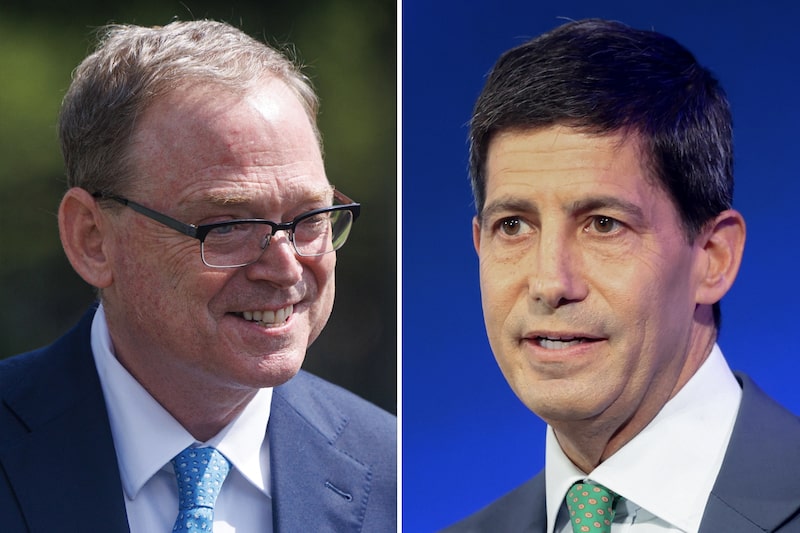
The nomination of Kevin Warsh as the next Federal Reserve Chair represents a significant leadership transition at the central bank, triggering pronounced market volatility across multiple asset classes. Warsh, who served on the Fed Board from 2006 to 2011 and gained prominence during the 2008 financial crisis, is viewed by markets as a more hawkish candidate given his historical criticism of the Fed’s quantitative easing programs [1][3]. The announcement, made via Truth Social on February 1, 2026, prompted immediate repositioning across global financial markets.
The most dramatic impact was observed in precious metals, where silver experienced a catastrophic 27-31.4% decline—the worst single-day drop since March 1980—reversing sharply from record highs [1][2]. Gold, traditionally a safe-haven asset, fell between 4.5% and 10.3%, indicating a significant rotation away from inflation hedges [1][2]. The U.S. Dollar Index (DXY) strengthened by 0.14% on expectations of continued prudent monetary policy under Warsh’s leadership [2]. Bitcoin declined more than 7%, falling to approximately $77,250, its lowest level since April [2].
Equity markets demonstrated measured but notable declines following the nomination announcement. The Russell 2000 small-cap index experienced the most significant pressure, falling 0.76%, which suggests investors are positioning for a potentially higher interest rate environment that disproportionately affects smaller companies [0]. The NASDAQ declined 0.50%, reflecting tech sector pressure, while the S&P 500 fell 0.12% [0]. These movements indicate market participants are reassessing the monetary policy trajectory under new leadership, with implications for growth equities and interest-rate-sensitive sectors.
Kevin Warsh’s nomination carries significant implications for monetary policy direction. His tenure during the 2008 crisis and subsequent public commentary have positioned him as a skeptic of the Fed’s massive balance sheet expansion, which reached $6.6 trillion [1]. Markets appear to be pricing in the possibility of a more hawkish policy stance, tighter financial conditions, and potential reductions in the Fed’s balance sheet. This expectation explains the sell-off in precious metals, which typically perform poorly in higher-rate environments, and the dollar strength reflecting confidence in prudent policy continuation [2].
The timing of this nomination is particularly significant given the upcoming calendar of central bank decisions, including meetings by the Reserve Bank of Australia (RBA), Bank of England (BoE), and European Central Bank (ECB), as well as the January non-farm payrolls (NFP) report—the first major economic data point under potential new Fed leadership [1].
The nomination signals a potential fundamental shift in monetary policy philosophy that markets are rapidly digesting. Warsh’s background as a former Fed Governor who publicly questioned post-crisis QE policies suggests a return to more traditional monetary frameworks. The sharp precious metals decline represents not merely a tactical repositioning but potentially a structural realignment of portfolio allocations as investors reassess inflation hedge requirements under anticipated policy conditions.
The nomination occurs at a delicate moment in global monetary policy synchronization. With multiple central banks scheduled to meet in the coming days—the RBA facing rate hike risks, the BoE and ECB considering pause decisions—Warsh’s appointment may influence international policy expectations [1]. Market participants are likely to adjust their forecasts for global monetary trajectories based on signals from the incoming Fed leadership, potentially creating cascading effects across international markets.
The Senate confirmation process represents an additional uncertainty window. Historically, confirmation hearings provide nominees opportunities to outline policy priorities and respond to congressional questioning, offering market participants new information about likely policy directions. The period between nomination and confirmation could feature elevated volatility as traders position for various policy scenarios.
This analysis is based on the Seeking Alpha Markets Weekly Outlook report [1] published on February 1, 2026, corroborated by CNBC coverage [2] and additional background from Daily Sabah [3]. Internal market data [0] provides quantitative support for equity index movements.
Kevin Warsh’s nomination as Fed Chair represents a potentially significant policy shift given his historical skepticism of quantitative easing. The immediate market reaction—particularly the dramatic precious metals decline—suggests markets are pricing in tighter monetary policy expectations. The dollar strengthened modestly (+0.14%) while equity indices showed measured declines with small-caps under particular pressure [0][2]. The Senate confirmation process and upcoming central bank meetings (RBA, BoE, ECB) will be critical monitoring points for policy direction signals [1]. Investors with commodity exposure, particularly silver and gold positions, should assess hedging strategies given the elevated volatility environment [2].
Insights are generated using AI models and historical data for informational purposes only. They do not constitute investment advice or recommendations. Past performance is not indicative of future results.
About us: Ginlix AI is the AI Investment Copilot powered by real data, bridging advanced AI with professional financial databases to provide verifiable, truth-based answers. Please use the chat box below to ask any financial question.