Government Shutdown Crisis: Speaker Johnson Faces One-Vote Margin Amid Immigration Fight
Unlock More Features
Login to access AI-powered analysis, deep research reports and more advanced features
About us: Ginlix AI is the AI Investment Copilot powered by real data, bridging advanced AI with professional financial databases to provide verifiable, truth-based answers. Please use the chat box below to ask any financial question.
The partial government shutdown that began on February 1, 2026, represents the culmination of escalating tensions between House Republicans and Senate Democrats over immigration enforcement and DHS funding mechanisms. According to reports from Reuters and CNN, the Senate had approved a funding package that separated DHS appropriations from other federal agencies, effectively creating a partial shutdown scenario that left homeland security operations impaired while other government functions continued [1][3]. The critical timing issue arose because the House had adjourned before final passage, preventing the legislative mechanism needed to fund government operations through the end of the fiscal year.
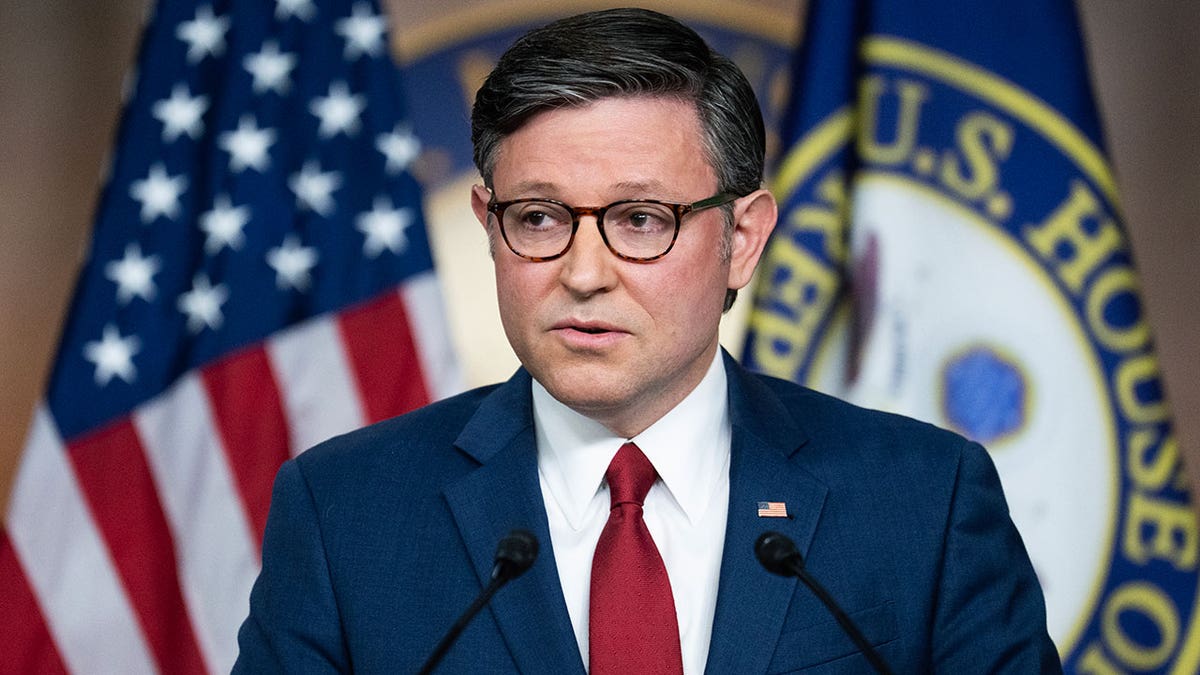
Speaker Mike Johnson’s position has become exponentially more precarious following the recent special election victory by Democrat Christian Menefee, which reduced the House Republican majority to effectively a single vote [3]. This razor-thin margin fundamentally transforms Johnson’s negotiating position, as he can afford virtually no defections from his conference while simultaneously facing pressure from hard-line conservatives demanding stricter immigration provisions. The “one-vote situation,” as characterized by multiple news sources, creates unprecedented leverage for individual House members and threatens the stability of the speakership itself [1][3].
The central dispute revolves around ICE reforms that have become litmus tests for both parties. Republicans, particularly the conservative faction led by Representatives Chip Roy, Ralph Norman, and Anna Paulina Luna, are demanding specific policy changes including mandatory body cameras for ICE agents, elimination of roving patrol practices, and inclusion of voter-ID provisions in any funding legislation [3]. These demands reflect broader conservative concerns about immigration enforcement practices and election integrity that have animated the Republican base throughout recent election cycles.
Conversely, Senate Democrats and progressive advocates are pushing for a fundamental restructuring of immigration enforcement toward a judicial warrant system, which would require immigration agents to obtain court approval before conducting enforcement actions [3]. This proposal represents a significant shift from current administrative enforcement practices and has become a non-starter for many Republicans who view it as an unnecessary constraint on law enforcement discretion. The gap between these positions creates substantial obstacles to rapid resolution, despite both parties expressing desire to avoid prolonged federal worker disruptions.
The partial shutdown’s operational impact extends beyond political posturing to affect actual government functions and federal workers. Over 800,000 federal employees face potential work stoppage or unpaid leave status, with DHS operations specifically impaired during a period of heightened border security concerns [2]. The timing of this shutdown, occurring during ongoing negotiations over immigration policy, adds complexity to an already fraught situation as border enforcement capabilities may be constrained during the political impasse.
Financial markets have exhibited measured reactions to the developing situation, with Treasury operations under particular scrutiny given the proximity of scheduled government bond auctions [2]. While historical precedent suggests that brief government shutdowns have produced limited sustained market impact, the unusual political dynamics surrounding this particular crisis—including the unprecedented one-vote margin and the fundamental nature of the immigration disputes—introduce elevated uncertainty into market expectations.
The current crisis reveals fundamental fractures within the House Republican conference that extend beyond typical ideological divisions. Speaker Johnson’s inability to secure unified support from his caucus despite controlling the speakership demonstrates the challenge of governing with minimal margins. The special election outcome that reduced the Republican majority to a single vote represents more than a numerical inconvenience; it signals a potential realignment within the Republican coalition that could reshape legislative priorities and leadership dynamics.
The conservative hard-liners threatening to oppose the current funding deal represent a significant voting bloc that cannot be ignored, yet their policy demands—including voter-ID provisions—have no realistic path to Senate passage given Democratic opposition [3]. This creates a classic legislative dilemma where the House majority cannot achieve its maximum policy goals without Senate cooperation, yet cannot accept moderate compromises without alienating its own ideological base.
Perhaps the most significant development emerging from the shutdown negotiations is the proposed two-week window for ICE reform discussions [1][2]. This mechanism provides a temporary off-ramp for ending the immediate shutdown while kicking the substantive policy disputes down the road for further negotiation. The wisdom of this approach remains debatable—it may allow cooler heads to prevail and enable compromise, or it may simply delay inevitable confrontation while allowing tensions to compound.
The two-week timeframe also creates important strategic considerations for all parties. Democrats may view extended negotiations as an opportunity to advance their judicial warrant proposal, while conservatives may see it as an opportunity to build public support for their enforcement reforms. The outcome of these negotiations will likely set the template for broader immigration policy debates expected throughout 2026.
While government shutdowns have occurred with some frequency in recent decades, the current situation presents unique challenges that distinguish it from previous episodes. The combination of an extraordinarily narrow House majority, fundamental policy disputes over immigration enforcement, and the personal political exposure of the Speaker creates conditions where historical precedent provides limited guidance. Previous shutdowns often resolved through targeted funding patches or short-term continuing resolutions; the current partisan configuration may preclude such traditional fixes.
The immediate risk landscape centers on several interconnected factors that could determine the crisis trajectory. The vote count uncertainty represents the most acute risk, as Speaker Johnson operates with essentially no margin for error—any single Republican defection or absence could force him to seek Democratic votes, potentially at the cost of abandoning conservative priorities [3]. This vulnerability creates both political and procedural risks that could cascade into broader leadership challenges.
Conservative revolt potential remains elevated despite Johnson’s confidence in securing sufficient votes for resolution [1]. Representatives Roy, Norman, and Luna have made clear their unwillingness to support funding measures without specific immigration and voter-ID provisions, and their opposition could technically be sustained by as few as two additional Republicans joining their position. The political messaging value of opposing the current deal may outweigh practical legislative considerations for some members seeking to establish conservative credentials.
Federal worker advocacy represents a secondary risk vector that could shift public opinion and political pressure dynamics. With over 800,000 workers potentially affected, constituent pressure on Members of Congress could intensify rapidly if the shutdown extends beyond the initial weekend timeframe. This pressure may cut across partisan lines as affected workers in both Republican and Democratic districts contact their representatives.
The two-week ICE negotiation framework creates an opportunity for substantive policy progress that has previously been elusive [1][2]. If good-faith negotiations proceed, the shutdown crisis could ultimately produce meaningful reforms to immigration enforcement practices that address legitimate concerns from both parties. The crisis atmosphere, while problematic, may create political incentives for compromise that normal legislative processes have failed to produce.
The current situation also presents opportunities for political repositioning by various actors within the broader immigration debate. Moderate Democrats may find common ground with pragmatic Republicans on enforcement reforms that neither ideological extreme would support in normal circumstances. Similarly, some conservatives may find themselves unexpectedly aligned with reform-minded Democrats on issues like body camera requirements that improve enforcement transparency.
The partial government shutdown that began February 1, 2026, stems from congressional failure to pass comprehensive funding legislation, with DHS operations specifically impacted by the dispute over immigration enforcement policy. Speaker Mike Johnson faces an extraordinarily constrained political position following the reduction of his House majority to effectively one vote, limiting his ability to absorb defections within his caucus. Conservative Republicans are demanding specific ICE reforms and voter-ID provisions that face Democratic opposition, while Democrats push for judicial warrant requirements that Republicans reject as unworkable.
Target resolution remains set for Tuesday, February 3, 2026, with Speaker Johnson expressing confidence in his ability to secure sufficient Republican votes to end the partial shutdown [1]. The proposed two-week window for ICE reform negotiations provides a potential pathway for resolving the immediate crisis while deferring substantive policy disputes. Over 800,000 federal workers face potential disruption, with DHS operating at partial capacity during the impasse. Financial market reactions have been measured but Treasury operations remain under scrutiny given scheduled bond auctions. The ultimate resolution of this crisis will likely set important precedents for immigration policy debates and congressional budget negotiations throughout 2026.
Insights are generated using AI models and historical data for informational purposes only. They do not constitute investment advice or recommendations. Past performance is not indicative of future results.
About us: Ginlix AI is the AI Investment Copilot powered by real data, bridging advanced AI with professional financial databases to provide verifiable, truth-based answers. Please use the chat box below to ask any financial question.