Trump Administration vs. Federal Reserve: Political Confrontation Over Powell Investigation and Fed Leadership Transition
Unlock More Features
Login to access AI-powered analysis, deep research reports and more advanced features
About us: Ginlix AI is the AI Investment Copilot powered by real data, bridging advanced AI with professional financial databases to provide verifiable, truth-based answers. Please use the chat box below to ask any financial question.
Related Stocks
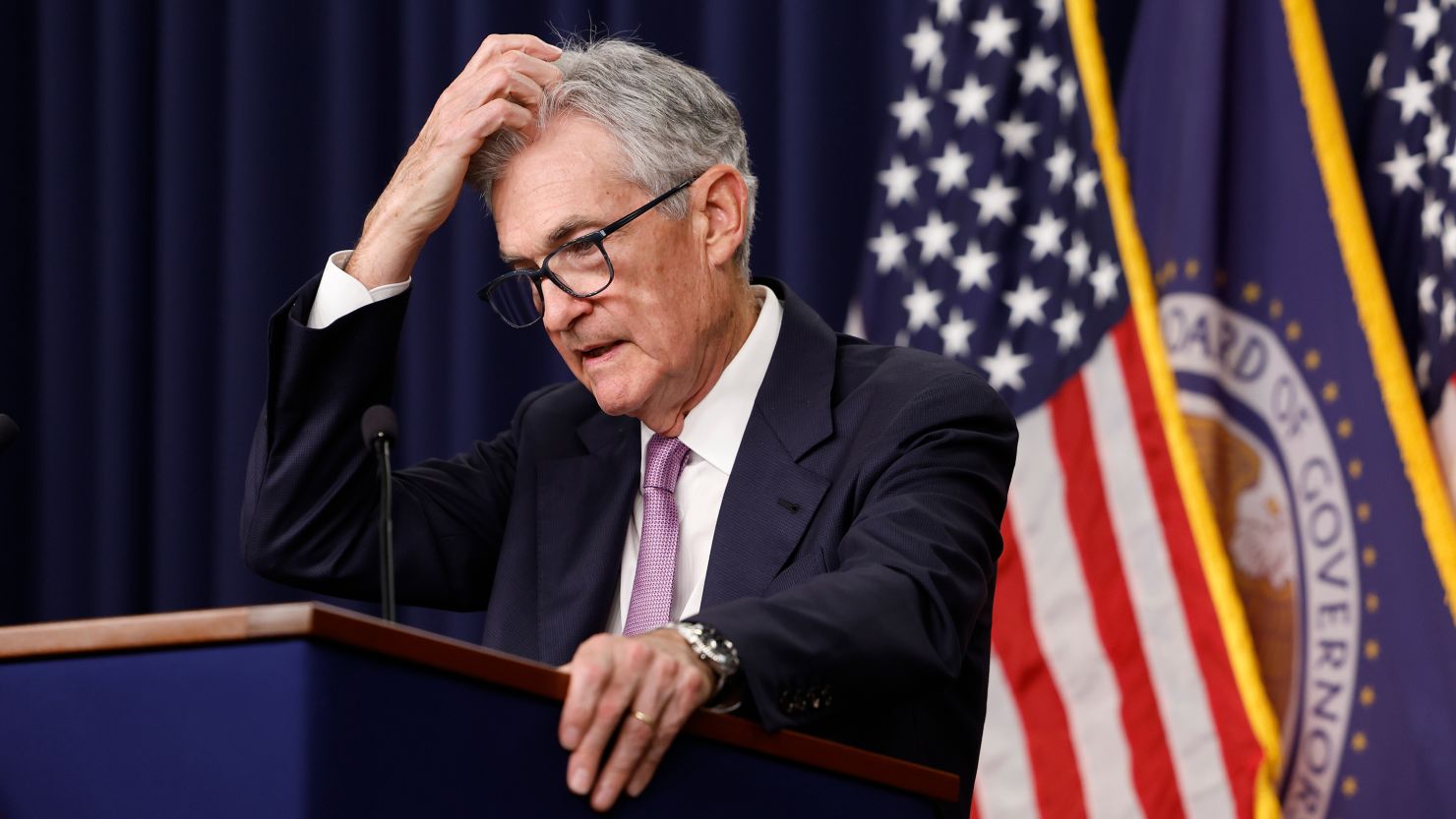
The confrontation between the Trump administration and the Federal Reserve represents a significant escalation in tensions that have been building since the beginning of the current administration. On February 2, 2026, President Trump explicitly refused to drop a Department of Justice criminal investigation into Fed Chair Jerome Powell, maintaining that the investigation concerning a $2.5+ billion renovation of the Federal Reserve headquarters should continue despite mounting political pressure [1][2]. This investigation, led by U.S. Attorney Jeanine Pirro, centers on allegations that Powell may have misled Congress regarding the scope and costs of the headquarters renovation project, with Trump characterizing the situation as potentially involving “gross incompetence or theft or kickbacks” [3].
The timing of this confrontation is particularly significant given that Powell’s term as Fed Chair is scheduled to expire in May 2026, and the administration nominated Kevin Warsh as his replacement on January 30, 2026 [5]. The simultaneous pursuit of a criminal investigation against the sitting Fed Chair while seeking Senate confirmation for his successor creates an unprecedented situation that challenges fundamental assumptions about the independence of the Federal Reserve from political interference. Powell has denied any wrongdoing, and his legal team has suggested that the investigation may be retaliatory for his reluctance to cut interest rates more aggressively during his tenure [2][3].
The investigation of a sitting Federal Reserve Chair by the Department of Justice represents a fundamental departure from established norms regarding the independence of central banking institutions. The Federal Reserve was designed as an independent agency precisely to insulate monetary policy decisions from short-term political considerations, allowing policymakers to focus on long-term economic stability rather than electoral cycles. The initiation of a criminal investigation against a Fed Chair for testimony given during Congressional oversight proceedings raises profound questions about the boundaries between executive branch oversight and interference with independent agencies [1][2].
The legal framework underlying this confrontation involves complex questions of executive authority and congressional oversight. While the Executive Branch certainly has the authority to direct DOJ investigations, the selective pursuit of a criminal investigation against a Cabinet-level official who has publicly disagreed with administration policy priorities sets a troubling precedent. Constitutional law scholars have raised concerns that this approach could effectively weaponize criminal investigations against independent agency heads who maintain policy disagreements with sitting presidents, fundamentally altering the balance of power in Washington [1][2].
Federal Reserve officials have historically enjoyed substantial protection from political interference, though this protection has never been explicitly codified in the Constitution. The unwritten norms that have preserved Fed independence for over a century—including traditions of reappointing Fed chairs regardless of political affiliation and respecting the institution’s policy autonomy—are now being tested in ways that could reshape American governance for generations. The outcome of this confrontation will likely establish important precedents for future interactions between administrations and independent regulatory agencies [2][3].
The nomination of Kevin Warsh to succeed Powell faces significant obstacles within the Senate Banking Committee, where Republican members have expressed substantial reservations about proceeding with confirmation while the DOJ investigation remains active. Senator Thom Tillis of North Carolina, a member of the Banking Committee, has explicitly threatened to block any nominee until the investigation into Powell is resolved, creating a potential confirmation deadlock [1][2]. Senator Lisa Murkowski of Alaska has expressed similar concerns, indicating that the Republican opposition coalition extends beyond a single dissenting member [1][2].
The Senate Banking Committee currently comprises 13 Republicans and 11 Democrats, meaning that unified Republican opposition could potentially block Warsh’s confirmation even in a chamber where Republicans hold a majority [1]. The threat posed by Senator Tillis is particularly significant given his position on the Committee and his expressed unwillingness to proceed with confirmation hearings until the DOJ probe reaches resolution. This procedural obstacle could delay or potentially prevent Warsh’s confirmation entirely, leaving the Federal Reserve without confirmed leadership beyond Powell’s May 2026 term expiration [2][3].
The dynamics of this confirmation fight reveal significant divisions within the Republican Party regarding the appropriate relationship between the executive branch and independent regulatory agencies. While some Republicans have supported the administration’s confrontational approach toward the Fed, others have expressed concern about the precedent set by pursuing criminal investigations against policy disagreements. This internal division creates uncertainty about the ultimate outcome of the confirmation process and raises questions about whether the administration might eventually need to negotiate a resolution to the investigation to secure confirmation of its preferred nominee [1][2][3].
FHFA Director William J. Pulte’s appearance on “Mornings with Maria” to discuss Freddie Mac’s mortgage portfolio adds an important dimension to this political confrontation, connecting the Fed leadership dispute to broader housing finance policy [4]. Freddie Mac’s mortgage portfolio currently stands at approximately $3.67 trillion, representing a substantial portion of the American housing finance system [4]. Pulte’s discussion of continued mortgage spending indicates the administration’s ongoing attention to housing markets even as it confronts the Federal Reserve over monetary policy and leadership questions.
The relationship between FHFA oversight and Federal Reserve monetary policy creates important linkages between these separate institutional domains. The Federal Reserve’s interest rate decisions directly affect mortgage rates and housing affordability, while FHFA policies governing Fannie Mae and Freddie Mac influence the availability and terms of mortgage credit. The simultaneous focus on both institutions suggests a comprehensive administration strategy for reshaping American housing finance, though the ongoing Fed leadership crisis introduces significant uncertainty into this policy area [4].
Housing market participants should note that continued political uncertainty around Federal Reserve leadership could affect mortgage rate trajectories regardless of the ultimate outcome of the confirmation process. The prospect of extended leadership uncertainty at the Fed may already be influencing market expectations about future monetary policy, potentially affecting long-term interest rates including mortgage rates. Any resolution to the current confrontation—whether through Warsh’s confirmation, a different nominee, or Powell’s continued service—will have implications for housing finance policy going forward [4].
The combination of political confrontation, legal uncertainty, and potential leadership gaps at the Federal Reserve creates a complex environment for financial markets and economic planning. Market participants have historically valued Fed independence as a source of policy predictability, and the current confrontation introduces elevated uncertainty into monetary policy expectations. Bond markets, currency markets, and equity valuations could all be affected by developments in this confrontation, with the degree of impact depending on the trajectory of the investigation and confirmation process [2][3].
The $2.5+ billion Federal Reserve headquarters renovation that triggered this investigation has become a focal point for the administration’s critique of Fed leadership, though the ultimate significance of this issue for monetary policy and economic outcomes remains unclear [3]. Whether the investigation ultimately produces criminal charges, administrative findings, or no action at all, its mere existence has already affected the institutional relationship between the White House and the Federal Reserve. The longer the investigation continues without resolution, the greater the potential for lasting damage to perceptions of Fed independence among domestic and international market participants [1][2].
Federal Reserve policy decisions over the coming months—regarding interest rates, quantitative tightening, and communication about future policy paths—will inevitably be viewed through the lens of this political confrontation. Market participants should anticipate that Fed officials may face questions about political considerations affecting their deliberations, even as they maintain that policy decisions remain focused on the dual mandate of maximum employment and price stability. The ability of the Fed to maintain credibility as an inflation-fighter during this period of institutional stress represents a critical consideration for economic forecasting [2][3].
The confrontation between the Trump administration and the Federal Reserve reveals several critical insights about the evolving nature of executive-agency relationships in American governance. First, the willingness to pursue criminal investigations against independent agency heads who maintain policy disagreements represents a significant escalation in executive branch tactics that could fundamentally alter institutional dynamics going forward. Second, the Republican opposition to the Warsh nomination demonstrates that concerns about Fed independence extend across party lines, providing some check on administration objectives even within the majority party. Third, the concurrent focus on housing finance through FHFA Director Pulte indicates a comprehensive administration strategy that extends beyond monetary policy to encompass broader economic governance.
The investigation’s focus on Congressional testimony about the Fed headquarters renovation raises important questions about the intersection of oversight authority and criminal law. Powell’s testimony about renovation costs, made during the course of legitimate Congressional oversight, now forms the basis for potential criminal liability—a development that could chill cooperation between independent agencies and their Congressional overseers. The precedent established by this investigation could affect how future officials approach Congressional testimony, potentially creating defensive communication patterns that undermine effective oversight [1][2][3].
The potential for an extended period without confirmed Fed leadership creates significant uncertainty for monetary policy implementation. If Warsh’s confirmation is blocked and no alternative nominee gains traction, the Fed could enter a period of acting leadership that may lack the same political legitimacy and market credibility as confirmed leadership. Historical precedents for extended periods of Fed leadership uncertainty suggest increased market volatility and potentially elevated risk premiums across asset classes [2][3].
The current confrontation presents several distinct risk categories that warrant careful monitoring.
Despite the predominantly negative risk profile, the current confrontation also presents certain opportunity windows for various stakeholders. For market participants with tolerance for elevated risk, periods of institutional uncertainty can create mispricing opportunities in interest rate-sensitive assets. The uncertainty premium currently embedded in bond markets could diminish significantly if the confrontation resolves favorably, potentially generating capital gains for investors who positioned appropriately [2].
For advocates of Fed reform, the current crisis presents an opportunity to reconsider the institutional arrangements that have governed central banking for decades. While the current confrontation is undeniably concerning, it also highlights weaknesses in the legal framework protecting Fed independence that could be addressed through legislative reform. Advocates for stronger central bank independence may find receptive audiences in Congress following the resolution of this confrontation [1][2].
For housing market participants, the concurrent attention to Freddie Mac’s portfolio through FHFA Director Pulte may create opportunities to influence housing finance policy during a period of institutional transition. The Trump administration’s stated commitment to housing finance reform creates potential openings for industry stakeholders to engage with policymakers on issues ranging from mortgage guarantee fees to affordable housing requirements [4].
This analysis is based on reporting from multiple sources including the Washington Times [1], CNBC [2], Fox Business [3], and the Texarkana Gazette [4], covering developments from February 2, 2026, regarding the DOJ investigation into Fed Chair Powell and the nomination of Kevin Warsh as his successor. The investigation concerns Powell’s Congressional testimony about a $2.5+ billion Federal Reserve headquarters renovation [3]. Freddie Mac’s mortgage portfolio stands at approximately $3.67 trillion under FHFA oversight [4]. The Senate Banking Committee comprises 13 Republicans and 11 Democrats [1], with confirmation requiring a simple majority but potentially blocked by individual Senator holds [2]. Powell’s term expires in May 2026 [5].
Key officials involved include President Donald Trump, Fed Chair Jerome Powell, DOJ officials including U.S. Attorney Jeanine Pirro, FHFA Director William J. Pulte, Senator Thom Tillis (R-NC), and Senator Lisa Murkowski (R-AK) [1][2][3][4]. Republican opposition to the Warsh nomination centers on concerns about proceeding with confirmation while a DOJ investigation of Powell remains active [1][2]. The unprecedented nature of the criminal investigation against a sitting Fed Chair raises significant constitutional and institutional concerns that extend beyond the immediate political dispute [1][2][3].
Insights are generated using AI models and historical data for informational purposes only. They do not constitute investment advice or recommendations. Past performance is not indicative of future results.
About us: Ginlix AI is the AI Investment Copilot powered by real data, bridging advanced AI with professional financial databases to provide verifiable, truth-based answers. Please use the chat box below to ask any financial question.