Senate Democrats Demand Delay on Warsh Fed Nomination Amid Powell and Cook Investigations
Unlock More Features
Login to access AI-powered analysis, deep research reports and more advanced features
About us: Ginlix AI is the AI Investment Copilot powered by real data, bridging advanced AI with professional financial databases to provide verifiable, truth-based answers. Please use the chat box below to ask any financial question.
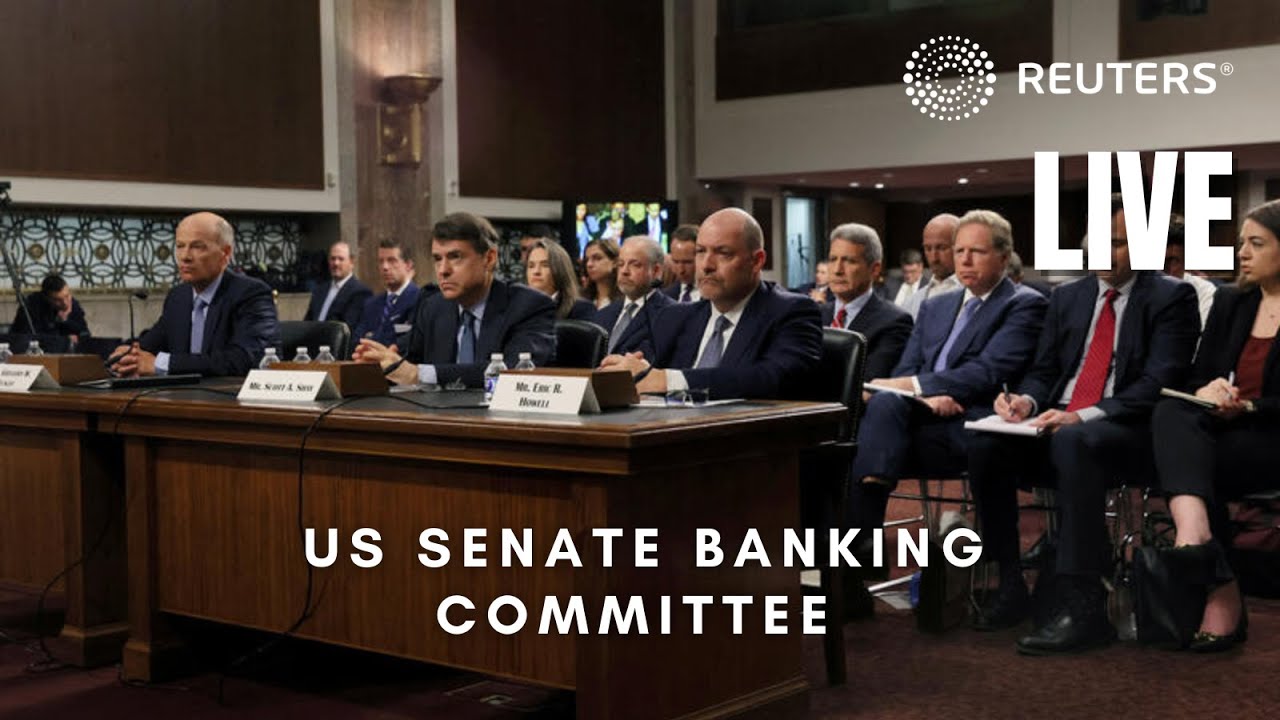
This analysis examines the February 3, 2026 demand by Senate Banking Committee Democrats to delay consideration of Kevin Warsh’s nomination as Federal Reserve Chair until DOJ investigations into current Fed Chair Jerome Powell and Governor Lisa Cook are concluded. Led by Senator Elizabeth Warren, the Democratic caucus has formally requested Committee Chair Tim Scott to halt proceedings, citing concerns about undermining Fed independence. The nomination faces additional Republican opposition from Senator Thom Tillis, creating a potential deadlock scenario on the 13-11 Republican committee. The developments introduce significant uncertainty into the Fed leadership transition process and raise broader questions about central bank independence amid ongoing political tensions [1].
The formal demand from Senate Banking Committee Democrats represents a significant escalation in the political confrontation surrounding Federal Reserve leadership. Senator Elizabeth Warren, serving as Ranking Democrat on the committee, led the effort to pressure Chair Tim Scott to delay movement on Kevin Warsh’s nomination, which was submitted by President Trump on January 30, 2026 [1]. The Democrats’ core argument centers on the principle that confirming a new Fed Chair while investigations into the current leadership are ongoing would effectively “seize control of the Fed through criminal prosecutions,” thereby compromising the institutional independence that the central bank requires to function effectively [1].
The committee composition creates a particularly vulnerable position for the Warsh nomination. With a narrow 13-11 Republican majority, the withdrawal of support from even a single Republican senator would result in a committee deadlock [1][2]. Senator Thom Tillis has already publicly pledged to oppose the nomination until the DOJ investigation into Jerome Powell is resolved, effectively granting Democrats a de facto veto power over the committee proceedings [1][2]. This Republican defection significantly strengthens the Democrats’ negotiating position and increases the probability that the nomination will face substantial procedural obstacles.
The Democrats’ demand is directly tied to two ongoing DOJ investigations that have raised unprecedented questions about the treatment of current Federal Reserve officials. The investigation into Fed Chair Jerome Powell centers on allegations that he misled Congress regarding cost overruns associated with the Federal Reserve headquarters renovation project. Subpoenas were issued in early 2026, and the investigation remains active without a clear timeline for conclusion [2]. Democrats argue that moving forward with a new nomination while the investigation proceeds would represent an inappropriate interference with the Fed’s institutional integrity.
The situation involving Governor Lisa Cook presents a distinct but related constitutional question. President Trump reportedly attempted to remove Cook from her position based on allegations of misleading mortgage documentation. The matter has reached the Supreme Court, with a hearing scheduled for January 21, 2026 [2]. Cook has denied any wrongdoing, and the case raises significant questions about the scope of presidential authority over independently appointed Federal Reserve governors. The outcome of this Supreme Court proceeding will likely influence the broader debate over Fed governance and the confirmation process for Warsh.
Market reaction to the political developments surrounding the Fed nomination showed elevated volatility on February 3, 2026. The NASDAQ declined 1.74%, the S&P 500 fell 0.97%, and the Dow Jones Industrial Average dropped 0.24%, while the Russell 2000 gained 1.69% [0]. However, analysts assess that these movements appear consistent with broader market trends rather than Fed-specific concerns, suggesting that markets have not yet fully priced in the potential for an extended nomination process or leadership uncertainty.
The uncertainty surrounding Fed leadership carries significant implications for monetary policy expectations. Kevin Warsh, if confirmed, would bring a distinct perspective to monetary policy deliberations, and markets have been assessing his likely alignment with President Trump’s expressed preference for interest rate cuts [4]. An extended confirmation process delays the resolution of this uncertainty and may affect market expectations for the trajectory of monetary policy in the coming quarters.
The current confrontation represents an unprecedented challenge to Federal Reserve independence from multiple directions simultaneously. The DOJ investigations into sitting Fed officials, combined with the political pressure campaign around the confirmation process, creates an environment where the traditional boundaries between political oversight and central bank autonomy are being tested. Democrats frame their demand as a defense of institutional independence, arguing that confirming Warsh while Powell faces potential criminal prosecution would undermine the Fed’s ability to operate free from political coercion [1]. This argument gains additional salience given the constitutional questions raised by the Cook removal attempt.
The unusual alignment of Democratic opposition with at least one Republican senator’s concerns creates a complex procedural landscape. President Trump has claimed that Warsh could attract Democratic support, potentially breaking partisan lines on the confirmation [3]. However, the formal Democratic demand and Tillis’s opposition suggest that bipartisan consensus on this nomination remains elusive. The combination of partisan Democratic resistance and Republican defection means the nomination faces obstacles that cannot be easily overcome through traditional political maneuvering.
A critical insight from the analysis is the fundamental uncertainty regarding the nomination timeline. The DOJ investigation into Powell has no estimated completion date, meaning the Democrats’ demand for delay could extend the nomination process indefinitely [2]. The target confirmation date of May 2026 now appears increasingly optimistic given the procedural and political obstacles that have emerged. This temporal uncertainty affects planning across financial markets and complicates the transition of leadership at the central bank.
The February 3, 2026 demand by Senate Banking Committee Democrats to delay the Warsh Fed nomination represents a significant development in the ongoing confrontation between political authorities and central bank independence. Kevin Warsh’s nomination, submitted on January 30, 2026, faces procedural obstacles stemming from both Democratic opposition and Republican defection by Senator Thom Tillis [1].
The demand is directly linked to two DOJ investigations: one into Fed Chair Jerome Powell regarding alleged misleading statements about headquarters renovation costs, and another involving Governor Lisa Cook related to mortgage documentation allegations and a Supreme Court case on her removal [2]. Democrats argue that proceeding with confirmation while these investigations continue would undermine Fed independence and represent inappropriate political interference with the central bank.
The committee’s 13-11 Republican composition means that Senator Tillis’s opposition effectively grants Democrats veto power over committee proceedings [1][2]. The DOJ investigation timeline remains uncertain, with no estimated completion date, suggesting that confirmation delays could extend the nomination process significantly beyond initial expectations [2].
Market reaction on February 3 showed mixed volatility consistent with broader trends, though Fed-specific concerns remain a potential tail risk for future market movements [0]. The ultimate resolution of these developments will depend on the interplay between DOJ investigation timelines, Supreme Court action on the Cook matter, and the political negotiations surrounding the confirmation process.
[0] Ginlix Analytical Database — Market Indices Data
[1] CNBC — “Senate Banking Democrats demand delay on Warsh nomination until Powell and Cook investigations end” (Feb 3, 2026) | URL: https://www.cnbc.com/2026/02/03/senate-democrats-delay-warsh-nomination-fed.html
[2] Reuters — “Donald Trump versus Federal Reserve: What you need to know” (Jan 12, 2026) | URL: https://www.reuters.com/legal/government/donald-trump-versus-federal-reserve-what-you-need-know-2026-01-12/
[3] Reuters — “Trump says his Fed nominee Warsh could pick up Democratic support” (Feb 1, 2026) | URL: https://www.reuters.com/world/us/trump-says-his-fed-nominee-warsh-could-pick-up-support-democrats-2026-02-01/
[4] Yahoo News — “5 questions facing Trump’s Fed pick Kevin Warsh” | URL: https://www.yahoo.com/news/articles/5-questions-facing-trump-fed-110000541.html
Insights are generated using AI models and historical data for informational purposes only. They do not constitute investment advice or recommendations. Past performance is not indicative of future results.
About us: Ginlix AI is the AI Investment Copilot powered by real data, bridging advanced AI with professional financial databases to provide verifiable, truth-based answers. Please use the chat box below to ask any financial question.