SpaceX-xAI Mega Merger Amid Tech and Crypto Market Selloff – February 3, 2026 Analysis
Unlock More Features
Login to access AI-powered analysis, deep research reports and more advanced features
About us: Ginlix AI is the AI Investment Copilot powered by real data, bridging advanced AI with professional financial databases to provide verifiable, truth-based answers. Please use the chat box below to ask any financial question.
Related Stocks
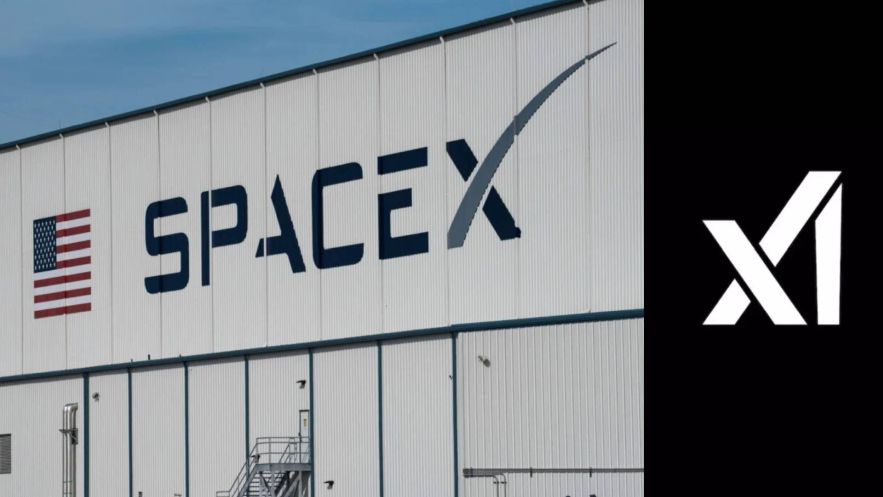
The events under examination occurred against a backdrop of significant market volatility on February 3, 2026. Yahoo Finance reported two major financial stories that together represent both a transformative corporate consolidation and a broad-based market correction. The SpaceX-xAI merger was announced via internal memo to employees on February 2, 2026, just one day before the broader market selloff became pronounced during the trading session [1][2]. This temporal proximity creates interesting questions about whether investor sentiment toward Musk-controlled entities influenced the broader tech sector decline, or whether both events emerged from common macro-economic pressures affecting risk assets.
The merger announcement came at a particularly sensitive moment for AI sector valuations, which had reached elevated levels throughout 2025. Musk’s stated vision for the combined entity focuses on creating what he described as “the most ambitious, vertically-integrated innovation engine on (and off) Earth” [1][2], encompassing orbital AI data centers, space-based internet infrastructure, and eventual Mars colonization efforts. This ambitious framing positions the merger not merely as a financial transaction but as a strategic repositioning of capital toward multi-decade technological objectives.
The technology sector experienced pronounced weakness on February 3, 2026, with the NASDAQ composite index declining 1.74% in what represented the most significant single-day underperformance among major US indices [3]. The S&P 500 fell 0.97%, while the Dow Jones Industrial Average demonstrated relative resilience with a more modest 0.24% decline. Notably, the Russell 2000 index of small-capitalization stocks posted a 1.69% gain, suggesting a potential rotation from large-cap growth names toward smaller, potentially undervalued companies [3].
The cryptocurrency market experienced parallel weakness, with Bitcoin declining to approximately $78,000-$80,000 from its October 2025 highs near $125,000, representing a drawdown of approximately 35-40% [4]. This significant correction tested critical technical support levels and coincided with elevated “fear” readings across market sentiment indicators. Multiple factors appeared to contribute to this selloff, including Federal Reserve monetary tightening expectations, ongoing geopolitical uncertainty, increasing regulatory pressure on digital assets, and substantial profit-taking following extended periods of price appreciation in both tech equities and cryptocurrencies.
The SpaceX-xAI merger introduces notable complexity regarding Tesla’s recent investment in xAI. In January 2026, Tesla had committed $2 billion to acquire a significant stake in xAI, a transaction that positioned the electric vehicle manufacturer as a key investor in Musk’s artificial intelligence venture [5]. Following the SpaceX acquisition, this xAI stake now falls under the ownership of SpaceX, creating an intercompany financial relationship that raises questions about proper accounting treatment, shareholder rights, and potential conflicts of interest.
The related-party nature of this transaction chain—whereby Tesla invested in an entity subsequently acquired by another Musk-controlled company—may attract scrutiny from both securities regulators and shareholder litigation counsel. The concentration of AI, social media (through X), aerospace, automotive, and brain-computer interface technologies under Musk’s corporate umbrella creates an increasingly complex governance structure that investors must carefully evaluate.
The SpaceX-xAI merger represents a deliberate strategy to vertically integrate artificial intelligence capabilities with space-based infrastructure. This approach addresses several strategic considerations that have emerged as AI development faces practical constraints. Orbital data centers, a key component of Musk’s stated vision, could potentially overcome terrestrial limitations related to power consumption, cooling capacity, and land availability for large-scale computing infrastructure. However, this vision remains a multi-decade proposition with substantial execution risk, technical challenges, and capital requirements that extend well beyond near-term planning horizons.
The merger also positions the combined entity favorably for SpaceX’s reported planned initial public offering in June 2026. The integration of cutting-edge AI capabilities could potentially enhance SpaceX’s valuation narrative by demonstrating technological differentiation beyond its established launch and satellite internet businesses. However, executing an IPO amid sector-wide selloff presents challenges, as investor appetite for growth-oriented technology offerings typically diminishes during periods of market fear.
The SpaceX-xAI transaction may signal broader consolidation dynamics within the AI sector. As artificial intelligence capabilities become increasingly critical across industries, companies with substantial capital resources may seek to acquire AI expertise rather than develop it internally. The transaction highlights the premium valuation that market participants assign to AI capabilities, with xAI commanding a $125 billion valuation despite limited disclosed revenue metrics [1][2]. This valuation level raises questions about the sustainability of AI sector valuations more broadly, particularly for companies without established profit-generating businesses.
The market selloff affecting both equities and cryptocurrencies simultaneously suggests broader concerns about risk asset valuations. The concentration of AI-related hype and capital flows into Musk-controlled entities creates both opportunity and risk for investors. The formation of a vertically-integrated AI conglomerate under the SpaceX umbrella potentially creates competitive advantages through synergies between AI development and space-based infrastructure, but also concentrates risk within a limited set of corporate entities.
Tesla’s $2 billion xAI investment, now effectively controlled by SpaceX, creates several implications that warrant monitoring. From a financial reporting perspective, Tesla’s investment may require reclassification depending on the accounting treatment of the SpaceX-xAI transaction. If SpaceX consolidates xAI’s financials, Tesla’s stake becomes an investment in a related party, potentially triggering disclosure requirements and valuation adjustments.
Shareholder considerations extend beyond accounting matters. Investors in Tesla who supported the xAI investment may have done so with different expectations than owning an indirect stake in a space company. The strategic rationale for Tesla’s AI investment—potentially related to autonomous driving capabilities, manufacturing optimization, or product features—may be less directly applicable through an ownership structure that places the investment under SpaceX control.
The SpaceX-xAI merger creates a vertically-integrated AI and aerospace conglomerate valued at approximately $1.125 trillion in combined enterprise value. The transaction consolidates AI capabilities under Musk’s corporate umbrella while raising questions about related-party transactions involving Tesla’s $2 billion xAI investment. The broader market selloff affecting technology equities and cryptocurrencies creates a challenging backdrop for SpaceX’s planned IPO while potentially establishing attractive entry points for long-term investors. Market fear levels have elevated, with the NASDAQ declining 1.74% and Bitcoin falling approximately 35-40% from recent highs. Investors should monitor regulatory developments, technical support levels, and SpaceX IPO documentation for insights into the merger’s accounting treatment and strategic implications.
[1] BBC News – SpaceX to take over Elon Musk’s AI firm
[2] TechCrunch – Elon Musk’s SpaceX acquires xAI
[3] Ginlix Analytical Database – Market Indices Data
[4] Sergey Tereshkin – Cryptocurrency Market February 3, 2026
Insights are generated using AI models and historical data for informational purposes only. They do not constitute investment advice or recommendations. Past performance is not indicative of future results.
About us: Ginlix AI is the AI Investment Copilot powered by real data, bridging advanced AI with professional financial databases to provide verifiable, truth-based answers. Please use the chat box below to ask any financial question.