South Korea Market Analysis: Volatility Rising Amid Record Stock Gains - Unusual VKOSPI Pattern Defies Conventional Market Mechanics

#volatility_analysis #kospi #vkospi #south_korea_equities #semiconductor_rally #retail_investor_trends #market_anomalies #asian_markets #institutional_targets #risk_assessment
Mixed
General
February 4, 2026

Unlock More Features

Login to access AI-powered analysis, deep research reports and more advanced features
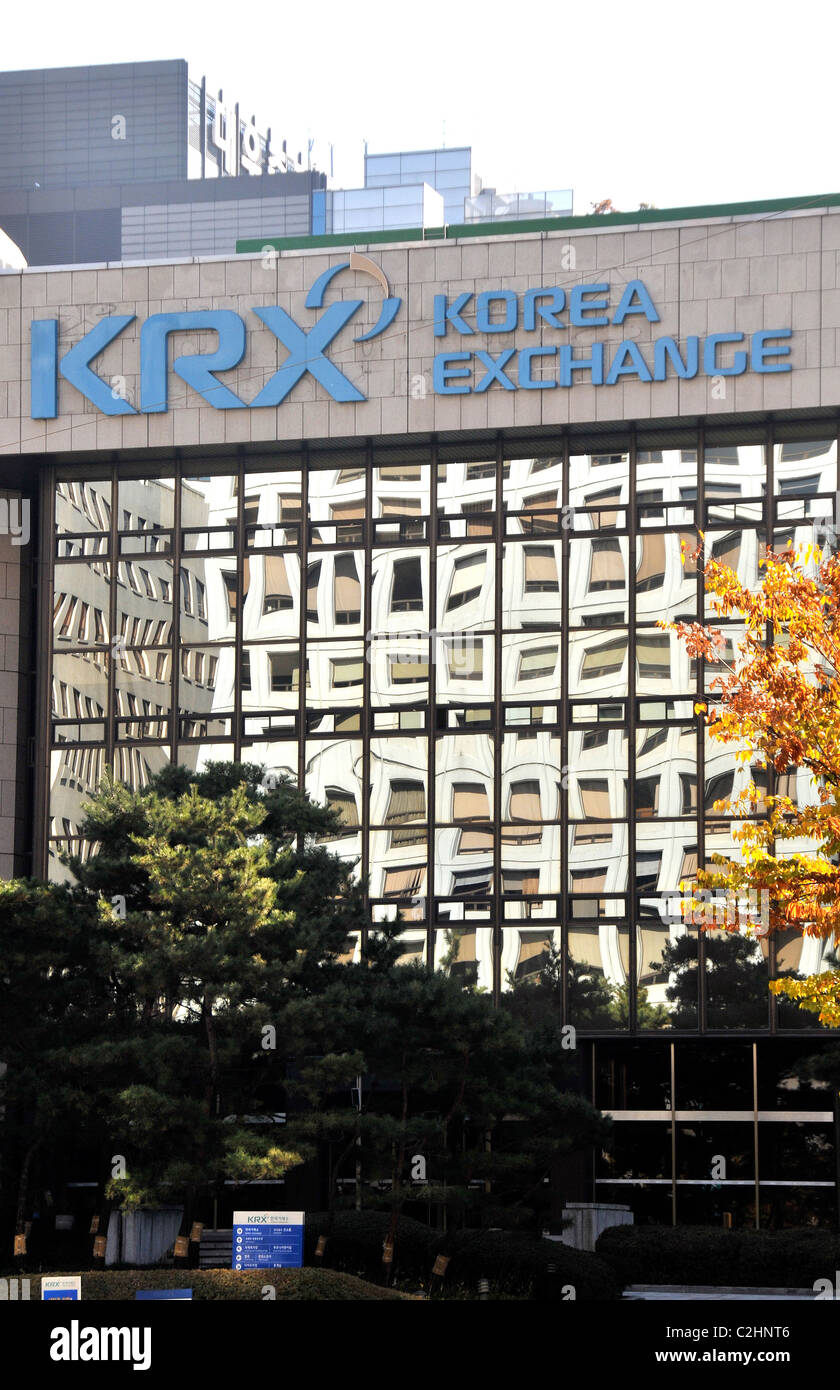
South Korea Market Analysis: Volatility Rising Amid Record Stock Gains - Unusual VKOSPI Pattern Defies Conventional Market Mechanics

About us: Ginlix AI is the AI Investment Copilot powered by real data, bridging advanced AI with professional financial databases to provide verifiable, truth-based answers. Please use the chat box below to ask any financial question.

Related Stocks

005930.KS
--
005930.KS
--
000660.KS
--
000660.KS
--
005380.KS
--
005380.KS
--
000270.KS
--
000270.KS
--
KOSPI
--
KOSPI
--
South Korea Market Analysis: Volatility Rising Amid Record Stock Gains
Integrated Analysis
Understanding the Unusual Price-Volatility Relationship

South Korea’s equity market has presented a paradox that challenges conventional market mechanics in early 2026. While the KOSPI index has surged to record highs—breaking through the psychologically significant 5,000 level for the first time in its 43-year history on January 26, 2026—the Korean equivalent of the VIX volatility index (VKOSPI) has simultaneously climbed to elevated levels [1][2]. This phenomenon defies the traditional inverse correlation between stock prices and volatility, where rising markets typically suppress uncertainty measures as investor confidence grows.

The VKOSPI’s monthly average reached 34.0 in January 2026, with daily peaks touching 40.0—the highest level since November 2025—compared to a historical baseline average of 21.7 during Q1-Q3 2025 [2][9]. This divergence suggests that options market participants are pricing in expectations of continued large market movements regardless of direction, indicating elevated uncertainty about future price stability even amid the rally.

Causal Factors Behind the Anomalous Pattern

Several interconnected factors have contributed to this unusual market configuration:

Semiconductor-Led Rally and Concentration Risk
: The KOSPI’s surge has been disproportionately driven by semiconductor giants Samsung Electronics and SK Hynix, which led the February 3 recovery with gains of 11% and 9% respectively [7][8]. This concentration creates vulnerability where single-sector movements produce outsized index effects, amplifying both directional moves and volatility measurements.

Limited Supply of Call Options
: As the KOSPI rapidly broke through the 5,000 milestone, out-of-the-money call options became increasingly scarce [2]. This supply constraint pushed option premiums higher, elevating implied volatility readings even as the underlying index continued climbing. The mechanics of options pricing mean that when underlying assets move quickly through strike prices, market makers must adjust volatility expectations accordingly.

Retail Investor Participation Surge
: Korean individual investors have flooded the market in record numbers during 2025, with trading account activity reaching unprecedented levels [3][10]. Online investment courses and financial literacy books have become bestsellers, indicating widespread retail engagement that can amplify momentum-driven price movements. These participants often utilize options strategies that contribute to elevated volatility readings.

Market Performance Timeline

The KOSPI’s recent price action illustrates the extraordinary volatility characterizing this period:

Date Close Daily Change Significance
February 4, 2026 5,371.10 +2.10% Record close, continuation of rally [0]
February 3, 2026 5,288.08 +6.84% Largest daily gain in six years, record close [7][8]
February 2, 2026 4,949.67 -5.26% Triggered circuit breaker, fell below 5,000 [6]
January 27, 2026 5,084.85 +3.08% All-time high before correction [5]
January 26, 2026 ~5,000 First breach of 5,000 level in history [3]
January 15, 2026 4,797.55 +2.27% Started 2026 bullish, surpassed 4,300 [4]

The swing from a 5.26% single-day plunge to a 6.84% rebound represents one of the most dramatic short-term reversals in the KOSPI’s history, demonstrating both the market’s vulnerability to external shocks and its remarkable resilience [6][7][8].

Key Insights
Institutional Perspective: “New Normal” Versus Overheating Warning

Major financial institutions have coalesced around the view that Korea’s elevated volatility represents a structural shift rather than a temporary aberration requiring correction [2]. Goldman Sachs raised its KOSPI target from 5,000 to 5,700, citing fundamental drivers supporting the rally [2]. Morgan Stanley adjusted its target from 4,500 to 5,200 based on structural growth thesis [2]. Most dramatically, JPMorgan executed a same-day upgrade on February 3, establishing a base target of 6,000 with a bull case reaching 7,500 [8].

This institutional optimism contrasts with historical patterns where VKOSPI readings near 40 have often preceded significant market corrections [2][9]. The divergence reflects analyst confidence in the sustainability of semiconductor-driven growth, particularly given artificial intelligence demand fundamentals, while acknowledging that the market has entered a new configuration of elevated baseline volatility.

Economic Divergence Raises Questions

A notable tension exists between the KOSPI’s record-setting performance and underlying economic indicators. Fourth-quarter 2025 GDP contracted while stocks rallied to all-time highs, suggesting a potential disconnect between market pricing and real economic conditions [3]. This divergence raises questions about whether equity valuations have extrapolated AI-related optimism beyond sustainable fundamentals, or whether market participants are anticipating economic recovery that has not yet materialized in official data.

Cross-Market Correlations and Regional Dynamics

The KOSPI’s movements have shown correlation with other regional equity indices, including Japan’s Nikkei and Hong Kong’s Hang Seng, particularly during periods of U.S. policy uncertainty [5]. The KOSDAQ small-cap index also crossed 1,000 for the first time in over four years, triggering buy-side circuit breakers during the rally [3]. These parallel movements suggest regional liquidity conditions and global risk appetite are influencing Korean market dynamics beyond domestic factors alone.

Risks and Opportunities
Risk Factors Requiring Monitoring

Federal Reserve Policy Uncertainty
: The “Warsh shock” triggered by the hawkish Federal Reserve chair nomination precipitated the February 2 plunge, demonstrating the Korean market’s sensitivity to U.S. monetary policy shifts [6][8]. Continued volatility should be anticipated if the Fed’s rate-cut trajectory changes, particularly given Korea’s dependence on global liquidity conditions.

Tariff Risk Exposure
: President Trump’s threatened 25% tariffs on Korean goods if the trade deal is not approved create sector-specific vulnerability for automotive stocks, which declined 0.81% for Hyundai and 1.1% for Kia amid tariff concerns [5]. The resolution of U.S.-Korea trade negotiations remains a material uncertainty that could trigger significant market movements.

Semiconductor Concentration Vulnerability
: Samsung Electronics and SK Hynix’s disproportionate influence on index movements creates single-sector risk where negative developments in the semiconductor industry could produce outsized market effects [3][8]. The concentration of gains in a limited number of stocks amplifies both upside potential and downside risk.

Technical Overheating Indicators
: VKOSPI readings near 40 indicate elevated hedging costs and pricing of continued market uncertainty [2][9]. While analysts view this as a “new normal,” such elevated volatility readings historically correlate with increased probability of meaningful corrections.

Opportunity Windows

Institutional Target Upside
: With targets ranging from 5,200 (Morgan Stanley) to 7,500 bull case (JPMorgan), institutional consensus suggests additional runway for the KOSPI from current levels [2][8]. The semiconductor structural growth thesis, particularly AI-related demand, provides fundamental support for continued optimism.

Market Resilience Demonstration
: The KOSPI’s 6.84% rebound following a 5.26% plunge demonstrates substantial bid support and buyer conviction at lower levels [6][7][8]. This resilience suggests that dips may be viewed as buying opportunities by a broad base of domestic and foreign investors.

Retail Participation Structural Shift
: The sustained increase in retail investor participation represents a structural change in market dynamics that could provide consistent buying support [3][10]. The democratization of market access through digital platforms may have altered the demand-supply balance in ways that support higher valuations.

Key Information Summary

The following data points synthesize the current market situation for decision-makers:

Volatility Index Readings
: VKOSPI averaged 34.0 in January 2026, with intraday peaks reaching 40—the highest since November 2025. This compares to a 52-week high of 40.05 recorded in November 2025 [2][9]. The current elevated baseline of approximately 30-34 represents a significant premium to the Q1-Q3 2025 average of 21.7.

Institutional Targets and Upgrades
: Goldman Sachs (5,700), Morgan Stanley (5,200), and JPMorgan (6,000 base / 7,500 bull) have all raised their KOSPI targets, reflecting institutional confidence in the rally’s sustainability [2][8]. The rapid succession of upgrades suggests building consensus around higher fair value estimates.

Foreign Investment Flow
: Foreign investors purchased 718.3 billion won on February 3 alone, demonstrating continued international interest in Korean equities [8]. However, the composition between short-term and long-term flow categories remains unclear.

Trading Activity
: February 4 trading volume reached 767,255K shares, with February 2’s circuit-breaker-triggering session recording 862,541K shares—the highest activity levels during this volatile period [0][6].

Information Gaps
: Real-time intraday VKOSPI data for February 4, detailed options market open interest and put/call ratios, and specific semiconductor earnings guidance from Samsung and SK Hynix represent key information gaps that would enhance decision-making precision [1][2].

The market’s trajectory will likely depend on the resolution of U.S. monetary policy uncertainty, trade negotiation outcomes, and whether semiconductor earnings validate current optimism. Decision-makers should monitor VKOSPI movements for signs of stabilization below 30, which would indicate normalized conditions, while remaining attentive to flow dynamics and external shock transmission mechanisms.

Related Reading Recommendations
No recommended articles
Ask based on this news for deep analysis...
Alpha Deep Research
Auto Accept Plan

Insights are generated using AI models and historical data for informational purposes only. They do not constitute investment advice or recommendations. Past performance is not indicative of future results.