Darden Restaurants Wind-Down of Bahama Breeze Brand: Strategic Portfolio Optimization Analysis
Unlock More Features
Login to access AI-powered analysis, deep research reports and more advanced features
About us: Ginlix AI is the AI Investment Copilot powered by real data, bridging advanced AI with professional financial databases to provide verifiable, truth-based answers. Please use the chat box below to ask any financial question.
Related Stocks
Darden Restaurants’ decision to wind down the Bahama Breeze brand represents the culmination of a strategic review process that began in mid-2025. The company closed 15 Bahama Breeze locations in May 2025 and subsequently announced in June 2025 that it was exploring strategic alternatives for the brand, ranging from sale to potential closure [3]. This deliberate 8-9 month evaluation period underscores Darden’s methodical approach to portfolio management rather than an abrupt operational failure.
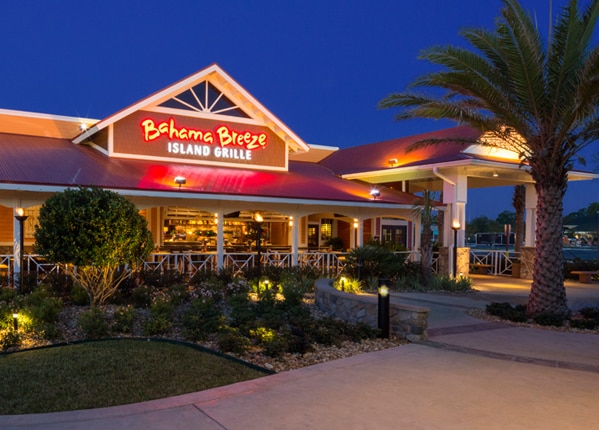
The brand, founded in 1996, has operated for nearly 30 years as a Caribbean-inspired casual dining concept targeting vacation destinations and suburban markets, particularly throughout the southeastern United States and Florida’s tourist corridor. With only 28 locations nationwide, Bahama Breeze represented a minimal 1.5% footprint within Darden’s approximately 1,900 restaurant portfolio, making it a logical candidate for divestiture or closure given the company’s scale and strategic priorities [1][2].
The announcement specifies that 14 locations will close permanently, while the remaining 14 will be converted to other Darden brands over a 12-18 month timeframe. This split approach suggests that certain Bahama Breeze real estate locations possess sufficient value to warrant conversion to higher-performing concepts within Darden’s portfolio, while underperforming sites will be exited entirely. The conversion strategy allows Darden to leverage existing lease agreements and potentially reduce capital expenditure requirements compared to building new locations from the ground up.
The market’s positive reaction to this announcement—DRI shares rising 2.28% or $4.59 on the news—provides significant insight into investor sentiment regarding the decision [0]. This counterintuitive response (typically, closures might be perceived negatively) indicates that investors view the Bahama Breeze wind-down as a rational portfolio optimization that will allow management to redirect attention and capital toward brands with stronger growth trajectories and better unit economics.
Darden has explicitly stated that it expects “no material impact” on company financials from this decision [1][2]. Given Bahama Breeze’s small relative footprint and the controlled nature of the transition (with a 3+ month operational runway before final closures), this guidance appears credible. The restaurant industry’s high fixed-cost structure means that underperforming locations can disproportionately drag on margins, making the exit of weak units potentially accretive to overall profitability even without substantial restructuring charges.
The company’s P/E ratio of 21.56x and 52-week trading range of $169.00 to $228.27 suggest that Darden maintains a premium valuation relative to casual dining peers, likely reflecting investor confidence in management’s strategic decision-making and the perceived quality of core brands like Olive Garden and LongHorn [0]. The Bahama Breeze wind-down reinforces this narrative by demonstrating management’s willingness to make difficult decisions to optimize portfolio performance.
The casual dining sector has faced structural pressure from fast-casual competition, shifting consumer preferences toward experiential dining, and evolving delivery/off-premise models. Darden’s decision to consolidate around proven, higher-performing brands reflects a defensive strategy that prioritizes market share retention in established concepts over investment in underperforming growth initiatives.
Notably absent from the announcement is specific disclosure regarding which Darden brands will occupy the 14 conversion locations [1][2]. This information gap creates uncertainty for employees, landlords, and investors who must await subsequent company communications to fully assess the strategic implications. The conversion timeline of 12-18 months suggests that Darden may be awaiting market conditions, permit approvals, or brand-specific rollout plans before announcing specific conversions.
Competitive implications may include targeted marketing from rivals seeking to capture departing Bahama Breeze customers and former employees. Casual dining competitors such as Texas Roadhouse, Buffalo Wild Wings, and other Caribbean-inspired concepts may view this transition as an opportunity to gain market share in affected geographies.
Darden’s Bahama Breeze wind-down exemplifies a mature-stage restaurant company’s approach to portfolio optimization: identifying and exiting brands that fail to meet strategic or financial thresholds while concentrating resources on core competencies. The explicit CEO-level characterization of Bahama Breeze as “not a strategic priority” removes ambiguity about the brand’s future within the corporate portfolio [2]. This transparency, while potentially uncomfortable for affected stakeholders, represents best-practice communication for major strategic decisions.
The 50/50 split between closures and conversions suggests a nuanced evaluation of individual location economics rather than a blanket brand exit. Darden’s operational flexibility—possessing multiple brand formats that can adapt to various real estate configurations—provides competitive advantage in executing this hybrid strategy. A company with fewer brand concepts might face an all-or-nothing decision with less optimal outcomes.
The market’s positive reaction demonstrates that investors increasingly value strategic clarity over the appearance of perpetual growth. Darden’s transparent communication about the decision’s limited financial impact and clear articulation of strategic priorities appears to have been well-received. This contrasts with companies that may attempt to minimize or obscure strategic setbacks, often resulting in greater negative market reaction when decisions eventually surface.
The announcement arrives approximately 18 months into Darden’s current fiscal year and follows an extended evaluation period initiated in mid-2025. This timeline suggests that the company conducted thorough analysis before reaching a decision, potentially allowing for internal planning, employee transition programs, and stakeholder communication preparation. The April 5, 2026 final closure date provides sufficient notice for affected parties while maintaining operational continuity through the typically challenging winter-to-spring transition period for restaurant performance.
This analysis is based on the Seeking Alpha report published on February 4, 2026, which documented Darden Restaurants’ announcement to wind down its Bahama Breeze brand [1]. Additional context was derived from the company’s official press release via PRNewswire [2] and reporting from Business Insider [3]. Market reaction data and stock performance metrics were sourced from the Ginlix Analytical Database [0].
Darden Restaurants operates approximately 1,900 restaurants across multiple casual dining brands, including Olive Garden, LongHorn Steakhouse, Yard House, Ruth’s Chris, Cheddar’s, Capital Grille, Chuy’s, Seasons 52, and Eddie V’s [2]. The Bahama Breeze wind-down represents a focused strategic decision rather than broader portfolio concern, as evidenced by the company’s explicit guidance that financial impact will be immaterial and the market’s positive stock price reaction.
The transition timeline extends 12-18 months for conversions, with permanent closures effective April 5, 2026. Stakeholders including employees, landlords, and investors should monitor subsequent company disclosures for updates on conversion targets, employment transition success, and any revised financial guidance in upcoming quarterly earnings reports through 2026.
Insights are generated using AI models and historical data for informational purposes only. They do not constitute investment advice or recommendations. Past performance is not indicative of future results.
About us: Ginlix AI is the AI Investment Copilot powered by real data, bridging advanced AI with professional financial databases to provide verifiable, truth-based answers. Please use the chat box below to ask any financial question.