Macro Insights: Warsh Fed Nomination, Japan Fiscal Stress, and S&P 500 Outlook - February 2026
Unlock More Features
Login to access AI-powered analysis, deep research reports and more advanced features
About us: Ginlix AI is the AI Investment Copilot powered by real data, bridging advanced AI with professional financial databases to provide verifiable, truth-based answers. Please use the chat box below to ask any financial question.
Related Stocks
The February 4, 2026 Seeking Alpha macro insights report presents a multifaceted view of the current global market environment, interweaving geopolitical developments, monetary policy transitions, and regional fiscal challenges. The analysis centers on the interconnected nature of these factors and their collective impact on equity market valuations and capital flows [1].
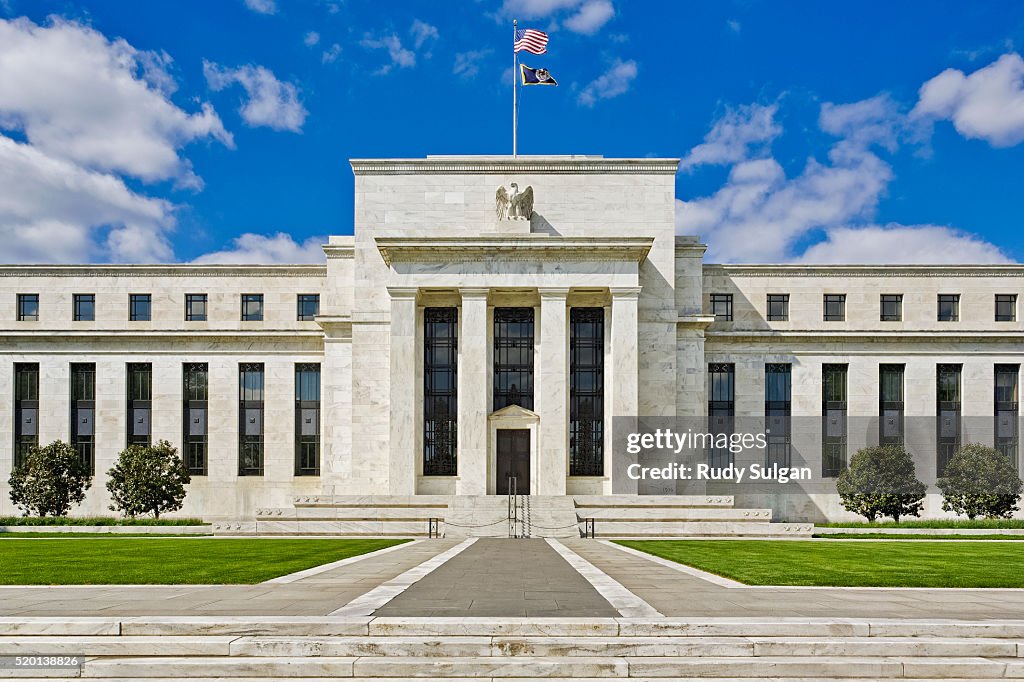
Kevin Warsh’s nomination to lead the Federal Reserve, confirmed by President Trump on January 30, 2026, represents a significant shift in the central banking landscape. Warsh, who previously served on the Fed Board from 2006 to 2011, is characterized as an inflation hawk with distinct policy preferences that diverge from the accommodative stance under Powell’s leadership [2][3]. Market analysts interpret his nomination as signaling a likely pivot toward both a smaller Federal Reserve balance sheet and interest rate cuts—a combination that historically favors equity valuations. The expectation of rate cuts particularly resonates with growth-oriented sectors, while the balance sheet reduction suggests a return to more traditional monetary policy frameworks that emphasize market-based mechanisms over extensive quantitative easing interventions.
Japan’s approaching snap elections on February 8, 2026, have intensified focus on the nation’s fiscal sustainability under Prime Minister Sanae Takaichi’s expansionary policy platform. Takaichi’s tax cut pledges, while politically popular, have raised substantial concerns among economists regarding the government’s ability to fund such measures without corresponding revenue increases [4][5]. The resulting pressure on Japanese government bonds has manifested in sharply rising yields, with the 30-year JGB auction serving as a critical test of market confidence. analysts warn that disorderly yield spikes could tighten financial conditions globally, creating potential spillover effects for international investors with significant Japan exposure [5][6]. The Bank of Japan’s apparent reluctance to intervene in the bond market adds another dimension of uncertainty, as market participants reassess the trajectory of Japanese monetary policy.
The precious metals market has experienced an extraordinary rally, with gold prices reaching approximately $5,520 per ounce by late January 2026. Despite this impressive performance, analysts maintain a cautionary stance, noting that gold has already exceeded many consensus year-end targets, creating inherent downside risk potential [7][8]. J.P. Morgan’s revised price target of $6,300 by year-end 2026 suggests continued bullish sentiment among major financial institutions, driven primarily by sustained central bank demand and persistent geopolitical uncertainty. However, the historical volatility associated with gold price movements following extended rallies warrants careful monitoring of technical indicators for potential reversal signals.
The interaction between the Warsh Fed nomination, Japanese fiscal stress, and gold price movements reveals complex capital flow dynamics that extend across traditional asset classes and geographic boundaries. The expectation of a more hawkish yet rate-cut-friendly Fed stance creates an environment where risk assets, particularly US equities, may attract capital flows from alternative safe havens including gold and Japanese government bonds. This redistribution effect could amplify volatility in both directions as market participants adjust positioning based on evolving policy expectations.
The article’s mention of geopolitical tensions over Greenland introduces an additional layer of market complexity that disproportionately affects defense and energy sectors. While this specific development was not independently verified through the research process, the broader theme of geopolitical risk premium embedded in equity valuations merits ongoing attention. Historical patterns suggest that sustained geopolitical uncertainty can generate sector-specific volatility that may be exploitable through tactical allocation adjustments.
Although the complete list of 15 S&P 500 stocks identified as “still worth buying” was not disclosed due to paywall restrictions, the mere identification of selective opportunities amid broader market volatility suggests a stock-picker’s market environment. This characterization aligns with the current technical picture where the S&P 500 trades near the 6,890 level within a volatile range bounded by 6,790 and 7,002, indicating sufficient dispersion for active management to add value relative to passive benchmark approaches.
The analysis reveals several risk factors that warrant sustained monitoring by market participants. Japan’s fiscal trajectory represents a particularly significant concern, as economists warn that tax cut pledges without revenue offsets could trigger disorderly yield spikes that extend beyond Japanese borders [4][5]. The potential for such an event to tighten global financial conditions unexpectedly underscores the importance of maintaining awareness of developments in Tokyo.
The Warsh Fed nomination process itself carries inherent uncertainty, as the confirmation timeline and specific policy implementation details remain subject to Senate deliberation and potential political negotiation [2][3]. Market pricing for Fed expectations has already begun to shift in anticipation of Warsh’s formal assumption of leadership, but the pace and magnitude of actual policy changes will likely differ from market expectations in unpredictable ways.
Gold’s overextension, despite institutional price targets suggesting further upside, represents a technical risk that could manifest rapidly if profit-taking accelerates. The historical tendency for gold to experience sharp corrections following extended rallies suggests that positions accumulated during the current uptrend may be vulnerable to heightened volatility.
The expectation of rate cuts under a Warsh Fed creates a favorable backdrop for equity selection, particularly in sectors historically sensitive to financing costs. Technology and growth-oriented segments of the market may benefit disproportionately from improved funding conditions, while small-cap stocks (as reflected in Russell 2000 index dynamics) could experience meaningful multiple expansion.
The current market volatility environment, with the S&P 500 oscillating near the 6,890 level and the NASDAQ showing greater sensitivity with movements around 22,950, provides tactical opportunities for investors capable of maintaining disciplined rebalancing approaches. The selective identification of 15 S&P 500 stocks deemed attractive suggests that fundamental research continues to identify mispricing even within broadly efficient market conditions.
The February 4, 2026 macro insights report synthesizes several concurrent developments affecting global capital markets. President Trump’s nomination of Kevin Warsh to lead the Federal Reserve, announced January 30, 2026, signals an expected shift toward smaller balance sheets and rate cuts that would generally favor equities. Japan’s snap elections on February 8, 2026, highlight significant fiscal sustainability concerns under Prime Minister Takaichi’s expansionary tax cut proposals, with potential implications for global bond markets. Gold’s rally to approximately $5,520 per ounce, while supported by J.P. Morgan’s $6,300 year-end target, has prompted analyst warnings about potential downside given the extent of price appreciation. The S&P 500’s current trading range near 6,890 reflects ongoing volatility amid these policy transitions, while the identification of 15 specific stock opportunities suggests selective value remains available despite broader market uncertainty.
Market participants should monitor the Japanese bond auction results, Warsh Senate confirmation timeline, and gold technical indicators for actionable signals amid this dynamic environment.
Insights are generated using AI models and historical data for informational purposes only. They do not constitute investment advice or recommendations. Past performance is not indicative of future results.
About us: Ginlix AI is the AI Investment Copilot powered by real data, bridging advanced AI with professional financial databases to provide verifiable, truth-based answers. Please use the chat box below to ask any financial question.