Treasury Secretary Bessent Testifies: "Tariffs Do Not Cause Inflation"
Unlock More Features
Login to access AI-powered analysis, deep research reports and more advanced features
About us: Ginlix AI is the AI Investment Copilot powered by real data, bridging advanced AI with professional financial databases to provide verifiable, truth-based answers. Please use the chat box below to ask any financial question.
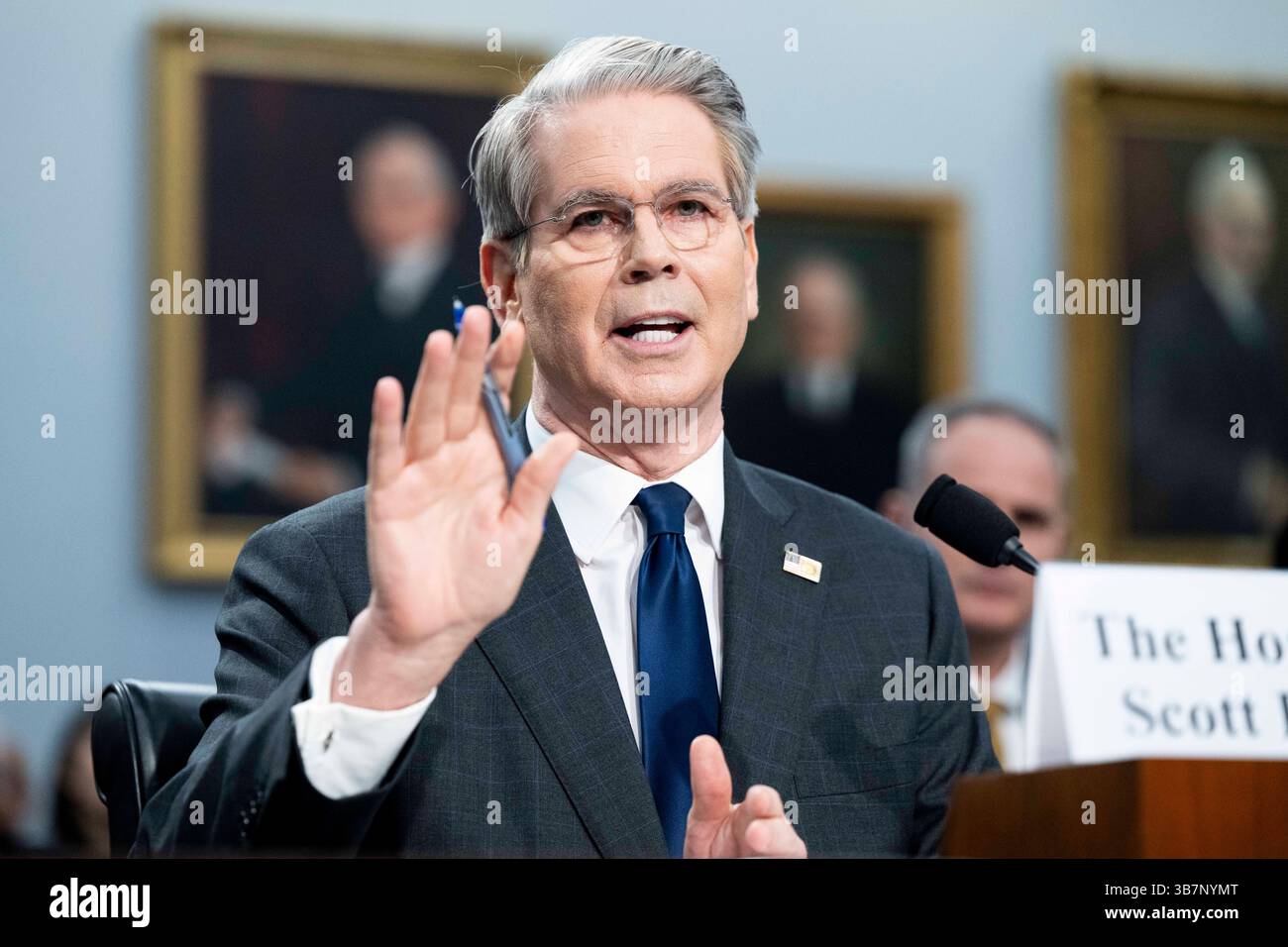
Treasury Secretary Scott Bessent’s testimony before the House Financial Services Committee on February 4, 2026, represents a significant moment in the ongoing debate over Trump administration trade policy [1][2]. By explicitly stating that “tariffs do not cause inflation,” Bessent has positioned the Treasury Department in apparent contrast to mainstream economic analysis and Federal Reserve assessments regarding the inflationary impact of trade barriers [4]. This assertion carries substantial implications for policy credibility, market expectations, and Congressional oversight dynamics.
The timing of this testimony is particularly noteworthy given current economic conditions. With core inflation remaining around 3% according to recent economic data [4], and markets exhibiting elevated volatility indicators, Bessent’s statement enters an environment where investors, policymakers, and economists are closely scrutinizing any evidence of tariff-driven price pressures. The House Financial Services Committee hearing provided a formal oversight forum where these tensions between Treasury policy positions and empirical economic data could be examined directly.
Current market indicators reveal significant investor concern regarding trade policy uncertainty [0]. The S&P 500’s 0.68% decline and the NASDAQ’s 1.45% weakness reflect market sensitivity to policy developments, while the Russell 2000’s 1.62% decline suggests particular pressure on domestic-focused and smaller companies potentially more exposed to tariff impacts [0]. The VIX’s elevation of 7.94% indicates that investors are pricing in heightened short-term volatility, consistent with the “uncertainty over tariff policies” that The Hill has identified as a challenge for the administration [2].
The relative strength of the Dow Jones (+0.34%) versus other major indices may reflect sector rotation dynamics, with some investors positioning for potential policy outcomes while others reduce exposure to tariff-sensitive areas. This divergence in market performance underscores the complex and differentiated impact that tariff policies can have across various segments of the economy, from multinational corporations to domestically-focused small businesses.
The Treasury’s position that tariffs do not generate inflationary pressure appears to rest on several administrative arguments. According to POLITICO coverage, Bessent has “continues to argue that tariffs are not leading to” inflation in previous interviews [3], suggesting a consistent policy message that the administration is attempting to communicate despite countervailing economic evidence and analysis.
This policy stance intersects with the proposed “$2,000 tariff dividend” concept referenced in recent coverage [5], which frames tariff revenue as potentially beneficial to American consumers rather than costly. The dividend proposal adds complexity to the policy messaging, as it simultaneously acknowledges tariff revenue generation while downplaying concerns about pass-through effects on consumer prices. The theoretical framework suggests that tariff revenue collected could be redistributed to American households, offsetting any price increases from imported goods.
The testimony creates several notable stakeholder dynamics:
The disconnect between Treasury testimony and mainstream economic analysis reveals a fundamental tension in how tariff impacts are conceptualized. Traditional economic theory suggests that import barriers raise domestic prices through several mechanisms: reduced foreign competition allows domestic producers to raise prices, tariff costs may be passed through to consumers, and supply chain disruptions can create inflationary pressures. The Treasury’s categorical rejection of these relationships represents a significant departure from established economic consensus, raising questions about the analytical foundations of administration policy.
This divergence may reflect political communication strategy as much as substantive economic disagreement. The administration may be seeking to frame tariff policies in terms that emphasize their benefits—revenue generation, trade leverage, and domestic production incentives—while minimizing attention to potential costs. Whether this represents genuine disagreement with economic analysis or strategic communication remains an open question that subsequent data releases and policy outcomes will help clarify.
With core inflation persisting around 3% [4], the coming months will serve as an empirical test of competing claims about tariff impacts. The correlation between tariff implementation timelines and inflation readings will receive intense scrutiny from economists, investors, and policymakers. If inflation remains elevated or accelerates, the Treasury position may face increased skepticism. Conversely, if inflation moderates despite ongoing tariff implementation, the administration may point to this as evidence supporting its framework.
The Congressional testimony format provides a mechanism for ongoing accountability. Lawmakers can request follow-up testimony, formal economic analysis, and documentation supporting Treasury claims. The $2,000 tariff dividend proposal [5] adds additional accountability dimensions, as implementation challenges or shortfalls in distribution could reinforce concerns about the administration’s economic messaging.
The differentiated market performance across indices reveals that investors are processing tariff policy information in nuanced ways [0]. The NASDAQ’s relative weakness may reflect concerns about technology sector exposure to global supply chains and international markets. The Russell 2000’s decline could indicate investor concern about smaller companies’ ability to absorb input cost increases or absorb tariff-related disruptions.
This segmentation suggests that broad generalizations about “tariffs” may obscure important variation in economic impact across sectors and company sizes. Manufacturing, retail, and technology companies with significant international supply chains face different exposure profiles than domestically-focused service businesses. Investors processing these developments are likely considering company-specific tariff exposure alongside broader portfolio positioning.
This analysis summarizes information from Treasury Secretary Scott Bessent’s February 4, 2026 Congressional testimony and related coverage. Key findings include:
- Testimony Content: Bessent explicitly stated that “tariffs do not cause inflation” before the House Financial Services Committee [1][2]
- Market Environment: Elevated volatility (VIX +7.94%) and mixed equity performance reflect investor focus on trade policy uncertainty [0]
- Inflation Context: Core inflation remains around 3%, creating tension with Treasury claims about tariff impacts [4]
- Policy Framework: The administration has consistently argued that tariffs do not generate inflationary pressure [3]
- Additional Policy Element: The proposed $2,000 tariff dividend represents related policy thinking about revenue utilization [5]
- Institutional Dynamics: Federal Reserve assessments may differ from Treasury positions, creating potential coordination considerations
The information presented here is based on Congressional testimony coverage, market data, and economic reports as cited. Subsequent policy developments, economic data releases, and Federal Reserve communications will provide additional context for assessing the implications of Treasury testimony.
Insights are generated using AI models and historical data for informational purposes only. They do not constitute investment advice or recommendations. Past performance is not indicative of future results.
About us: Ginlix AI is the AI Investment Copilot powered by real data, bridging advanced AI with professional financial databases to provide verifiable, truth-based answers. Please use the chat box below to ask any financial question.