Sen. Tillis Maintains Blockade of Kevin Warsh's Fed Nomination Until DOJ Resolves Powell Investigation
Unlock More Features
Login to access AI-powered analysis, deep research reports and more advanced features
About us: Ginlix AI is the AI Investment Copilot powered by real data, bridging advanced AI with professional financial databases to provide verifiable, truth-based answers. Please use the chat box below to ask any financial question.
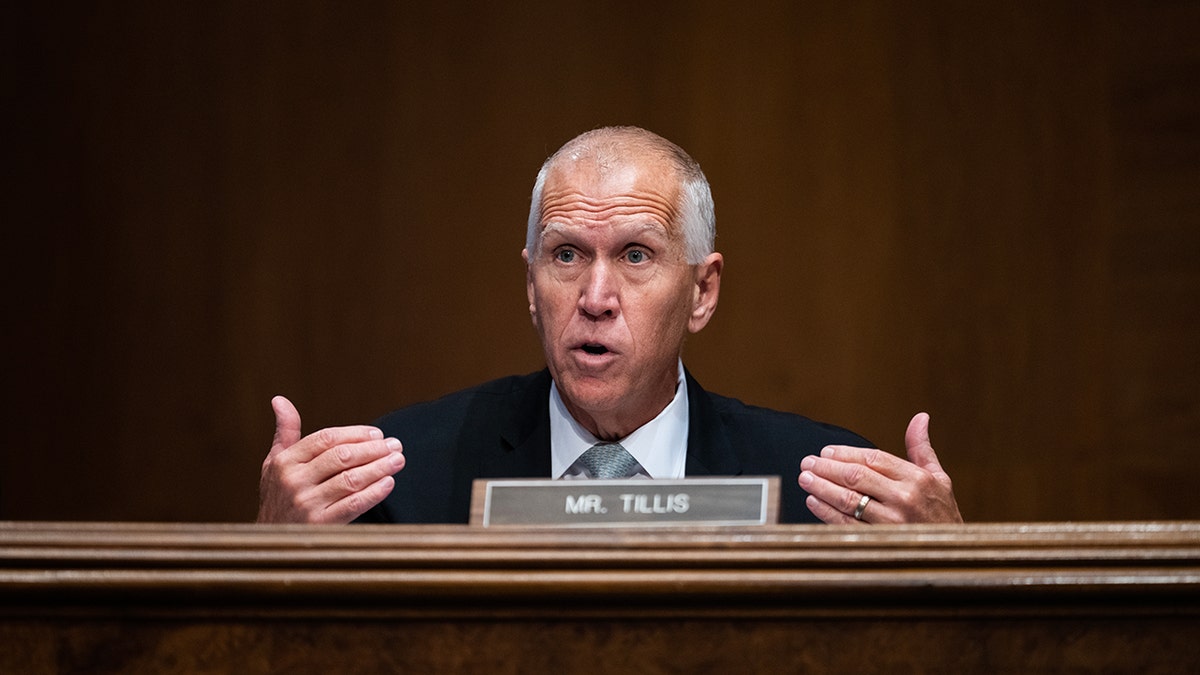
The blockade of Kevin Warsh’s Federal Reserve nomination represents a significant political impasse with substantial implications for U.S. monetary policy governance. Senator Tillis’s position, as reported by multiple credible sources [1][2][4], centers on concerns about Federal Reserve independence and the ongoing Department of Justice investigation into Chair Jerome Powell. The investigation, which focuses on cost overruns associated with the Federal Reserve headquarters renovation, has created a complex political dynamic where the resolution of a potential ethics matter has become inextricably linked to the succession planning for America’s central bank.
Tillis’s leverage stems from his unique position as the only Republican member of the Senate Banking Committee, which grants him effective filibuster power within the committee structure. This procedural reality means that without bipartisan cooperation or a change in Tillis’s position, Warsh’s nomination cannot advance to the full Senate floor. The Senator has made clear that his conditions for lifting the blockade are not merely procedural—he insists on substantive resolution of the DOJ investigation before considering Warsh’s qualifications, effectively making the investigation’s outcome a prerequisite for confirmation proceedings [1][3].
The timing of this standoff carries particular significance. Chair Powell’s term expires in May 2026, creating a hard deadline by which either Powell must be renominated and confirmed, Warsh must be confirmed, or the Federal Reserve will face a leadership vacuum. Historical precedent suggests that even extended periods without confirmed leadership create operational challenges for the Fed, potentially affecting its capacity to respond to economic developments and implement monetary policy decisions with full institutional authority. Market participants and economic analysts have consistently emphasized the importance of clear, confirmed leadership at the central bank, particularly during periods of economic uncertainty [1][2].
The political dimensions of this situation extend beyond the immediate confirmation battle. Tillis’s demands represent a broader Republican stance on issues of government ethics and accountability, while also raising questions about the appropriate relationship between law enforcement investigations and personnel decisions at independent regulatory agencies. The Federal Reserve’s institutional independence has long been considered essential to its effectiveness in managing monetary policy free from political interference. Critics argue that conditioning a confirmation vote on the outcome of an ongoing criminal investigation could set a problematic precedent for future appointments to independent agencies [1][4].
The Tillis-Warsh-Powell triangle reveals several interconnected dynamics that extend beyond this specific nomination fight. First, the Federal Reserve’s governance structure, designed to insulate monetary policy from political pressure, creates unique vulnerabilities when confirmation processes become entangled with unrelated investigations. The headquarters renovation investigation, while potentially significant in isolation, has outsized implications for monetary policy continuity due to its timing relative to the leadership transition.
Second, the episode highlights the increasingly partisan nature of confirmations for key economic positions. While Kevin Warsh has received positive assessments from analysts across the political spectrum regarding his qualifications and expertise—the Washington Times notes that Republicans broadly support his nomination [4]—his confirmation has become a proxy battle for broader political disputes. This dynamic suggests that even well-qualified nominees may face significant obstacles when political conditions are unfavorable, regardless of their individual credentials.
Third, Tillis’s stated willingness to maintain his blockade for the remainder of Congress—even if the DOJ were to drop the investigation in exchange for Powell’s departure after his term—indicates that this dispute may not be amenable to traditional compromise solutions [1]. This hardline position narrows the administration’s options, potentially forcing consideration of alternative nominees or extended leadership uncertainty. The Senator’s statement, as documented by his official office, suggests deeply held convictions about the importance of resolving the investigation before moving forward with leadership transitions [3].
Fourth, the situation exposes the tension between accountability and institutional continuity in governance. The investigation into Powell raises legitimate questions about oversight and ethical standards at independent agencies. However, the timing of this investigation—coming at the precise moment when succession planning should occur—creates institutional friction that could affect the Fed’s effectiveness regardless of the investigation’s ultimate outcome.
The analysis identifies several risk factors warranting attention from market participants and policy stakeholders.
This analysis synthesizes information from multiple credible sources regarding Senator Tillis’s blockade of Kevin Warsh’s Federal Reserve nomination [1][2][3][4]. The central finding is that Fed leadership succession faces significant uncertainty due to the intersection of a DOJ investigation into Chair Powell and the confirmation process for his potential successor.
Key facts include: Senator Tillis controls the Senate Banking Committee’s confirmation pathway as its sole Republican member; he has committed to maintaining his blockade for approximately 333 days if necessary; Powell’s term expires in May 2026; and the DOJ investigation concerns Fed headquarters renovation cost overruns [1][3]. These factors combine to create elevated uncertainty regarding Fed leadership during the approaching transition period.
Market participants should monitor several developing indicators: DOJ investigation progress and any charging decisions; potential Senate Banking Committee procedural options; Trump administration responses and potential alternative nominees; and market reaction to ongoing Fed leadership uncertainty [1][2][4]. The situation’s implications for broader central bank independence norms also warrant ongoing attention from policy analysts and institutional investors.
The source credibility assessment rates the Tillis Senate Statement as Tier 1 (highest reliability), while CNBC, Politico, and Washington Times are classified as Tier 2 (high reliability) based on their established track records for political and economic reporting [1][2][3][4]. The original event source (YouTube) is Tier 4 and has been supplemented by higher-tier verification sources.
Insights are generated using AI models and historical data for informational purposes only. They do not constitute investment advice or recommendations. Past performance is not indicative of future results.
About us: Ginlix AI is the AI Investment Copilot powered by real data, bridging advanced AI with professional financial databases to provide verifiable, truth-based answers. Please use the chat box below to ask any financial question.