China's Record $1.2 Trillion Trade Surplus: Currency Implications and Global Market Impact Analysis
Unlock More Features
Login to access AI-powered analysis, deep research reports and more advanced features
About us: Ginlix AI is the AI Investment Copilot powered by real data, bridging advanced AI with professional financial databases to provide verifiable, truth-based answers. Please use the chat box below to ask any financial question.
China’s achievement of a historic $1.2 trillion trade surplus in 2025 marks a watershed moment in global trade dynamics, occurring despite substantial tariffs imposed by the United States and representing a 20% increase from the $992 billion surplus recorded in 2024 [1][2]. The surplus emerged from exports totaling $3.64 trillion against imports of $2.58 trillion, with export growth of 5.5% year-over-year in dollar-denominated terms [2][3]. This remarkable performance occurred against a backdrop of escalating trade tensions, positioning 2025 as a pivotal year in the reconfiguration of global supply chains and trade relationships.
The timing of this analysis is particularly significant given the current market environment on February 4, 2026, when sector rotations反映出 investors are already digesting the implications of these structural shifts [7]. The yuan’s breakthrough through the psychologically important 7.00 per dollar level at year-end 2025, combined with the People’s Bank of China setting the onshore yuan fixing at its strongest point in nearly 16 months, signals a potential policy evolution toward a “strong currency” stance that could have far-reaching implications for global competitiveness and portfolio positioning [5][6].
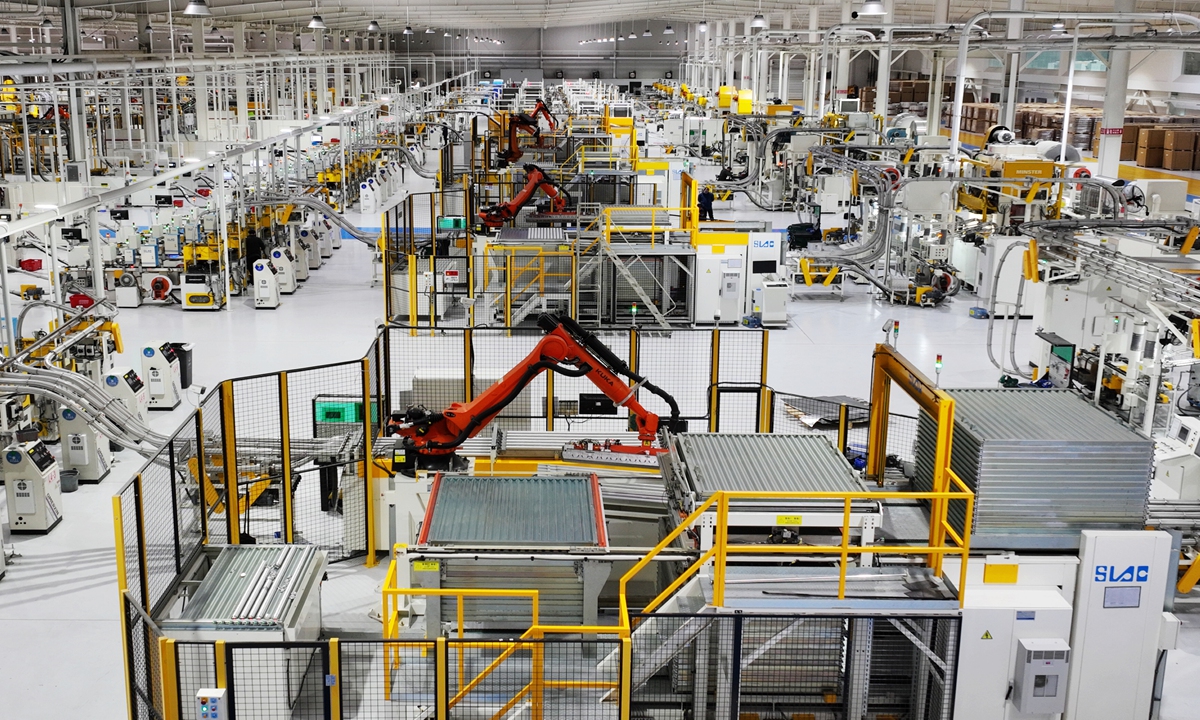
The persistence and magnitude of China’s trade surplus indicate structural rather than cyclical factors at play, fundamentally transforming the competitive landscape across multiple industries. China’s export portfolio has progressively shifted toward sophisticated manufactured goods, with machine tools and industrial robots experiencing 13% year-over-year growth, while electric vehicles, lithium batteries, and photovoltaic products saw 27% growth [1]. This high-value manufacturing expansion represents a deliberate strategic pivot away from low-margin commodity exports toward technology-intensive goods that command premium pricing in global markets.
Faced with U.S. tariff pressures, China has executed a strategic geographic diversification of export destinations that fundamentally reshapes its trade relationships. Exports to Africa grew by 26.5%, while ASEAN markets absorbed 14% growth in Chinese exports, the European Union received 9% growth, and Latin America saw 8% growth—all offsetting the 19.5% decline in exports to the United States [1]. This diversification demonstrates remarkable resilience and adaptability in China’s trade infrastructure, reducing dependence on any single market while establishing new commercial relationships across developing economies.
The automotive sector exemplifies this transformation, with auto exports surging 21% in 2025 to exceed 7 million units, driven predominantly by electric vehicles and plug-in hybrids [3]. This breakthrough position reflects not only cost competitiveness but also technological leadership in electrification, positioning Chinese manufacturers as increasingly formidable global competitors. The combination of high-value manufacturing expansion and geographic diversification creates a structural advantage that appears durable even in the face of tariff pressures.
Goldman Sachs analysis provides a compelling framework for understanding yuan valuation dynamics, indicating the currency remains approximately 25% undervalued relative to fair value, with the GSDEER model estimating fair value near 5.00 USD/CNY [4]. This significant gap between current market levels and fundamental value estimates suggests substantial appreciation potential, particularly as Beijing appears to be shifting toward a “strong currency” policy stance. The IMF’s estimate that China’s current account surplus reached 3.3% of GDP in 2025 provides structural support for the currency’s undervaluation thesis [4].
The policy shift toward appreciating the yuan aligns multiple strategic objectives for Beijing, including the internationalization of the yuan as a global reserve currency, curbing export overcapacity through exchange rate adjustment, enhancing purchasing power for domestic consumers, and reducing import costs for commodities and technology [5]. Analysts predict the currency could strengthen to as high as 6.8 against the US dollar in 2026, representing significant appreciation from current levels [5]. This trajectory, combined with Hong Kong’s expansion of yuan liquidity facilities to 200 billion yuan, reflects accelerating efforts to establish the yuan as a global funding currency [9].
The currency dynamics create complex implications for multinational corporations and investors. For companies with significant China exposure, yuan appreciation could erode pricing power as Chinese competitors gain currency advantages, while for investors, the yuan’s structural undervaluation suggests potential for appreciation supporting long positions in yuan-denominated assets [4]. The Goldman Sachs classification of yuan as a “high-conviction currency trade” for 2026 signals institutional confidence in the appreciation potential, though the path is likely to be managed to prevent destabilizing capital flows [4].
The trade surplus dynamics and associated currency movements create differentiated impacts across sectors, revealing a clear pattern of winners and losers in the current environment. On February 4, 2026, sector performance data demonstrated significant divergence, with basic materials rising +1.74% on demand for industrial inputs, financial services gaining +1.04% from increased trade financing needs, and real estate advancing +0.56% potentially reflecting improved sentiment from yuan strength [7]. In contrast, technology declined -1.75% facing margin pressure from potential currency appreciation and ongoing trade restrictions, consumer cyclical fell -1.12% reflecting concerns about Chinese export competition, and utilities dropped -4.34% as the worst-performing sector [7].
The technology sector faces particular pressure from multiple vectors, including potential currency appreciation that could compress margins for companies importing Chinese goods or competing with Chinese exports, ongoing trade restrictions that limit market access, and competitive pressure from Chinese manufacturers gaining currency advantages [7]. For S&P 500 companies, the implications extend to complex, non-linear impacts including pricing power erosion, margin pressure, and sustained geopolitical risk premiums affecting equity valuations [8]. The Seeking Alpha analysis highlights that U.S. companies with significant China exposure may need to reassess their competitive positioning in an environment of continued yuan strength.
The basic materials sector benefits from continued strong Chinese imports of commodities including iron ore, copper, and crude oil, supporting global mining and energy sectors despite China’s domestic economic weakness [1][2]. This demand profile appears durable given China’s position as the world’s largest importer of many industrial commodities, creating a structural support mechanism for commodity prices even as domestic growth moderates. The financial services sector benefits from expanded trade volumes requiring increased trade financing, currency hedging, and associated banking services, creating a virtuous cycle of activity supporting sector performance.
The trade data demonstrates China’s expanding competitive position in high-technology sectors, with electric vehicles, lithium batteries, and solar panels each recording 27% year-over-year growth, while industrial robots and machine tools achieved 13% growth [1]. This performance reflects not only scale economies and supply chain integration but also substantial policy support through subsidies, tax incentives, and strategic infrastructure investments that have systematically developed manufacturing capabilities. The competitive implications extend across multiple industries where Chinese manufacturers are increasingly positioned as technology leaders rather than cost followers.
China’s successful geographic diversification suggests a more multi-polar global trade architecture is emerging, reducing dependence on U.S.-China bilateral trade while establishing new commercial relationships [1]. The expansion into ASEAN, Africa, Latin America, and the European Union creates new market access that compensates for U.S. market limitations, while also reducing vulnerability to any single trading partner’s policy changes. This structural shift has significant implications for global supply chains, as manufacturing networks increasingly integrate Southeast Asian and East Asian economies receiving orders for components assembled in China.
The digital yuan integration with Singapore and ASEAN trade routes represents an additional dimension of China’s trade strategy, potentially facilitating cross-border settlement infrastructure that reduces dollar dependence [5]. This infrastructure development, combined with expanded yuan liquidity facilities in Hong Kong, represents systematic efforts to internationalize the currency while creating alternative payment mechanisms that could reduce vulnerability to Western financial sanctions or trade restrictions [9]. The strategic implications of these developments extend beyond immediate trade considerations to fundamental questions about the future architecture of international monetary system.
The analysis reveals several risk factors warranting attention from market participants navigating this evolving environment. The unprecedented surplus level raises questions about the durability of export-led growth models, particularly as rising “industrial overcapacity” concerns may trigger protectionist responses from trading partners [1][2]. European concern is particularly notable, with EU leaders including President Macron characterizing the trade imbalance as “unsustainable,” suggesting potential for European trade actions that could complement or exceed U.S. tariff measures [1]. These political risks create planning complexity for multinational corporations with significant China exposure.
Currency risk represents a significant consideration, with potential for sharp appreciation creating margin volatility for companies with unhedged currency exposure or significant China-related revenues. The gap between headline yuan levels and real effective exchange rate measures suggests underlying competitiveness advantages may persist despite nominal appreciation, complicating policy responses from trading partners [4]. Investors should consider enhanced hedging strategies and flexible manufacturing footprints to manage this volatility.
Opportunity windows exist for investors positioned to benefit from the structural trends identified in this analysis. The yuan’s structural undervaluation suggests potential for appreciation supporting long positions in yuan-denominated assets, while sector allocation considerations favor maintaining exposure to beneficiaries of commodity demand and trade finance while potentially underweighting sectors most exposed to Chinese import competition [4][8]. The Seeking Alpha analysis suggests investors may consider gold and tactical stock holdings beyond the S&P 500 if trade conflicts evolve into currency conflicts, highlighting the need for portfolio resilience in an increasingly uncertain environment [8].
China’s record $1.2 trillion trade surplus reflects structural advantages in high-value manufacturing and strategic export pivots that appear durable despite tariff pressures. The currency implications are significant, with the yuan potentially strengthening to 6.8-7.0 against the dollar in 2026 as Beijing pursues a “strong currency” policy stance [5]. Goldman Sachs’ identification of the yuan as 25% undervalued provides institutional validation of appreciation potential, though the path is likely to be managed to prevent destabilizing capital flows [4].
Sector differentiation is pronounced, with basic materials and financial services benefiting from trade volume expansion and commodity demand, while technology faces competitive pressure and margin constraints [7]. The geographic diversification of Chinese exports away from the United States toward ASEAN, Africa, EU, and Latin America represents a structural shift that reduces vulnerability to bilateral trade tensions while creating new competitive dynamics in those markets [1]. For industry participants, the key takeaway is that China’s trade surplus reflects durable competitive advantages likely to persist, requiring strategic adaptation rather than hoping for reversal.
The implications for stakeholders extend across multiple dimensions, from corporate strategy and portfolio positioning to trade policy and international monetary architecture. Market participants should prepare for an environment of continued currency tension, sectoral differentiation, and evolving global trade architecture, with careful attention to risk management and opportunity identification across the investment landscape.
Insights are generated using AI models and historical data for informational purposes only. They do not constitute investment advice or recommendations. Past performance is not indicative of future results.
About us: Ginlix AI is the AI Investment Copilot powered by real data, bridging advanced AI with professional financial databases to provide verifiable, truth-based answers. Please use the chat box below to ask any financial question.