Investor Days to Watch: Sector Rotation and Economic Signals from Utilities, Energy, Industrials, and Banks
Unlock More Features
Login to access AI-powered analysis, deep research reports and more advanced features
About us: Ginlix AI is the AI Investment Copilot powered by real data, bridging advanced AI with professional financial databases to provide verifiable, truth-based answers. Please use the chat box below to ask any financial question.
Related Stocks
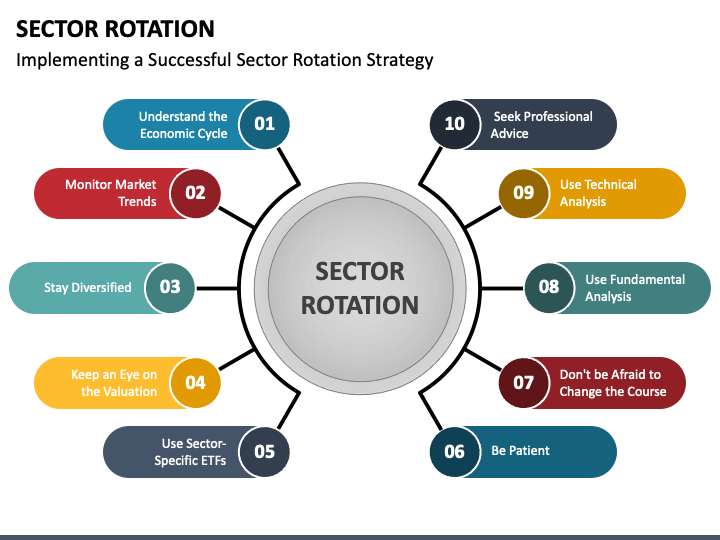
The current bull market environment presents a notable shift from technology-dominated gains to broader participation across sectors. Recent sector performance data reveals that Financial Services leads with a gain of +1.51%, while Basic Materials (+0.63%), Healthcare (+0.46%), and Energy (+0.20%) all show positive momentum [0]. This breadth indicates a healthy market rotation where capital is flowing beyond the tech sector into value-oriented and economically sensitive industries.
The Utilities sector, currently experiencing a -3.78% decline—the worst performance among all sectors [0]—is generating particular investor interest as potential leadership rotation candidates. The Seeking Alpha article suggests utilities could “regain leadership as capital shifts from tech,” making upcoming investor days critical for assessing this thesis [1]. The intersection of AI infrastructure development and utilities sector capital investment creates new competitive dynamics, with companies like NextEra Energy (NEE) and Constellation Energy gaining earnings visibility as data center power demand accelerates [9].
The improved manufacturing sentiment backdrop is particularly significant for interpreting upcoming corporate commentary. According to S&P Global data, the U.S. Manufacturing PMI increased from 51.8 in December 2025 to 52.4 in January 2026, indicating stronger expansion [2]. This improvement in manufacturing conditions provides a foundation for more optimistic guidance from industrial and energy companies during their investor events. Global manufacturing business conditions have also improved at a modest but increased pace at the start of 2026, with encouraging rises in new orders and employment indicators [3]. This macro backdrop suggests that corporate leadership commentary may reflect improved confidence in domestic demand conditions.
Three structural trends are likely to shape industry trajectories over the coming years. First, the
The FedEx freight spin-off exemplifies broader competitive dynamics reshaping the industrials sector. The separation of capital-intensive LTL operations from parcel and express businesses reflects strategic choices about portfolio composition and investor appeal [8]. This move creates new peer group considerations for both the parent company and the spun-off entity. The freight and surface operations segment has become a focal point for competitive repositioning, with all major participants—including FedEx, UPS, and XPO—adjusting networks, costs, and customer focus in response to evolving market conditions [8]. The promotion of Scott Ray to oversee U.S. and Canada Surface Operations signals execution focus on initiatives like Network 2.0, which aims to improve margins while navigating freight cycle dynamics [8].
The substantial capital expenditure programs announced by Williams Companies and Xcel Energy are generating upstream demand for equipment, materials, and construction services. The $5 billion in Power Innovation projects at Williams [5] and utilities’ AI infrastructure investments [1] create pipeline opportunities for engineering, procurement, and construction firms. According to recent analysis, approximately $1.5 trillion in infrastructure spending is trapped in federal permitting processes, with potential legislative catalysts in 2026 [10]. This creates interconnections between the utilities, industrials, and financial services sectors as infrastructure development advances. The manufacturing PMI improvement suggests upstream industrial activity is expanding, potentially easing supply constraints and improving execution timelines for infrastructure projects [2].
The February and April 2026 investor days (FedEx on February 12, FedEx Freight on April 8) will serve as near-term catalysts for sector-specific trading [7][8]. Market attention will focus on capital expenditure guidance from utilities and energy companies, freight cycle positioning and margin outlook from FedEx, analyst sentiment shifts following corporate updates, and manufacturing sector trends reflected in corporate commentary. The Financial Services sector’s current leadership (+1.51%) suggests short-term market favor toward economically sensitive industries [0]. Companies with data-center exposure (Williams, NextEra, Constellation) may offer more predictable growth trajectories with fee-based revenues and lower commodity price exposure [9].
The utilities sector’s current underperformance (-3.78%) [0] may indicate deeper concerns beyond simple rotation dynamics. Investors should assess company-specific execution risks, particularly regarding capital program delivery timelines and rate case outcomes. Approximately $1.5 trillion in infrastructure spending remains trapped in federal permitting processes [10], introducing policy-dependent variables that could delay project timelines and affect return projections. The substantial infrastructure capital programs require careful assessment of financing capacity and debt sustainability for lenders and credit analysts. Additionally, AI infrastructure exposure creates both opportunities and risks—utilities and energy companies with significant data-center related investments may experience improved credit metrics if power demand projections materialize, but face execution risks if anticipated demand growth does not materialize.
Rating agencies may upgrade several credits tied to AI enablers (power generation, semiconductors, networking) as investment thesis develops [11]. This potential for rating upgrades could improve borrowing costs for affected companies and attract yield-focused investors to the sector. However, the timing and magnitude of such upgrades remain uncertain and dependent on actual capital program execution.
The investor days highlighted in the Seeking Alpha article represent inflection points across sectors critical to Main Street economic health. The combination of improved manufacturing sentiment (U.S. Manufacturing PMI at 52.4) [2], substantial infrastructure capital programs ($5.1 billion at Williams, significant initiatives at Xcel Energy), and strategic corporate transformations (FedEx freight spin-off) creates a dynamic environment for market participants.
The convergence of AI-driven power demand, freight industry restructuring, and utilities sector rotation potential suggests that these investor days will provide insights not only into company-specific strategies but also into broader economic trends. For stakeholders across the value chain, monitoring these events and the subsequent market reactions will be essential for navigating the evolving competitive landscape.
Williams Companies’ 9% annualized growth projection [1] and FedEx’s structural transformation [8] represent strategic choices that will play out over the medium to long term. The infrastructure investments being planned in 2026 will define competitive positioning through the early 2030s, with companies establishing early positions in AI-related power infrastructure, sustainable energy transmission, and efficient logistics networks likely to emerge as industry leaders.
中概股盘前大涨深度分析报告
Insights are generated using AI models and historical data for informational purposes only. They do not constitute investment advice or recommendations. Past performance is not indicative of future results.
About us: Ginlix AI is the AI Investment Copilot powered by real data, bridging advanced AI with professional financial databases to provide verifiable, truth-based answers. Please use the chat box below to ask any financial question.