Anthropic's Claude Opus 4.6: Disruption Analysis for the Financial Research Industry
Unlock More Features
Login to access AI-powered analysis, deep research reports and more advanced features
About us: Ginlix AI is the AI Investment Copilot powered by real data, bridging advanced AI with professional financial databases to provide verifiable, truth-based answers. Please use the chat box below to ask any financial question.
Related Stocks
Now I have comprehensive information to provide a detailed analysis. Let me compile the findings into a systematic report.
On February 5, 2026, Anthropic announced
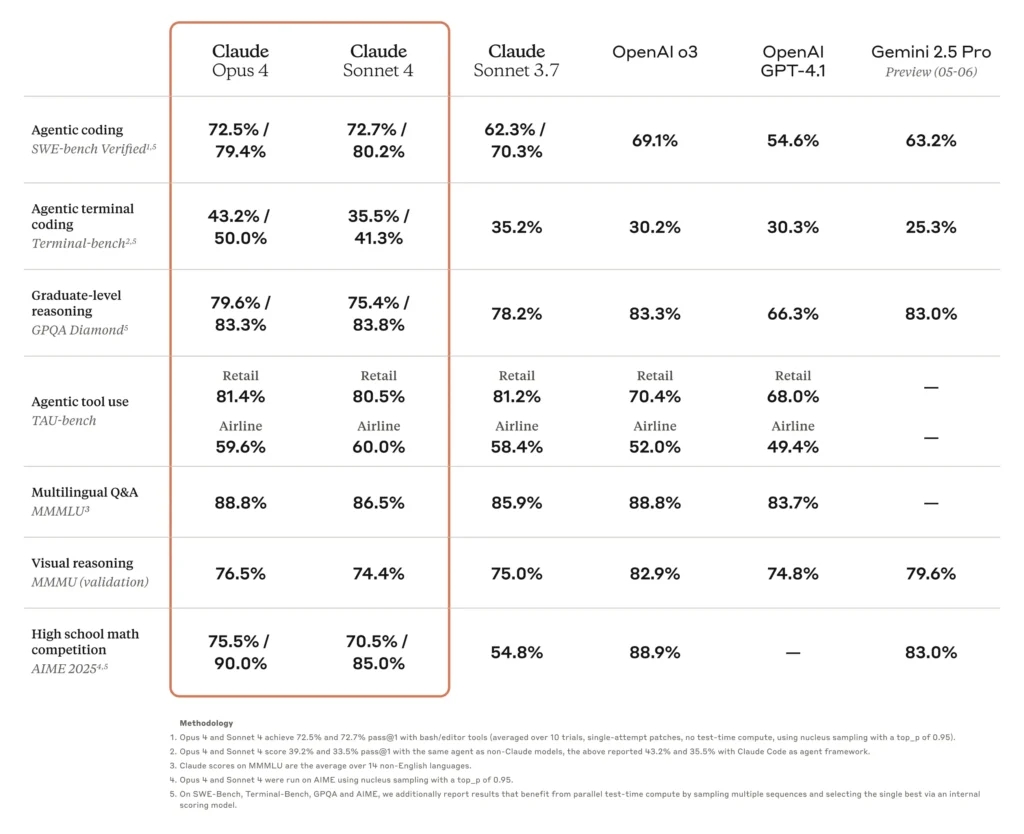
Claude Opus 4.6 represents Anthropic’s most capable enterprise AI model to date, designed specifically for “finding, analyzing and producing finished outputs” end-to-end. The model builds upon its predecessor (Opus 4.5) with several critical enhancements relevant to financial research applications [3]:
| Capability | Description |
|---|---|
1M-Token Context Window (beta) |
Enables analysis of extensive regulatory filings, market reports, and internal enterprise data simultaneously—equivalent to analyzing hundreds of SEC filings, earnings transcripts, and financial statements in a single context window [4] |
Agent Teams |
Multiple AI agents can coordinate in parallel, splitting complex tasks into segmented jobs for more sophisticated financial analysis workflows [3] |
Deep Reasoning |
Enhanced ability to navigate nuanced financial and regulatory contexts while maintaining analytical consistency across complex workflows [4] |
Self-Correction |
The model can identify and rectify errors autonomously without requiring user prompting [5] |
Anthropic has positioned Opus 4.6 specifically for financial research applications, with the model capable of performing tasks that traditionally required human analysts working for days:
- Regulatory Filing Analysis: Automated processing of SEC filings, 10-Ks, 10-Qs, and 8-Ks to extract material information
- Market Report Generation: Synthesis of company data, regulatory filings, and market information into detailed financial analysis reports
- Financial Modeling: Generation of complex financial models with compliance-sensitive outputs
- Cross-Source Integration: Connection of insights across regulatory filings, market reports, and internal enterprise data [4]
The model’s ability to compress multi-day analytical tasks into minutes represents a fundamental shift in the economics of financial research production.
The announcement’s impact on financial services stocks was immediate and pronounced:
| Company | Ticker | Maximum Drop | Closing Impact |
|---|---|---|---|
| FactSet Research Systems | FDS | -10.0% | -6.94% daily [2] |
| S&P Global | SPGI | -4.7% | -3.08% daily [2] |
| Moody’s Corporation | MCO | -2.9% | -1.01% daily [2] |
| Nasdaq Composite | NQ-100 | -1.3% | -1.26% index decline [2] |
FactSet experienced the most severe reaction, reflecting its direct exposure to the financial research analyst workflow that Opus 4.6 is designed to automate.
Beyond immediate daily reactions, the affected companies show significant longer-term weakness:
- Market Cap: $7.85 billion | Current Price: $209.79
- YTD Performance: -26.36%
- 1-Year Performance: -55.25%
- 5-Year Performance: -34.02% [6]
The substantial decline reflects investor concerns that Anthropic’s entry into financial research threatens FactSet’s core value proposition of aggregating and distributing financial data through analyst-curated platforms.
- Market Cap: $136.61 billion | Current Price: $451.17
- YTD Performance: -12.00%
- Analyst Consensus: BUY(85.7% of analysts rate as Buy) [7]
- Market Cap: $81.89 billion | Current Price: $456.57
- YTD Performance: -8.50%
- Analyst Consensus: BUY(56.2% Buy, 40.6% Hold) [8]
FactSet generates approximately $2.5 billion in annual revenue by providing integrated financial data and analytics platforms to investment professionals. The company’s revenue breakdown by region shows Americas (65.2%), Europe (24.6%), and Asia Pacific (10.2%) [6]. FactSet’s core value proposition centers on:
- Aggregating data from thousands of sources
- Providing analytics tools for financial analysis
- Enabling workflow automation for investment professionals
- Delivering curated research content
Claude Opus 4.6 directly threatens multiple facets of FactSet’s business model:
| Threat Vector | Description |
|---|---|
Research Production |
AI can now generate detailed financial analysis reports that previously required human analysts using FactSet’s platform |
Data Aggregation |
Universal AI models can ingest and synthesize data without requiring FactSet’s proprietary aggregation infrastructure |
Client Workflow |
Enterprise AI integrations (Microsoft Office, Teams) may bypass FactSet’s workflow tools |
Content Curation |
AI’s ability to personalize analysis reduces the value of FactSet’s curated offerings |
- Operating Margin: 31.73% (healthy but potentially unsustainable under margin pressure)
- P/E Ratio: 13.09x (significantly below historical averages, suggesting investor concern)
- 1-Year Stock Decline: -55.25% [6]
S&P Global generates approximately $15.6 billion in annual revenue across five segments:
- Ratings: 31.5% ($1.24B)
- Market Intelligence: 31.4% ($1.24B)
- Commodity Insights: 14.1%
- Indices: 11.7%
- Mobility: 11.3% [7]
The company benefits from strong recurring revenue (77% of revenue from recurring subscriptions and analytics) and maintains an oligopolistic position in credit ratings.
While S&P Global’s scale and regulatory moat provide some protection, key vulnerabilities exist:
| Threat Vector | Description |
|---|---|
Market Intelligence |
Claude Opus 4.6’s ability to analyze regulatory filings and market data threatens S&P’s Market Intelligence segment |
Ratings Automation |
AI-assisted analysis of credit-relevant data could reduce barriers to entry in rating services |
Commodity Insights |
AI’s ability to synthesize commodity market data and reports challenges specialized offerings |
Index Calculation |
Automated analysis could commoditize certain index-related services |
- Significant regulatory barriers to entry in ratings
- Brand recognition and trust in S&P ratings
- Integrated data infrastructure
- Strong balance sheet with $2.36B in US revenue alone [7]
Moody’s generates approximately $7.8 billion in annual revenue through two primary segments:
- Moody’s Analytics (60.8%): $1.22B in data and analytics services
- Moody’s Investors Service (39.2%): $787M in credit rating services [8]
The Analytics segment is most directly exposed to AI disruption, as it provides many of the same services that Claude Opus 4.6 can now perform autonomously.
| Threat Vector | Description |
|---|---|
Research Automation |
AI’s ability to generate financial analysis reports directly competes with Moody’s Analytics offerings |
Credit Modeling |
Automated credit risk analysis reduces demand for Moody’s proprietary models |
Compliance Automation |
Regulatory filing analysis can be automated, threatening compliance-related services |
- Strong moat in credit ratings (regulatory recognition)
- Brand trust and historical track record
- Integrated data and analytics platform
- International presence (50% of revenue from International Regions) [8]
- Financial institutions adopt AI-assisted research tools alongside existing platforms
- Established players integrate AI capabilities into their existing offerings
- Market share shifts gradually as AI-native solutions prove their value
- Cost-conscious institutions rapidly adopt AI alternatives for routine research
- Price pressure forces established players to significantly reduce subscription costs
- Consolidation in the financial data industry as weaker players exit
Based on the patterns observed in legal technology disruption (where Anthropic’s earlier legal AI tools caused 18-30% declines in Thomson Reuters, Wolters Kluwer, and RELX stocks), the financial research industry may experience [5]:
-
Business Model Recalibration: Traditional per-seat subscription models give way to AI-enhanced value propositions with different pricing structures
-
Workforce Restructuring: Significant reduction in junior analyst positions as AI handles routine analysis, while senior roles evolve toward oversight and complex judgment
-
Data Moat Erosion: Proprietary data advantages diminish as AI systems can synthesize publicly available information more efficiently
-
Platform Competition: AI platforms (Azure Foundry, AWS Bedrock) become primary distribution channels, potentially bypassing traditional financial data providers
The financial research industry may evolve into a three-tier structure:
| Tier | Players | Value Proposition |
|---|---|---|
Tier 1: AI Platform Providers |
Anthropic, OpenAI, Google | Core AI capabilities and model development |
Tier 2: Domain Specialists |
Transformed FactSet, S&P, Moody’s | Proprietary data, regulatory expertise, trust/credibility |
Tier 3: Specialized Analysts |
Niche research boutiques | Highly specialized expertise and judgment AI cannot replicate |
-
AI Partnership and Integration
- Rapid integration of frontier AI models into existing platforms
- Development of proprietary AI capabilities leveraging unique data assets
- Strategic partnerships with AI platform providers
-
Data Moat Strengthening
- Investment in proprietary, non-public data sources
- Development of unique analytical methodologies
- Creation of “training data” advantages through exclusive relationships
-
Regulatory and Trust Advantages
- Emphasis on human oversight and accountability in AI-generated analysis
- Development of regulatory-compliant AI workflows
- Communication of brand trust and reliability advantages
-
AI-Native Product Development
- Launch of AI-enhanced research products with differentiated capabilities
- Development of specialized AI tools for specific financial workflows
- Creation of hybrid human-AI service offerings
-
Business Model Transformation
- Migration toward outcome-based pricing models
- Development of enterprise-wide AI licensing agreements
- Creation of platform ecosystems that incorporate AI capabilities
-
Vertical Specialization
- Deep investment in industry-specific expertise
- Development of specialized compliance and regulatory AI tools
- Creation of “intelligent” data products that leverage proprietary knowledge
| Company | Disruption Risk | Time Horizon | Key Watch Factors |
|---|---|---|---|
FactSet |
HIGH |
Immediate (12-18 months) | Subscription retention, AI integration progress |
S&P Global |
MODERATE |
Medium-term (18-36 months) | Ratings moat preservation, Market Intelligence evolution |
Moody’s |
MODERATE |
Medium-term (18-36 months) | Analytics segment transformation, ratings relevance |
The current P/E compression across the sector (FactSet at 13.09x, S&P Global at 33.23x, Moody’s at 36.52x) suggests investors have already factored in significant disruption risk [6][7][8]. However, the magnitude of potential disruption remains uncertain, creating both risks and opportunities:
- Rapid AI adoption could accelerate revenue decline beyond current expectations
- Margin compression as pricing power erodes
- Market share losses to AI-native competitors
- Successful AI integration could enhance margins and create new revenue streams
- Regulatory barriers may prove more durable than expected
- Trust and brand advantages may command premium valuations
Anthropic’s launch of Claude Opus 4.6 represents a paradigm shift in the financial research industry, with implications extending far beyond immediate competitive pressures. The technology demonstrates that AI has reached a threshold where it can replicate—and in many cases, accelerate—tasks that previously required human financial analysts working over multiple days.
The market reaction, with FactSet shares declining as much as 10% on the announcement, reflects investor recognition that the $14.5 billion US financial data information services market faces fundamental disruption [1]. However, the degree and speed of disruption will depend on several factors:
- Adoption Velocity: How quickly financial institutions integrate AI research tools
- Regulatory Evolution: Whether AI-generated analysis meets regulatory standards for investment research
- Trust Dynamics: Whether clients value human oversight and brand reputation sufficiently to maintain premium pricing
- Strategic Response: How established players adapt their business models
The financial research industry stands at an inflection point. Those players that successfully transform their business models to incorporate AI capabilities while leveraging their existing data advantages, regulatory relationships, and brand trust will likely emerge as industry leaders in a transformed landscape. Those that fail to adapt may face the same disruptive pressures that have already reshaped adjacent industries such as legal technology and software services.
[1] Bloomberg - “Anthropic Releases New Model That’s Adept at Financial Research” (https://www.bloomberg.com/news/articles/2026-02-05/anthropic-updates-ai-model-to-field-more-complex-financial-research)
[2] Investing.com - “FactSet, Moody’s shares fall as Anthropic launches financial AI model” (https://www.investing.com/news/stock-market-news/factset-moodys-shares-fall-as-anthropic-launches-financial-ai-model-93CH-4488589)
[3] PYMNTS - “Anthropic Announces Claude Opus 4.6 as Next Step in Enterprise AI Development” (https://www.pymnts.com/news/artificial-intelligence/2026/anthropic-announces-new-version-claude-opus-next-step-enterprise-ai-development/)
[4] Microsoft Azure - “Claude Opus 4.6: Anthropic’s powerful model for coding agents and enterprise workflows is now available in Microsoft Foundry on Azure” (https://azure.microsoft.com/en-us/blog/claude-opus-4-6-anthropics-powerful-model-for-coding-agents-and-enterprise-workflows-is-now-available-in-microsoft-foundry-on-azure/)
[5] Above the Law - “Anthropic’s Legal Plug In: Hate to Say We Told You So, But We Told You So” (https://abovethelaw.com/2026/02/anthropics-legal-plug-in-hate-to-say-we-told-you-so-but-we-told-you-so/)
[6] Ginlix API - FactSet Research Systems Company Overview
[7] Ginlix API - S&P Global Company Overview
[8] Ginlix API - Moody’s Corporation Company Overview
[0] Ginlix API Data - Financial data and market analysis
Insights are generated using AI models and historical data for informational purposes only. They do not constitute investment advice or recommendations. Past performance is not indicative of future results.
About us: Ginlix AI is the AI Investment Copilot powered by real data, bridging advanced AI with professional financial databases to provide verifiable, truth-based answers. Please use the chat box below to ask any financial question.