Kevin Warsh Fed Chair Nomination: Market Impact Assessment and Policy Outlook
Unlock More Features
Login to access AI-powered analysis, deep research reports and more advanced features
About us: Ginlix AI is the AI Investment Copilot powered by real data, bridging advanced AI with professional financial databases to provide verifiable, truth-based answers. Please use the chat box below to ask any financial question.
Related Stocks
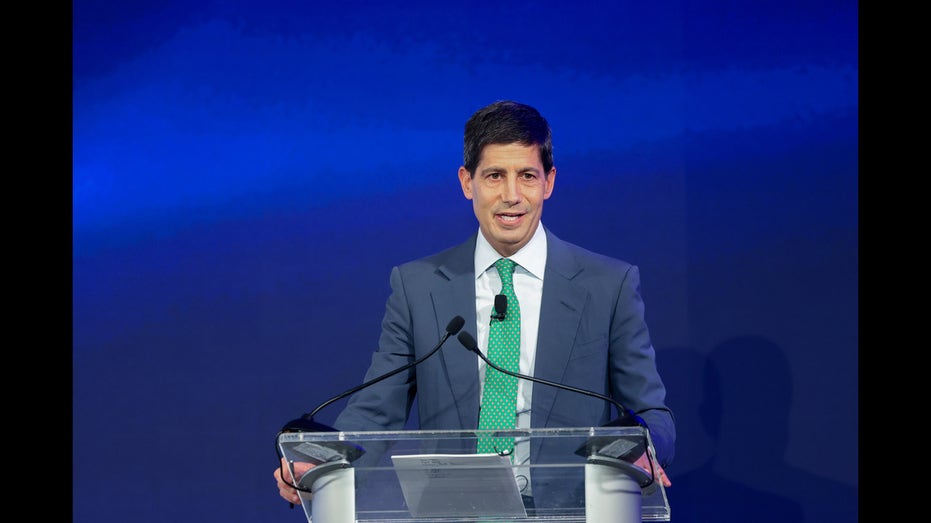
The nomination of Kevin Warsh as the next Federal Reserve Chair represents a potentially significant shift in U.S. monetary policy framework, triggering measurable market volatility across multiple asset classes. President Trump’s announcement on January 30, 2026, positioning Warsh to succeed Jerome Powell on May 15, 2026, immediately sparked concern among market participants due to Warsh’s documented criticism of aggressive balance sheet expansion and his advocacy for what he terms “privatize QE”—a framework that would shift asset purchase responsibilities from the Federal Reserve to private banking institutions [1][4].
The market reaction, while pronounced, demonstrated characteristics of an initial shock response rather than a fundamental repricing of economic conditions. Major indices experienced broad-based selling, with high-beta and technology stocks bearing the brunt of the decline, while treasury yields moved lower in a pattern that suggests markets are simultaneously pricing both growth concerns and potential policy accommodation [0][1].
The three-day period following the nomination announcement revealed distinct patterns across market capitalization segments, with small-cap and high-beta stocks experiencing the most significant pressure. The S&P 500 closed at 6,798.39 on February 5, representing a 0.57% daily decline and a cumulative 1.71% decrease from pre-nomination levels [0]. The technology-heavy Nasdaq 100 demonstrated even greater sensitivity, closing at 22,540.59 with a 0.28% daily decline but a more substantial 3.07% three-day decline, reflecting investor rotation away from growth assets perceived to benefit from accommodative monetary policy [0][1].
The Russell 2000 small-cap index recorded the sharpest decline among major equity indices, falling 1.11% on February 5 alone and 2.68% over the three-day period, suggesting particular concern among market participants regarding the potential impact of tighter liquidity conditions on smaller enterprises that typically rely more heavily on credit market access [0]. The Dow Jones Industrial Average, comprising larger, more diversified corporations, demonstrated relative resilience with a 0.68% daily decline and only a 0.67% three-day decrease, indicating that mega-cap and dividend-paying stocks may offer relative shelter during periods of monetary policy uncertainty [0].
The commodity markets exhibited pronounced weakness, with precious metals experiencing particularly sharp corrections. Gold prices fell below the $5,000 per ounce threshold, while silver declined approximately 20% in a single session—a move that, while potentially overdone in the short term, reflects genuine concern regarding the trajectory of inflation expectations under a Warsh-led Fed [2]. The U.S. Dollar demonstrated strength concurrent with these commodity price declines, appreciating to 1.18 against the Euro as investors sought safety in sovereign currencies [2].
Treasury markets presented a nuanced picture, with short-term yields moving lower following the nomination despite the apparent hawkish implications of a monetarist Fed Chair selection [2]. This seemingly contradictory behavior suggests markets are pricing in multiple scenarios simultaneously: growth concerns that would merit policy accommodation, combined with potential fiscal coordination that could allow the Fed greater flexibility in normalizing its balance sheet.
Kevin Warsh’s advocacy for transferring Fed asset purchases to private banks represents a fundamental restructuring of the monetary policy transmission mechanism that has been in place since the 2008 financial crisis [4]. Under current frameworks, the Federal Reserve’s balance sheet serves as the primary tool for liquidity provision, with asset purchases directly influencing long-term rates and portfolio rebalancing dynamics. The “privatize QE” alternative would fundamentally alter this dynamic by delegating balance sheet management to private institutions, potentially reducing direct Fed market intervention while increasing the role of private capital in maintaining market functioning [4].
The implications of this shift are substantial and multifaceted. Proponents argue that private sector involvement could enhance market discipline, reduce moral hazard associated with Fed backstops, and create more predictable liquidity conditions. Critics, however, highlight significant execution risks, including the potential for a “liquidity hole” if private banks cannot or will not fully absorb the volume of assets currently on the Fed balance sheet [4]. The transition period between current and proposed frameworks represents a particular vulnerability, as market participants may face uncertainty regarding the availability and pricing of liquidity during the restructuring period.
Warsh’s nomination requires Senate confirmation, creating a timeline constraint and potential source of additional uncertainty [1]. Jerome Powell’s term expires on May 15, 2026, establishing a firm deadline for the confirmation process and potentially limiting the Senate’s leverage in extracting policy commitments from the nominee. The confirmation hearings will likely serve as the primary venue for Warsh to articulate his policy framework and address market concerns regarding his monetarist credentials [1].
The political dynamics surrounding the nomination add additional complexity to the policy outlook. President Trump’s selection of Warsh—rather than a more traditionally dovish candidate—signals an intention to fundamentally reshape Fed operations, potentially aligning monetary policy more closely with administration priorities regarding economic growth and market functioning [1]. However, the extent to which Warsh can implement his stated preferences will depend on Senate composition, the views of other Fed Board members, and the evolution of economic conditions between now and his assumed chairmanship.
The technology sector’s pronounced weakness following the nomination announcement reflects investor assessment of QE-dependent business models [1]. Companies in the AI, software, and high-growth technology sectors have benefited substantially from the low-interest-rate environment that characterized the post-2020 period, with valuation multiples in many cases relying heavily on discounted cash flow assumptions that are highly sensitive to discount rate changes. The prospect of a Fed Chair who has criticized balance sheet expansion and advocated for alternative liquidity frameworks creates genuine uncertainty regarding the sustainability of these valuation parameters [1][4].
However, analysts caution against overly simplistic sector rotation frameworks. The connection between Fed policy and technology valuations operates through multiple channels, including growth expectations, competitive dynamics, and capital availability. A Warsh-led Fed does not necessarily imply higher interest rates in any absolute sense; rather, it suggests a potentially different mix of policy tools and a different approach to market functioning [1]. Technology companies with strong fundamentals, clear profitability, and resilient business models may prove more resilient than broad sector categorizations suggest.
The banking sector presents a particularly complex picture in the context of the Warsh nomination [4]. On one hand, expectations of deregulation and the “privatize QE” framework could benefit major financial institutions by expanding their market-making roles and reducing competitive pressure from Fed asset purchases. The potential for simplified regulatory requirements under a Warsh-led Fed adds a further positive catalyst for banks [4].
On the other hand, the transition to a privatized liquidity framework creates execution risks and potential disruption to established business models. Banks would need to significantly scale their balance sheet capacity to absorb the liquidity functions currently performed by the Fed—a transition that would require substantial capital raises and potentially years of implementation [4]. The near-term impact on banking sector profitability remains uncertain, with the net effect depending heavily on implementation details that have not yet been specified.
The analysis identifies several categories of risk that warrant continued monitoring by market participants [1][4]. Policy uncertainty represents the most significant near-term risk, as the “privatize QE” proposal, if implemented, would represent the most fundamental restructuring of U.S. monetary policy framework since the creation of the modern Fed system. The end of the “Fed Put”—the implicit market support provided through automatic liquidity provision during periods of stress—could fundamentally alter risk premium dynamics and increase volatility across asset classes [4].
Liquidity transition risk constitutes a second major concern, particularly during the implementation period between current and proposed frameworks. If private banks cannot or will not fully replace Fed asset purchases, a “liquidity hole” could develop, potentially tightening credit conditions and increasing the frequency and severity of market dislocations [4]. Historical precedent from prior periods of Fed balance sheet normalization suggests that liquidity dynamics can shift rapidly and unpredictably when central bank support is withdrawn or modified.
Confirmation risk adds a further layer of uncertainty, as Senate approval is not guaranteed and any complications in the confirmation process could extend the transition period and increase policy uncertainty [1]. Additionally, the potential for Powell’s term to expire before a confirmed successor is in place creates operational risks for financial markets that depend on clear Fed governance structures.
Despite the risk factors, the analysis identifies several potential opportunity areas for positioned investors [1]. The small-cap sector, while experiencing sharp initial declines, may represent attractive value if the “privatize QE” framework is implemented alongside fiscal support measures that benefit domestic enterprises. The initial sell-off may have overdiscounted negative scenarios while underweighting potential growth benefits from deregulation and tax policy alignment with Fed priorities [1].
Cyclical sectors more broadly may benefit from the policy mix suggested by the Warsh nomination, including potential lower rates, regulatory simplification, and fiscal coordination. industrials, materials, and domestic-focused consumer discretionary sectors could outperform if the economy demonstrates resilience under the new policy framework [1].
The banking sector, while complex, may offer asymmetric return potential for investors who can tolerate near-term uncertainty. Major institutions including JPMorgan Chase, Goldman Sachs, and Wells Fargo may benefit from multiple supportive factors, including deregulation expectations, expanded market-making roles, and potential net interest margin improvements from steeper yield curves [4].
The market reaction to Kevin Warsh’s Fed chair nomination reflects genuine investor concern regarding the potential for tighter monetary policy under a monetarist chair, while simultaneously demonstrating characteristics of an initial shock response that may prove temporary. The three-day market decline of approximately 1.71% for the S&P 500, while significant, remains within normal volatility parameters and does not indicate systemic market dysfunction [0].
The critical distinction for market participants lies in differentiating between assets that face genuine fundamental headwinds from potential policy changes and those that are experiencing indiscriminate selling pressure. Technology and high-beta stocks face the most direct repricing risk given their reliance on accommodative monetary conditions, while financial institutions face a more nuanced situation with both upside potential from deregulation and implementation risks from structural changes [1][4].
The treasury market’s behavior—yields moving lower despite hawkish policy implications—suggests markets are pricing multiple scenarios simultaneously and remain uncertain regarding the ultimate policy mix [2]. This uncertainty creates both risks and opportunities, with positioned investors potentially benefiting from clarity that emerges as the confirmation process unfolds and Warsh’s policy framework becomes better defined.
Market participants should focus monitoring efforts on three primary indicators: treasury yield movements and their implications for inflation expectations and growth forecasts; Senate confirmation hearing dynamics and any dovish pivots in Warsh’s policy statements; and credit market conditions as leading indicators of liquidity transition effects [1][2]. The next 48-72 hours will likely provide important signals regarding the sustainability of the initial market decline versus the emergence of a more constructive trading range.
Insights are generated using AI models and historical data for informational purposes only. They do not constitute investment advice or recommendations. Past performance is not indicative of future results.
About us: Ginlix AI is the AI Investment Copilot powered by real data, bridging advanced AI with professional financial databases to provide verifiable, truth-based answers. Please use the chat box below to ask any financial question.