Asian Stocks Fall Amid AI Capex Concerns; South Korea Exchange Trading Halted
Unlock More Features
Login to access AI-powered analysis, deep research reports and more advanced features
About us: Ginlix AI is the AI Investment Copilot powered by real data, bridging advanced AI with professional financial databases to provide verifiable, truth-based answers. Please use the chat box below to ask any financial question.
Related Stocks
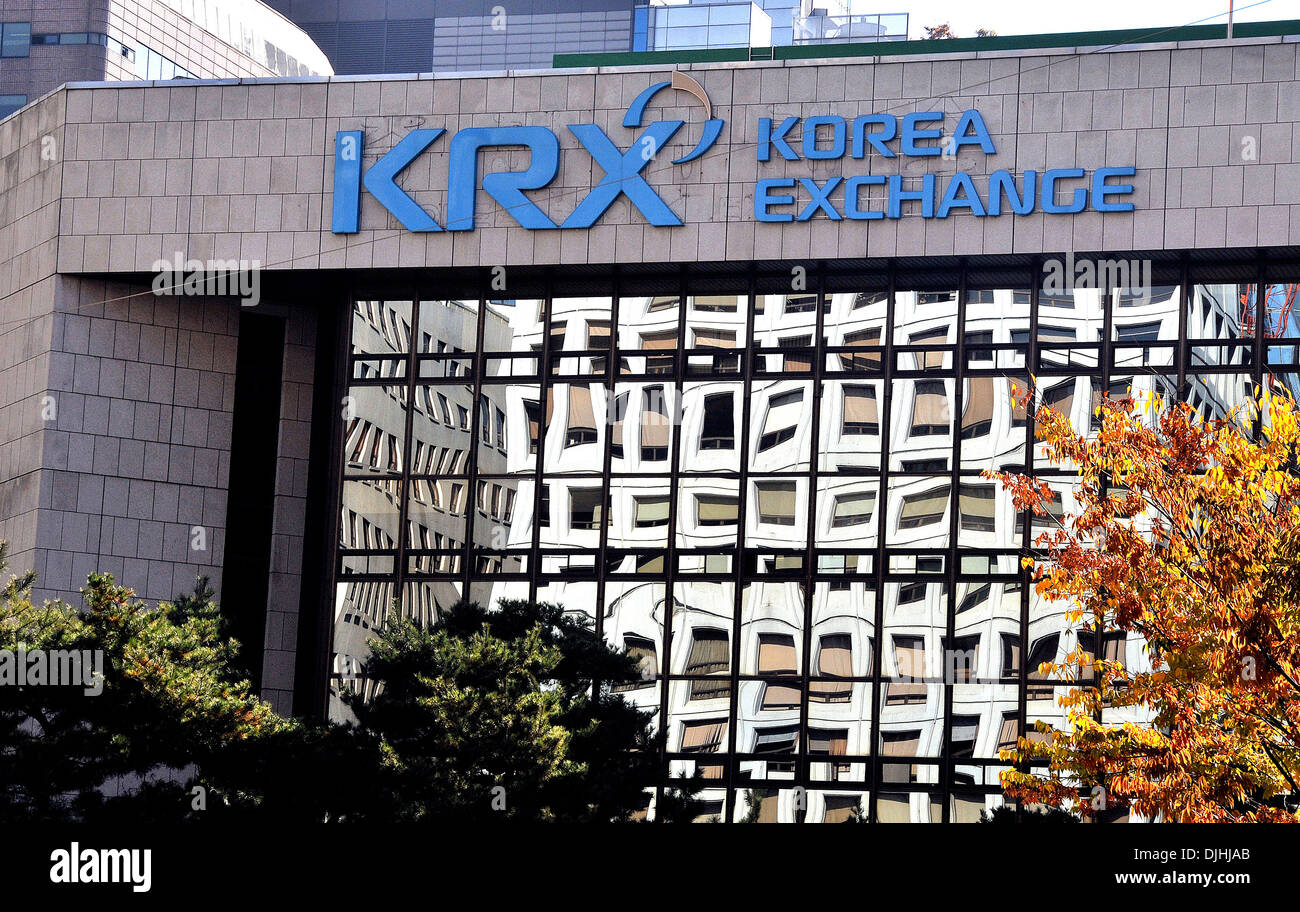
This analysis is based on the Wall Street Journal report [1] published on February 5, 2026, which documented a significant selloff in Asian stock markets triggered by investor anxiety over massive AI capital expenditure plans from major technology companies. The event occurred against a backdrop of elevated market volatility, with the tech sector experiencing its most pronounced decline since early 2024. South Korea’s stock-market regulator briefly halted trading on the main exchange, marking a rare circuit-breaker activation that underscored the severity of the regional selloff [1][2]. The timing of this market correction coincides with earnings season and follows a new legal tool release from Anthropic’s Claude large-language model, which initially triggered the tech sector rout in late January [2].
The Asian market selloff on February 5, 2026, was broadly based across the region’s major exchanges, with technology-focused indexes experiencing the most pronounced declines. South Korea’s KOSPI index dropped between 1.67% and 1.7%, triggering circuit-breaker mechanisms that briefly halted trading on the country’s main exchange—an indication of the extreme volatility affecting regional benchmark indexes during this period [1][2][3]. The MSCI Asia-Pacific (ex-Japan) index declined approximately 1%, while Taiwan’s Weighted Index fell 0.7% and Hong Kong’s Hang Seng index dropped 0.8% [2]. Chinese Blue-Chips also declined 0.7%, with Japan’s Nikkei remaining relatively flat compared to regional neighbors [2]. The trading halt on KOSPI represents a significant technical event that highlights the severity of the AI-driven selloff and the interconnected nature of global technology investments.
US markets experienced their own significant declines on February 5, 2026, reflecting the global nature of the tech sector correction. The Dow Jones Industrial Average fell 592.58 points (1.20%) to close at 48,908.72, while the S&P 500 declined 84.32 points (1.23%) to settle at 6,798.40 [3]. The technology-heavy Nasdaq Composite dropped 363.99 points (1.59%) to close at 22,540.59, continuing a trend of significant volatility over the preceding week [3]. According to market data [0], the NASDAQ has shown substantial decline from 23,592.11 on February 2 to 22,540.59 by February 5—a decline of approximately 4.5% over just four trading days. The MSCI Global index also declined 12.81 points (1.23%) to 1,027.24, confirming the worldwide scope of the technology sector correction [3].
US sector performance on February 5, 2026, revealed mixed but telling dynamics across the economy [0]. Technology stocks demonstrated resilience with a 0.47% gain, benefiting from chip demand supporting AI infrastructure despite broader sector concerns. Real Estate advanced 0.25% and Utilities gained 0.09%, reflecting investors’ rotation toward defensive sectors during periods of uncertainty [0]. Conversely, Basic Materials suffered the steepest decline at 2.49%, followed by Consumer Cyclical at 1.81%, Healthcare at 1.28%, and Communication Services at 1.23%—the latter category includes major technology companies whose massive capex announcements triggered the selloff [0]. This sector rotation pattern suggests investors are reallocating capital away from high-growth technology investments toward more stable, income-generating assets amid uncertainty about AI return on investment timelines.
Alphabet (Google) announced capital expenditure guidance of $175 billion to $185 billion for 2026, representing approximately 55% above analyst estimates [2][3]. This substantial spending plan, which far exceeded market expectations, sent the company’s shares tumbling over 6% intraday before settling 0.4% lower in after-hours trading [2][3]. Tony Sycamore, analyst at IG, characterized the Alphabet capex increase as “absolutely enormous,” noting that investor sentiment is particularly sensitive to software company developments and AI valuation concerns at this time [2]. The scale of Alphabet’s announced spending has raised questions among investors about the timeline for returns on AI infrastructure investments and the potential impact on profitability and free cash flow generation.
Amazon announced a 2026 spending plan of $200 billion, significantly exceeding analyst expectations of approximately $144.67 billion—a gap of over $55 billion [3]. This announcement triggered a more than 10% decline in Amazon shares, representing one of the worst single-day performances for the e-commerce and cloud computing giant in recent years [3]. The substantial deviation between Amazon’s announced capex and market expectations indicates either significantly higher infrastructure investment needs than anticipated or a strategic commitment to maintaining competitive positioning in AI and cloud services regardless of near-term margin pressure. The market’s strongly negative reaction reflects investor concerns about the capital-intensive nature of AI competition and the potential for extended periods of reduced profitability as major technology companies invest heavily in AI infrastructure.
The technology sector selloff has extracted approximately $830 billion in market value since January 28, 2026 [2]. The rout was initially triggered by a new legal tool from Anthropic’s Claude large-language model, which introduced competitive concerns into the software sector and raised questions about the sustainability of AI valuations [2]. AMD shares fell 17% overnight following disappointing earnings, highlighting competitive pressures even within the semiconductor industry that supplies AI infrastructure [2]. This substantial value destruction reflects a broader reassessment by investors of AI-related investments, particularly those with extended timelines for return realization and significant capital requirements for infrastructure development.
The market correction has revealed significant rotation away from high-growth technology investments toward defensive sectors. Anthony Saglimbene, Chief Market Strategist at Ameriprise Financial, observed that “if big tech and AI lose more momentum, it’s likely that broader averages like the S&P 500 will see more pressure,” noting that while rotation is occurring, it has not been sufficient to stabilize broader market averages [3]. Brian Levitt, Chief Global Market Strategist at Invesco, described the current period as “a pretty significant unravelling” of AI-related positions, with precious metals and cryptocurrencies also experiencing selling pressure as speculative positions unwind [3]. This rotation suggests a potential shift in market leadership that could persist until investors gain greater clarity on AI investment returns.
Despite the near-term selloff, technology sector fundamentals remain substantially strong, particularly for companies positioned at the center of AI infrastructure development. Nvidia (NVDA) continues to demonstrate robust market positioning, with Data Center revenue representing 87.9% of total revenue ($41.1 billion in Q2 FY2026) [0]. Analyst consensus remains firmly bullish on NVDA with 73.4% of ratings classified as “Buy” and a price target of $272.00, representing approximately 58% upside from current levels [0]. The company is scheduled to report Q4 FY2026 earnings on February 25, 2026, with EPS estimates of $1.52 and revenue expectations of $65.55 billion [0]. Super Micro Computer (SMCI) reported blowout Q2 results driven by AI server demand, with the stock surging 13.78% on February 4, 2026, demonstrating continued demand for AI server infrastructure despite broader sector concerns [0].
The technology sector selloff is occurring against a backdrop of mixed macroeconomic signals that may influence Federal Reserve policy decisions. US labor market data shows weakness, with job openings at a 5+ year low and layoffs at a 17-year high for January [3]. Treasury yields declined during the selloff, with the 10-year yield falling 8.8 basis points to 4.19% and the 30-year yield dropping 6.8 basis points to 4.8469%, reflecting flight-to-safety demand amid equity weakness [3]. Japanese elections scheduled for February 6 could impact yen and regional currency dynamics, introducing additional complexity for multinational technology companies with significant Asian operations [2][3]. The uncertain Federal Reserve rate trajectory adds another dimension of complexity for investors assessing AI investment viability and discount rates applied to growth equity valuations.
The analysis reveals several risk factors warranting attention from market participants. Valuation concerns in the AI sector have intensified as massive capex commitments of $175-200+ billion annually from major technology companies raise questions about return on investment timelines and the potential for extended periods of reduced profitability [2][3]. The market has already erased $830 billion in value since late January, suggesting significant repricing of AI-related investments [2]. Execution risk remains elevated, with Alphabet’s capex 55% above estimates and Amazon’s $200 billion plan exceeding expectations by $55 billion, indicating potential margin pressure that could persist for multiple quarters [2][3]. Competitive disruption risks have materialized through new legal and enterprise tools from Anthropic’s Claude, which are disrupting established software business models and forcing reconsideration of AI investment thesis [2]. AMD’s 17% decline following earnings highlights competitive pressures even within the semiconductor companies that supply AI infrastructure [2].
Additional risk factors include weak US labor market data suggesting potential economic softening and the possibility that tech sector weakness could spread to broader economic indicators [3]. Interest rate uncertainty remains elevated despite Treasury yield declines, creating complexity for capital allocation decisions. Silver’s 16.4% single-day decline and gold’s 3.14% drop indicate speculative position unwinding across multiple asset classes [3]. Bitcoin’s decline below $70,000 for the first time since late 2024, dropping 12.09% to $63,868.33, suggests risk appetite has diminished substantially and that speculative assets across categories are experiencing correction pressure [3]. The interconnected nature of these market movements indicates a broader reassessment of risk assets rather than technology-specific concerns alone.
Despite the elevated risk environment, several opportunity windows may emerge for well-capitalized investors. The defensive sectors demonstrating resilience (utilities, real estate) may continue to attract rotation capital if tech weakness persists [0]. Nvidia’s upcoming February 25, 2026 earnings report will provide critical AI demand visibility and could serve as a catalyst for sector stabilization if results exceed already-discounted expectations [0]. The trading halt in South Korea indicates elevated volatility that may create tactical opportunities for investors with longer time horizons and conviction in AI infrastructure demand growth. The 4.5% decline in the NASDAQ over four trading days represents a rapid repricing that may create entry points for investors who believe AI long-term growth thesis remains intact despite near-term capex concerns.
Market participants should closely monitor several factors going forward, including Nvidia’s Q4 FY2026 earnings report on February 25, 2026, for revenue guidance and AI demand commentary that could stabilize or exacerbate sector concerns [0]. Quarterly reports from Microsoft, Meta, and Google will provide additional AI spending visibility and may clarify whether current capex levels represent temporary acceleration or structural investment requirements. South Korea market stability warrants monitoring following the trading halt and potential for further circuit-breaker triggers during periods of elevated volatility [1][2]. The sustainability of defensive sector rotation will be critical in assessing whether broader market averages can absorb continued technology weakness. Treasury yield movements and flight-to-safety dynamics may provide additional signals about institutional investor sentiment and risk appetite across asset classes.
The February 5, 2026 Asian market selloff represents a significant repricing of AI-related investments triggered by massive capital expenditure announcements from Alphabet and Amazon. South Korea’s KOSPI trading halt underscored the severity of regional declines, with the MSCI Asia-Pacific (ex-Japan) index falling approximately 1% and Taiwan, Hong Kong, and Chinese markets all experiencing notable drops [1][2]. The selloff has erased approximately $830 billion in market value since January 28, 2026, with the technology sector experiencing its most pronounced correction in recent years [2]. US markets followed regional declines, with the NASDAQ dropping 4.5% over four trading sessions and major indexes falling 1.2-1.6% on February 5 alone [0][3]. Defensive sectors demonstrated relative resilience, with utilities, real estate, and technology chip companies showing modest gains amid the broader selloff [0]. Upcoming earnings reports from Nvidia, Amazon, and other major technology companies will be critical in determining whether this represents a temporary correction or a more sustained shift in AI investment sentiment.
Insights are generated using AI models and historical data for informational purposes only. They do not constitute investment advice or recommendations. Past performance is not indicative of future results.
About us: Ginlix AI is the AI Investment Copilot powered by real data, bridging advanced AI with professional financial databases to provide verifiable, truth-based answers. Please use the chat box below to ask any financial question.