Policy Uncertainty Triggers Cross-Asset Repricing Following Kevin Warsh Fed Chair Nomination
Unlock More Features
Login to access AI-powered analysis, deep research reports and more advanced features
About us: Ginlix AI is the AI Investment Copilot powered by real data, bridging advanced AI with professional financial databases to provide verifiable, truth-based answers. Please use the chat box below to ask any financial question.
Related Stocks
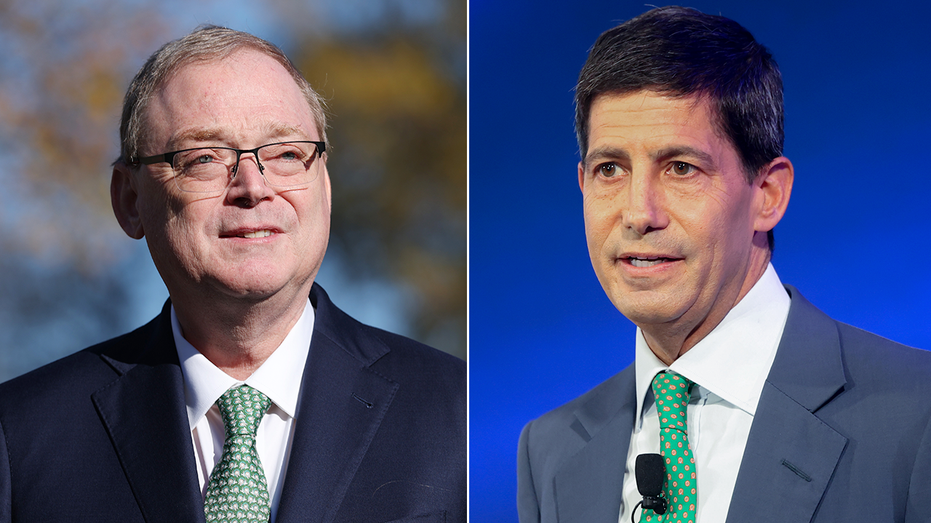
The market dislocation occurring in early February 2026 stems from a confluence of factors centered on leadership transition at the Federal Reserve. The January FOMC meeting concluded with the policy rate remaining unchanged at 3.50%–3.75%, a decision that aligned with widespread market expectations and suggested a period of monetary policy stability. However, attention rapidly shifted to the nomination of Kevin Warsh, a former Fed Governor selected by the Trump administration to lead the central bank, which introduced substantial uncertainty regarding the future trajectory of monetary policy [1][2].
Kevin Warsh’s nomination carries particular significance given his professional background and public commentary. Having served on the Federal Reserve Board from 2006 to 2011, Warsh has been notably critical of the Fed’s response to rising inflation in 2022, suggesting that he may advocate for a more aggressive approach to price stability than the current policy framework. This perceived hawkish orientation has prompted investors to reassess expectations for future interest rate paths, balance sheet normalization timelines, and the overall inflation tolerance of the central bank under new leadership [2][4].
The market reaction reflects not merely uncertainty about specific policy outcomes but also broader concerns about institutional credibility and the independence of monetary policy decision-making. BNP Paribas economic research has highlighted that the nomination introduces a layer of political uncertainty that markets must now price in, as the Senate confirmation process and potential policy signals from the administration create additional variables for investors to navigate [3].
The repricing across asset classes has been neither uniform nor simultaneous, revealing the complex transmission mechanisms through which monetary policy uncertainty propagates through financial markets. Analysis of market data from February 3-5, 2026, demonstrates distinct patterns of price adjustment across different asset categories [0].
The equity market response has been characterized by three consecutive down days, with the S&P 500 declining from 6,917.82 on February 3 to 6,798.39 on February 5, representing a total decline of approximately 2.1% over the period. The index closed at 6,798.39 on February 5, recording a daily decline of 0.57% that reflected continued selling pressure. The NASDAQ Composite demonstrated similar weakness, falling from 23,255.19 on February 3 to 22,540.59 on February 5, with a single-day decline of 0.28% on February 5. The Russell 2000 small-cap index emerged as the most significantly impacted, declining 2.7% over the three-day period, a pattern consistent with historical patterns where small-cap equities tend to exhibit heightened sensitivity to domestic policy uncertainty and potential interest rate movements [0].
The concentration of declines in smaller-capitalization stocks suggests that market participants are reassessing the domestic growth outlook in light of potential policy shifts. Small-cap companies, which tend to have greater exposure to domestic economic conditions and typically face higher financing costs, may face disproportionate challenges if monetary policy tightens further or if the Fed adopts a more restrictive stance on inflation tolerance.
The cryptocurrency market experienced particularly pronounced volatility during this period, with leverage unwind dynamics exacerbating price declines across major digital assets. The Seeking Alpha analysis indicates that Bitcoin and Ethereum both experienced significant drops, while digital-asset exchange-traded funds recorded notable outflows as investors rapidly reduced exposure [1]. The digital-asset ecosystem’s sensitivity to monetary policy expectations reflects several structural factors, including the high correlation between risk asset sentiment and crypto valuations, the prevalence of leveraged positions that amplify downside moves during periods of forced deleveraging, and the relatively limited depth of trading in certain digital asset markets compared to traditional financial instruments.
The constraints facing digital-asset trading firms in accumulating positions during the selloff represent an additional factor limiting stabilizing buying power in these markets. Unlike traditional market makers who may step in during periods of volatility to provide liquidity, many digital-asset trading firms face balance sheet and regulatory constraints that limit their capacity to absorb selling pressure [1].
The most dramatic price action occurred in the precious metals complex, where silver experienced a reversal exceeding 30% in a single day. Such a magnitude of move in a major precious metal is exceptionally rare and typically signals either a technical break or a fundamental reassessment of macroeconomic conditions. The silver decline reflects the metal’s dual nature as both a precious metal and an industrial commodity, with investors potentially reassessing demand dynamics amid concerns about economic growth implications of potential policy tightening [1].
The silver move also carries implications for broader commodity markets and inflation expectations. Silver’s role as an inflation hedge and its industrial applications make it sensitive to both monetary policy expectations and global growth outlooks. The magnitude of the single-day decline suggests thin liquidity conditions that amplified price movements during the repricing episode.
The U.S. dollar and Treasury yields both spiked during this period, reflecting market expectations of potentially higher-for-longer interest rates under a Warsh-led Fed. The dollar strength has implications for multinational corporate earnings and emerging market asset valuations, as a stronger dollar increases the relative cost of dollar-denominated debt and can pressure export-competitive industries in other economies [1].
Rising Treasury yields introduce duration risk for fixed income portfolios, particularly those with longer-dated holdings. The relationship between Fed leadership transitions and bond market yields reflects investor expectations about future policy paths, with hawkish appointments typically associated with higher yield expectations across the curve.
The cross-asset repricing following the Warsh nomination reveals the complex interplay between monetary policy expectations and asset valuations. Unlike specific policy decisions that may affect particular sectors or asset classes, Fed leadership changes introduce structural uncertainty that propagates through multiple market channels simultaneously. The rapidity of the repricing suggests that markets had not fully incorporated the leadership transition into pricing prior to the nomination’s confirmation, leading to a period of accelerated adjustment [1][3].
The persistence of elevated volatility until Warsh provides clearer guidance on key policy questions—including his tolerance for inflation overshoot, his views on the appropriate pace of balance sheet normalization, and his stance on central bank independence—suggests that the current market environment may persist until more concrete policy signals emerge [1].
The varying severity of impact across asset classes reflects fundamental differences in their sensitivity to monetary policy conditions and their structural characteristics. Crypto markets, with their leverage-intensive trading cultures and limited institutional liquidity provision, experienced the most acute stress. The precious metals complex, particularly silver, showed vulnerability to rapid position unwinding in thin market conditions. Equities demonstrated more measured declines, with the Russell 2000’s outperformance of small-cap sensitivity highlighting the domestic-focused nature of the policy uncertainty [0][1].
Analyst assessments of the Warsh nomination’s implications show notable divergence. While the initial market reaction reflects a hawkish repricing, some analysts suggest that markets may be overestimating the degree of policy tightening that Warsh would implement. The Fund Selector Asia analysis raises the possibility that Warsh may prove less hawkish than current market pricing suggests, particularly given the constraints that a divided Congress and ongoing economic considerations would impose on policy implementation [5]. This divergence highlights the uncertainty inherent in interpreting leadership transitions and the potential for subsequent market corrections as expectations recalibrate.
The timing of key economic data releases over the coming days and weeks adds an additional layer of significance to the current market environment. Upcoming U.S. inflation and labor data releases, along with Fed official speeches and the delayed Q4 GDP report, will provide crucial signals about the state of the economy and potentially hints about the policy path under new leadership [1]. The market’s interpretation of these data points will likely be influenced by expectations regarding Warsh’s policy framework, creating the potential for heightened data sensitivity in the immediate term.
The analysis reveals several risk factors that warrant ongoing attention from market participants. First, the persistence of policy uncertainty until Warsh provides clearer guidance on his policy priorities creates an environment where elevated volatility across asset classes is likely to continue. Historical precedents for Fed leadership transitions suggest that uncertainty typically resolves gradually as new officials communicate their frameworks and data-dependent approaches [1][3].
Second, the liquidity dynamics in certain markets, particularly digital assets and precious metals, suggest elevated slippage risks during periods of rapid price adjustment. The >30% single-day decline in silver exemplifies how thin liquidity conditions can amplify price movements beyond what fundamental developments might justify [1].
Third, the constraints facing digital-asset trading firms in accumulating positions limit the stabilizing buying power available in crypto markets during periods of selloff. This structural constraint may prolong downside moves in digital assets compared to traditional markets where institutional liquidity provision is more robust [1].
Fourth, dollar strength resulting from hawkish policy expectations carries implications for multinational corporate earnings and emerging market assets. Companies with significant international revenue exposure may face translation headwinds, while emerging markets with dollar-denominated debt burdens may experience refinancing pressures [1].
The repricing episode also creates potential opportunity windows for investors with appropriate risk tolerance and investment horizons. The significant price declines in digital assets and precious metals may represent attractive entry points for investors with conviction that long-term value propositions remain intact despite near-term policy uncertainty.
The divergence between analyst expectations and actual policy outcomes could create opportunities in assets that may be currently oversold. If Warsh proves less hawkish than markets anticipate, equities and other risk assets could experience meaningful rallies from current levels [5].
The focus on upcoming economic data releases creates opportunities for tactical positioning based on data-dependent policy expectations. Investors who accurately anticipate how the Fed will interpret incoming economic information may find attractive risk-adjusted returns in both directional and non-directional strategies.
The current market environment is characterized by heightened time sensitivity across multiple dimensions. The next 48-72 hours will be particularly critical, with Fed official speeches and key economic data releases providing important signals about the policy path ahead. Market participants should maintain heightened monitoring during this period, as the potential for significant price movements remains elevated.
The near-term timeline for Senate confirmation of Warsh’s nomination adds political uncertainty that markets must continue to navigate. The confirmation process may introduce additional volatility as Senators’ questions and Warsh’s responses provide signals about his policy orientation and potential confirmation challenges [2].
The nomination of Kevin Warsh as Federal Reserve Chair has triggered a significant cross-asset repricing driven by uncertainty regarding future monetary policy direction. Following the January FOMC meeting where rates were held at 3.50%–3.75%, markets rapidly adjusted expectations based on Warsh’s perceived hawkish stance on inflation and questions about central bank independence [1][2].
The market impact has been most severe in digital assets and precious metals, with crypto experiencing leveraged unwind dynamics and silver declining more than 30% in a single day. Equity markets have recorded three consecutive down days, with the S&P 500 declining approximately 2.1% and the Russell 2000 falling 2.7% over the three-day period ending February 5, 2026 [0]. The U.S. dollar and Treasury yields have both risen as markets price in potential for higher-for-longer interest rates.
Key monitoring indicators include the DXY dollar index, 10-year Treasury yields, Bitcoin and Ethereum prices, the silver/gold price ratio, the VIX volatility index, and crypto ETF flows. Upcoming economic data releases, Fed official speeches, and the Senate confirmation process will be critical in determining whether the current repricing represents a correction or the beginning of a broader trend shift in risk asset valuations [1].
Analyst perspectives on the nomination’s implications diverge significantly, with some suggesting markets may be overestimating Warsh’s hawkishness. This divergence highlights the uncertainty inherent in interpreting leadership transitions and the potential for subsequent market adjustments as expectations evolve [3][5].
Insights are generated using AI models and historical data for informational purposes only. They do not constitute investment advice or recommendations. Past performance is not indicative of future results.
About us: Ginlix AI is the AI Investment Copilot powered by real data, bridging advanced AI with professional financial databases to provide verifiable, truth-based answers. Please use the chat box below to ask any financial question.