RBI Interest Rate Decision: Policy Steady at 5.25% Amid Trade Deal Momentum and Growth Optimism
Unlock More Features
Login to access AI-powered analysis, deep research reports and more advanced features
About us: Ginlix AI is the AI Investment Copilot powered by real data, bridging advanced AI with professional financial databases to provide verifiable, truth-based answers. Please use the chat box below to ask any financial question.
Related Stocks
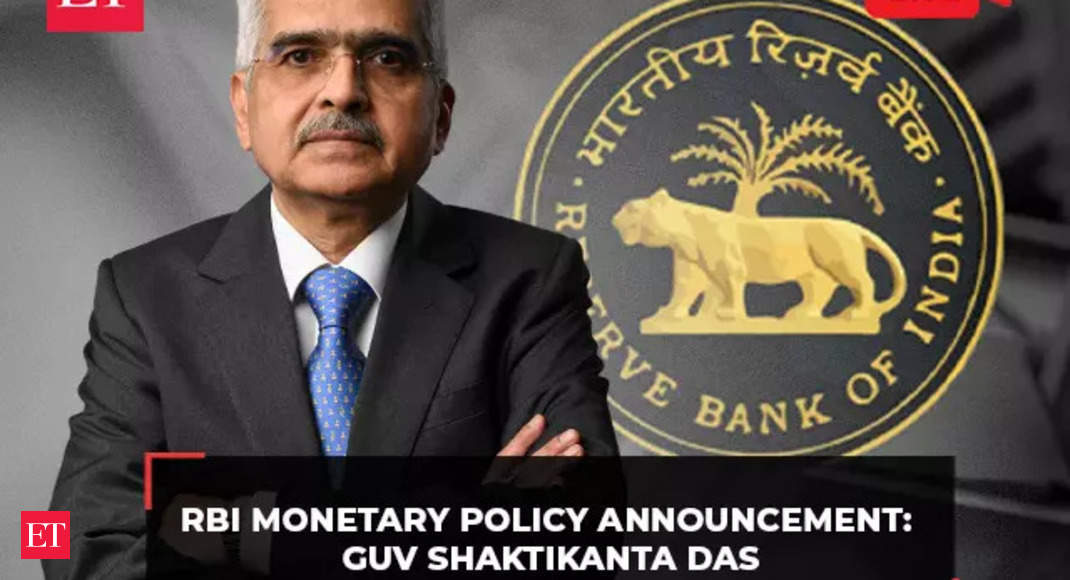
The Reserve Bank of India’s decision to maintain its repo rate at 5.25% represents a strategic pause following an aggressive easing cycle in 2025, during which the central bank implemented 125 basis points of rate cuts [1][2]. Governor Sanjay Malhotra emphasized that the Monetary Policy Committee’s unanimous decision reflects confidence in India’s economic positioning, characterizing the current environment as a “goldilocks” scenario of robust growth and contained inflation [2][4]. This assessment is supported by GDP growth projections of 7.4% for fiscal year 2025-26 and 6.8-7.2% for FY 2026-27, coupled with CPI inflation expectations of 2.1% [1].
The timing of this policy decision coincides with significant geopolitical and economic developments that have materially improved India’s growth outlook. The successful conclusion of trade negotiations with both the United States and European Union has removed substantial uncertainty that had previously weighed on investor sentiment and the rupee’s trajectory [3][5]. These trade agreements have been credited with stabilizing currency flows and providing a catalyst for equity market advancement, with market observers noting that the deals have “stabilized the Rupee and boosted the Indian stock market” [3].
India’s current macroeconomic configuration presents a compelling case for monetary policy restraint. The combination of strong GDP growth exceeding 7% and inflation running near 2% creates what Governor Malhotra described as a resilient domestic economic position [2][4]. The central bank’s forward guidance indicates an intention to “keep rates at a low level for a long period,” with Goldman Sachs economists projecting that the pause could extend for at least twelve months [1][2]. This extended period of accommodative policy provides a stable backdrop for business planning and investment decisions.
However, Governor Malhotra also acknowledged that “external headwinds have intensified,” suggesting that global economic conditions remain a significant consideration in policy formulation [1][2]. This nuanced assessment balances domestic optimism against the backdrop of an uncertain international environment, including potential trade policy shifts and divergent monetary policies among major central banks.
Indian equity markets demonstrated a positive but measured response to the policy announcement, with the Nifty 50 closing 0.34% higher at 25,693.70 and the Sensex advancing 0.40% to 83,580.40 [0]. These modest gains continue a pattern of recovery following significant volatility earlier in the week, when sharp sell-offs occurred on February 1-3 before a rebound commenced [0]. The trading volume of 375.47 million shares on the Nifty 50 and 16.05 million on the Sensex indicates sustained market engagement with policy developments [0].
The JPMorgan perspective, articulated by Head of India Equity Research Sanjay Mookim, introduces an important counterpoint to domestic optimism. Mookim’s observation that “Indian assets face competition from more attractive global markets” underscores the ongoing challenge of maintaining portfolio inflows amid yield differentials and risk-adjusted return considerations [Event Source]. This competitive dynamic is particularly relevant given the potential for the Federal Reserve and other major central banks to follow different policy paths, affecting global capital allocation decisions.
The RBI’s explicit shift in focus from rate adjustments to policy transmission represents a significant evolution in monetary policy stance. With 125 basis points of rate cuts already implemented, the central bank’s attention has turned to ensuring these reductions effectively flow through to end borrowers [1][2]. Governor Malhotra outlined plans for open market operations, variable rate repos, and targeted liquidity measures designed to support this transmission process [1]. This operational focus suggests that market participants should monitor bank lending rate movements and corporate borrowing costs as key indicators of policy effectiveness, rather than anticipating further rate reductions.
The India-US and India-EU trade deals have materially altered the risk-reward calculus for Indian assets. By reducing trade uncertainty and establishing more predictable economic relationships with major trading partners, these agreements have enhanced India’s attractiveness as an investment destination [3][5]. The benefits are expected to accrue disproportionately to export-oriented sectors including textiles, chemicals, and manufacturing, where tariff reductions under the new agreements improve competitive positioning [3]. Additionally, the stabilization effects on the rupee have reduced currency risk considerations for foreign investors, potentially broadening the investor base for Indian equities.
The rate pause creates a balanced environment across Indian equity sectors. Interest-sensitive sectors such as real estate and consumer discretionary can continue benefiting from the cumulative effect of prior rate cuts without facing the uncertainty of a shifting monetary policy backdrop [1]. Financial sector institutions, particularly banks, gain from reduced rate uncertainty, allowing them to focus on lending growth and margin improvement strategies. Export-oriented sectors emerge as primary beneficiaries of trade deal momentum, while import-competing industries may face increased competitive pressure from improved market access granted to foreign partners.
The RBI policy decision and associated communications highlight several risk factors that warrant continued attention from market participants. External economic headwinds, as explicitly noted by Governor Malhotra, represent an ongoing vulnerability given the interdependence of global economic conditions and India’s export-dependent growth model [1][2]. Global yield competition poses a concrete threat to capital inflows, as more attractive returns in developed markets could redirect portfolio investment flows away from Indian assets [Event Source]. Liquidity management challenges may emerge as the RBI balances transmission objectives with broader financial stability considerations, potentially creating periods of market volatility around policy implementation.
The inflation trajectory remains a key risk factor despite currently benign projections. Any resurgence in food or energy prices, given India’s structural sensitivities to these categories, could rapidly alter the inflation dynamic and force a policy response [1]. Similarly, fiscal policy developments, including the government’s pledged spending increases, require monitoring for potential inflationary effects that could complicate the RBI’s balancing act between growth support and price stability.
The extended period of accommodative monetary policy creates opportunities for interest-rate sensitive sectors to capitalize on improved financing conditions. Real estate developers and consumer discretionary companies that have restructured operations around lower rate expectations can pursue growth initiatives with reduced cost-of-capital constraints. The trade agreement framework provides sector-specific opportunities for exporters who have positioned themselves to leverage improved market access, particularly in categories where India possesses comparative advantages.
The stable policy environment also creates opportunities for corporate capital structure optimization, as companies can lock in longer-term financing at historically favorable rates. Banks that have successfully managed margin compression during the easing cycle may find opportunities to improve profitability through selective lending growth and fee-based service expansion.
The RBI’s February 2026 policy decision maintains the repo rate at 5.25% following 125 basis points of easing throughout 2025, reflecting confidence in India’s growth-inflation balance amid recently secured US and EU trade agreements. GDP growth projections of 7.4% for FY 2025-26 and CPI inflation expectations of 2.1% support the “goldilocks” characterization provided by Governor Malhotra. The policy shift toward transmission focus indicates that market participants should monitor lending rate movements and liquidity operations rather than anticipating further rate adjustments. Goldman Sachs projections suggest the pause may extend for at least twelve months, providing an extended period of accommodative conditions. Indian equity markets showed modest positive reactions to the decision, though JPMorgan’s observation regarding global competition for capital flows highlights ongoing challenges in maintaining portfolio inflows.
Market participants should track RBI lending rate transmission progress, FII/FPI flow dynamics, INR movement, US Federal Reserve policy decisions, and trade deal implementation as key indicators affecting the outlook for Indian assets. The Q4 FY26 GDP and inflation prints will represent important data points that could influence market expectations regarding future RBI policy positioning.
Insights are generated using AI models and historical data for informational purposes only. They do not constitute investment advice or recommendations. Past performance is not indicative of future results.
About us: Ginlix AI is the AI Investment Copilot powered by real data, bridging advanced AI with professional financial databases to provide verifiable, truth-based answers. Please use the chat box below to ask any financial question.