AI Bubble Concerns: Super Bowl LX Advertising as Warning Signal
Unlock More Features
Login to access AI-powered analysis, deep research reports and more advanced features
About us: Ginlix AI is the AI Investment Copilot powered by real data, bridging advanced AI with professional financial databases to provide verifiable, truth-based answers. Please use the chat box below to ask any financial question.
Related Stocks
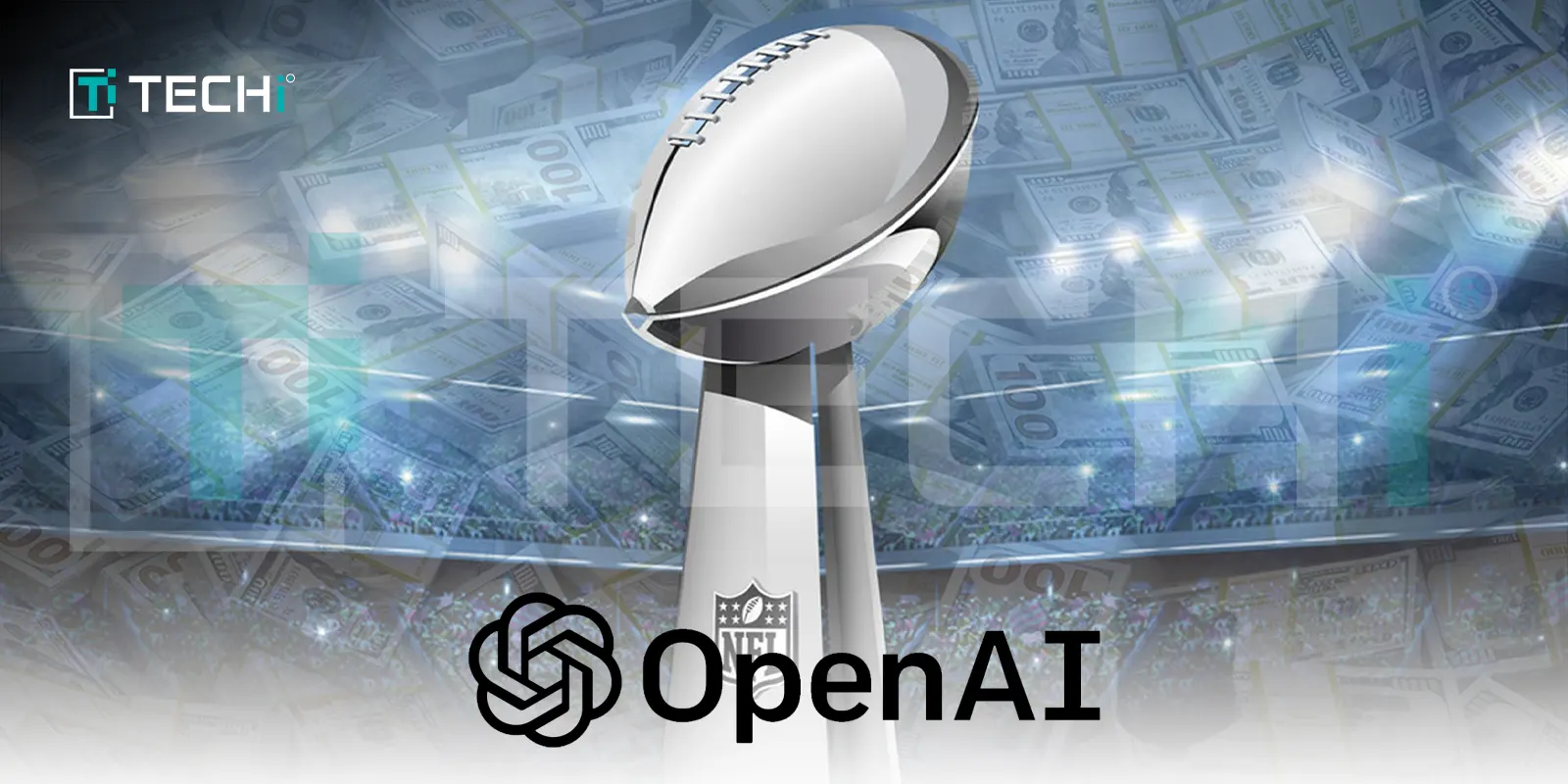
The Super Bowl LX advertising landscape represents a critical inflection point for the artificial intelligence industry, with multiple converging factors suggesting potential market froth that warrants careful examination. The MarketWatch analysis authored by Jeff Funk and Gary Smith presents a provocative thesis: that the current wave of AI company advertising expenditure mirrors the patterns observed during the 2000 Super Bowl, which preceded the dot-com collapse by mere months [1]. This comparison, while not definitive, has gained traction among market observers due to several structural similarities between the two eras.
The financial metrics underlying the AI advertising surge paint a picture of an industry trading at valuations that appear disconnected from fundamental profitability. OpenAI’s reported $11.5 billion in losses for Q3 2025 alone represents a staggering figure that challenges even the most optimistic growth projections [1]. The company’s trajectory—operating at massive losses while commanding valuations in the hundreds of billions—echoes the valuation methodologies of the dot-com era, where user counts and market potential superseded traditional earnings-based metrics. Anthropic faces similar challenges, with its Claude product positioned as an “ad-free” alternative while competing against companies exploring advertising integration into their AI platforms [4].
The competitive dynamics within the AI sector have evolved beyond traditional market competition into public advertising warfare, with OpenAI and Anthropic engaging in a highly visible Super Bowl advertising spat that has captured significant media attention [4]. Sam Altman’s characterization of Anthropic’s advertisements as “funny” but “clearly dishonest” reflects the increasingly hostile competitive landscape, where companies are willing to spend tens of millions of dollars to attack rivals’ business models rather than simply promoting their own products [4]. This pattern of competitive escalation, combined with the enormous costs associated with Super Bowl advertising—averaging $8 million per 30-second spot with some reaching $10 million—raises questions about capital efficiency and the sustainability of current spending patterns [3].
Market data from February 6, 2026, reveals a bifurcated response to these concerns. While major indices demonstrated strong rebounds with the Dow Jones Industrial Average gaining 2.05%, the S&P 500 advancing 1.63%, and the Nasdaq Composite rising 1.88%, AI-related software stocks experienced continued selling pressure [9][10]. This divergence suggests that investors are beginning to differentiate between AI infrastructure providers—such as Nvidia, which gained 7.65%, and AMD, which advanced 8.18%—and pure-play AI software companies facing fundamental business model questions [9]. C3.ai’s stock hitting a 52-week low at $10.16 represents the most dramatic example of this sector rotation, with Bank of America reducing its price target from $14 to $10, reflecting growing analyst skepticism about pure AI software valuations [11][12].
The Super Bowl LX advertising phenomenon reveals several structural insights about the current AI market phase that extend beyond the bubble debate. First, the participation of AI companies has reached critical mass, with tech and AI-related advertisements comprising a substantial portion of the 2026 advertising inventory—a significant increase from 14 AI/tech ads in 2025 to a majority position in 2026 [1][7]. This concentration of advertising spend by AI companies during a single high-profile event creates both a validation moment for the industry and a potential vulnerability if consumer or investor response falls short of expectations.
Second, the OpenAI-Anthropic rivalry has exposed fundamental disagreements about AI monetization strategies that carry significant implications for the industry’s long-term structure [4]. OpenAI’s exploration of ad integration into ChatGPT represents a potential pivot toward advertising-supported models, while Anthropic’s “ads are coming to AI… but not to Claude” campaign positions the company as a defender of ad-free user experiences [4]. This strategic divergence raises questions about whether the AI industry will consolidate around advertising-supported free products (like Google Search) or subscription-based premium services (like traditional enterprise software), with significant implications for profitability timelines and competitive dynamics.
Third, the historical comparison to 2000, while instructive, requires nuance. The dot-com era companies often lacked the rapid user adoption and demonstrated utility that current AI products have achieved [1]. Generative AI has attracted hundreds of millions of users in relatively short timeframes, providing a foundation of actual usage that many dot-com companies never achieved. However, the core criticism—that valuations remain untethered from realistic projections of future profits—applies equally to both eras [1]. The “greater fool theory,” wherein investors buy based on price momentum rather than fundamentals, appears to be operating in full effect according to the MarketWatch analysis [1].
Fourth, the advertising cost structure creates interesting contrasts within the AI sector. While traditional Super Bowl spots cost $8-10 million plus production costs that can exceed $1 million with celebrity appearances, some AI companies are demonstrating alternative approaches [3]. Artlist.io’s AI-generated advertisement, reportedly created in five days for “a few thousand dollars,” represents a potential disruption to traditional advertising economics [3]. This cost efficiency could advantage smaller AI startups competing against larger players, though the strategic implications of lower-quality creative outputs remain unclear.
The analysis identifies several categories of risk that warrant attention from market participants and industry observers.
Despite the bubble concerns, several opportunities emerge from the current market dynamics.
The Super Bowl LX advertising phenomenon provides a concentrated lens through which to examine the AI industry’s current market position and future trajectory. The evidence suggests a sector at an inflection point, where the unprecedented visibility and spending of AI companies at this high-profile event could represent either a vindication of the industry’s long-term potential or a peak-of-hype moment preceding significant correction.
The historical parallel to 2000 is provocative but imperfect. While the patterns of heavy advertising spend by unprofitable companies share structural similarities, the underlying technology adoption and user engagement metrics differ substantially. The rapid proliferation of generative AI tools to hundreds of millions of users provides a foundation that dot-com companies often lacked [1]. However, the fundamental question of whether current valuations can be justified by future profit streams remains unanswered and increasingly contested.
Market data from early February 2026 indicates that investors are already beginning to discriminate within the AI sector, rewarding infrastructure providers while penalizing pure software plays [9][10]. This rotation suggests a maturing market response to bubble concerns, where capital seeks refuge in companies with more tangible near-term growth drivers rather than speculative AI exposure. The divergence between AI infrastructure stocks (+7.65% for Nvidia, +8.18% for AMD) and AI software stocks (C3.ai hitting 52-week lows) represents a meaningful signal that warrants continued monitoring [9][11].
The competitive dynamics between OpenAI and Anthropic, playing out through multi-million dollar Super Bowl advertisements, illuminate broader strategic tensions within the industry regarding monetization models [4]. Whether the industry ultimately consolidates around advertising-supported free products or subscription-based premium services will have profound implications for profitability, competition, and market structure. The resolution of this strategic question may prove more determinative of long-term outcomes than the broader bubble debate.
Looking ahead, the immediate post-Super Bowl period will provide important data points regarding consumer response to AI advertising and whether the massive expenditure translates into measurable brand or product benefits. The medium-term outlook will depend heavily on AI companies’ ability to demonstrate revenue growth and progress toward profitability, particularly as interest rate pressures and macroeconomic uncertainties continue to influence risk appetite across technology sectors.
Insights are generated using AI models and historical data for informational purposes only. They do not constitute investment advice or recommendations. Past performance is not indicative of future results.
About us: Ginlix AI is the AI Investment Copilot powered by real data, bridging advanced AI with professional financial databases to provide verifiable, truth-based answers. Please use the chat box below to ask any financial question.