Dow Jones Reaches 50,000 as Tech Sector Faces Pressure - February 6, 2026 Market Analysis
Unlock More Features
Login to access AI-powered analysis, deep research reports and more advanced features
About us: Ginlix AI is the AI Investment Copilot powered by real data, bridging advanced AI with professional financial databases to provide verifiable, truth-based answers. Please use the chat box below to ask any financial question.
Related Stocks
This analysis examines the financial developments reported by Yahoo Finance on February 6, 2026, a day marked by significant market milestones and sector rotations. The Dow Jones Industrial Average achieved a historic milestone by closing above 50,000 for the first time, while Bitcoin staged a notable rebound and the technology sector experienced pronounced volatility throughout the trading week.
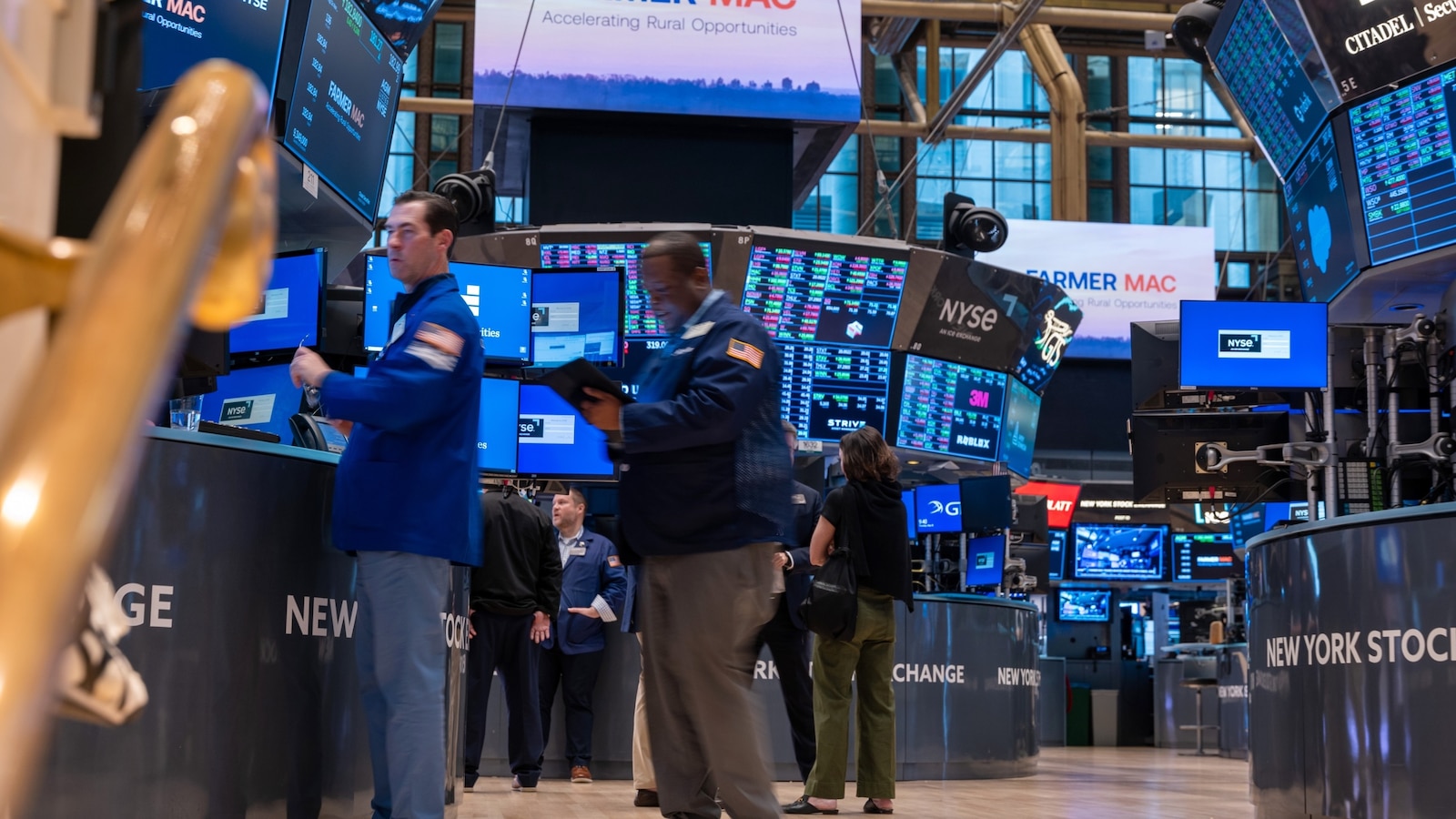
The Dow Jones Industrial Average closed at 50,115.68 on February 6, 2026, representing a 2.21% gain and marking the first time the venerable 30-stock index surpassed the psychologically significant 50,000 level [0][1]. The trading session saw robust volume of 772.92 million shares, with the index trading within a range of 49,032.19 to 50,169.65. According to CNN Business, this achievement reflects “Wall Street’s optimism about the US economy” and represents the culmination of an extended bull market that has pushed major indices to record highs [1].
Matt Dmytryszyn, Chief Investment Officer at Composition Wealth, provided context for the milestone’s significance, noting that “the positives of the Dow getting to that new milestone is it’s showing we’re seeing a broadening in the market” [1]. This observation highlights a critical distinction between the Dow’s composition and other major indices: the Dow’s weighting methodology and sector focus on financials and industrials rather than technology has enabled it to capture strength in areas of the economy that have performed well even as technology stocks faced headwinds [1]. The S&P 500 and NASDAQ, which carry significantly higher technology sector weightings, experienced a more volatile week characterized by sharp sell-offs followed by partial recoveries.
Bitcoin demonstrated its characteristic volatility by rebounding sharply on February 6, 2026, recovering above $70,000 after threatening to fall below the $60,000 support level just one day prior [2][3]. The cryptocurrency closed at approximately $70,618, representing a 0.13% daily gain but reflecting the dramatic 11% bounce from the previous session’s lows [0][2]. The 52-week trading range of $60,001 to $126,296 underscores the significant volatility that characterizes digital asset markets, with the current price situated in the lower portion of this range.
CNBC reported that Bitcoin’s rebound coincided with broader market recovery, suggesting that investor sentiment toward risk assets was improving following a period of elevated uncertainty [2]. However, analyst caution remains prominent. Bloomberg quoted 10X Research estimates suggesting Bitcoin could fall as low as $50,000 if selling pressure intensifies [3]. Conversely, Damien Loh, Chief Investment Officer, observed that “the bounce back from $60,000 suggests there’s strong support there” [3]. The cryptocurrency’s market capitalization of $1.41 trillion positions it as a significant asset class whose movements increasingly correlate with broader risk appetite in financial markets [0].
Crypto-related equities experienced strong performance alongside the digital currency’s rebound. Strategy (MSTR), MARA Holdings (MARA), and Galaxy Digital (GLXY) all recorded double-digit percentage gains, demonstrating the leveraged exposure these stocks provide to cryptocurrency price movements [4].
The week of February 2-6, 2026, witnessed significant volatility in technology sectors, with the NASDAQ experiencing consecutive declines of 1.74% on February 3 and 1.35% on February 4 before recovering on February 6 [0]. The S&P 500 and NASDAQ both posted gains of approximately 1.70-1.79% on February 6, but the weekly performance remained mixed as the earlier losses created significant headwinds.
The software sector experienced particularly pronounced selling pressure, with the Morningstar US Software Index declining 5.6% during the week [10]. Individual software stocks faced significant pressure: Microsoft (MSFT) fell 3.7%, Salesforce (CRM) declined 6.0%, and Adobe (ADBE) dropped 4.6% [10]. CNN Business reported that “consensus about software companies has flipped to them being AI victims, not beneficiaries” [9], reflecting growing investor concern that artificial intelligence developments could potentially disrupt established software business models.
Nick Dempsey, Director of Media Equity Research at Barclays, expressed skepticism about the extent of AI disruption, writing that “it just does not seem realistic” that AI companies can supplant industry-specific software tools [9]. Tom Essaye, President of Sevens Report Research, provided a more nuanced perspective, noting that “at this point, the negativity surrounding AI-related tech is getting pretty intense… Granted, there are reasons for the skepticism, but the declines in some of these stocks are substantial, and if AI is more resilient than expected (which has been the case in each test so far over the past three years), then there are opportunities [for buying] developing” [9].
Amazon (AMZN) shares experienced significant volatility following the company’s Q4 2025 earnings report, which revealed mixed results and an aggressive capital expenditure forecast [7][8]. While revenue exceeded analyst estimates, earnings per share missed expectations, and management raised its 2026 capital spending guidance to $200 billion—a figure that raised concerns among investors about cash flow implications [7].
The stock declined sharply in extended trading following the announcement, with CNBC reporting that “Amazon shares plunged more than 10% in extended trading Thursday after the company posted mixed fourth-quarter earnings and boosted its 2026 spending forecast to $200 billion” [7]. However, the shares recovered significantly on February 6, closing at $210.32—a 3.76% gain on elevated volume of 179.38 million shares [0]. The trading pattern suggests that investors may be reassessing the long-term implications of the spending plan following initial negative reactions.
CEO Andy Jassy addressed investor concerns by noting that spending would “predominantly” go to AWS, where non-AI workloads are “growing at a faster rate than we anticipated” [7]. The Motley Fool reported positively on this statement, suggesting that the aggressive investment stance could position Amazon for sustained long-term growth despite near-term cash flow pressures [8].
Roblox Corporation (RBLX) reported exceptional Q4 and full-year 2025 results that significantly exceeded company guidance and long-term targets [5][6]. The company generated quarterly revenue of $1.4 billion, representing 43% year-over-year growth, while quarterly bookings reached $2.22 billion—a 63% increase year-over-year that “easily cleared consensus estimates” [5][6].
Despite the strong fundamental performance, RBLX shares experienced notable post-earnings volatility. The stock surged approximately 10% following the earnings announcement but subsequently gave back gains in subsequent trading sessions [5]. On February 6, shares closed at $66.42, representing a 1.47% decline on volume of 32.41 million shares—significantly elevated compared to average daily trading volume [0]. The disconnect between fundamental performance and stock price movement may reflect broader market concerns about growth stock valuations or specific investor appetite for the gaming sector.
Roblox provided forward guidance projecting full-year 2026 revenue of $6.0-$6.2 billion, with bookings between $8.2-$8.5 billion [6]. These targets represent continued strong growth, though the rate of acceleration may moderate compared to 2025 performance.
The February 6 trading session revealed notable sector rotation patterns that provide insight into investor positioning during the technology sell-off [0]. Defensive sectors outperformed: Real Estate advanced 3.07%, Utilities gained 1.83%, and Healthcare rose 1.76%. Conversely, economically sensitive sectors lagged: Basic Materials declined 1.13%, Energy fell 0.26%, and Communication Services slipped 0.23%.
The Russell 2000 small-cap index gained 2.26%, outperforming the major indices and suggesting that market participants were rotating toward value-oriented and domestically focused equities [0]. This defensive rotation pattern during periods of technology sector weakness is characteristic of risk-averse positioning, where investors seek stability in traditionally defensive sectors while reducing exposure to higher-growth, higher-volatility technology investments.
The Super Bowl LX (60) represents a significant event for the gaming and entertainment sectors, with the American Gaming Association projecting record legal wagering of $1.76 billion in the United States [11]. This represents a 61% year-over-year increase and reflects the growing acceptance and accessibility of legal sports betting. CBS News reported that the surge is “emboldened by loosened restrictions from federal” regulations [12], indicating that regulatory changes have created a more favorable environment for legal wagering.
The entertainment sector also received attention through coverage of Kevin Hart’s Gran Coramino Tequila brand, which has developed into a “multimillion-dollar tequila brand” with aggressive growth plans for 2026 [13]. According to James Morrissey, “We’ve got aggressive targets over the next few years” for Gran Coramino’s growth plan [13]. The brand’s Coramino Fund has allocated $10,000 grants to support entrepreneurs, demonstrating the growing intersection between celebrity branding and consumer goods investments [14].
The February 6, 2026 market developments reveal a financial environment characterized by significant cross-currents across different asset classes and sectors. The Dow Jones Industrial Average’s historic crossing of the 50,000 level represents a psychological milestone that reflects broader economic optimism and sector rotation away from technology concentration [0][1]. Bitcoin’s dramatic recovery above $70,000 demonstrates both the volatility inherent in cryptocurrency markets and the strong support levels that emerge at psychologically significant price points [2][3].
The technology sector’s pronounced weakness, particularly in software stocks, reflects investor uncertainty regarding the implications of artificial intelligence for established business models [9][10]. While concerns about AI disruption are legitimate, the magnitude of some stock price declines may be discounting pessimistic scenarios more aggressively than current fundamentals warrant.
Amazon’s mixed earnings results and aggressive capital expenditure plans highlight the tension between near-term financial discipline and long-term competitive positioning in technology infrastructure [7][8]. Roblox’s strong fundamental performance demonstrates continued growth in the gaming sector, though the disconnect between earnings results and stock price movement suggests broader market sentiment factors influence equity valuations beyond company-specific fundamentals [5][6].
The record Super Bowl betting projections and Kevin Hart’s tequila brand success provide insight into consumer discretionary spending patterns and the intersection of celebrity branding with consumer goods [11][12][13][14]. These developments, while smaller in absolute scale than major equity market movements, reflect broader economic trends in entertainment and premium goods consumption.
Insights are generated using AI models and historical data for informational purposes only. They do not constitute investment advice or recommendations. Past performance is not indicative of future results.
About us: Ginlix AI is the AI Investment Copilot powered by real data, bridging advanced AI with professional financial databases to provide verifiable, truth-based answers. Please use the chat box below to ask any financial question.