Elon Musk's SpaceX-xAI Merger Creates $1.25 Trillion Conglomerate Targeting Mid-2026 IPO
Unlock More Features
Login to access AI-powered analysis, deep research reports and more advanced features
About us: Ginlix AI is the AI Investment Copilot powered by real data, bridging advanced AI with professional financial databases to provide verifiable, truth-based answers. Please use the chat box below to ask any financial question.
Related Stocks
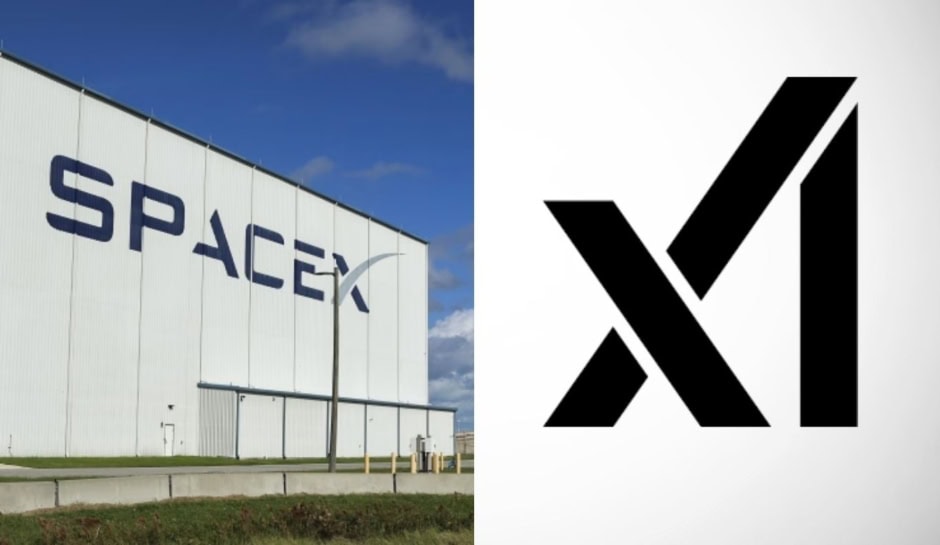
The SpaceX-xAI merger announced in early February 2026 represents one of the most significant corporate combinations in recent history, combining the world’s most valuable private aerospace company with one of the fastest-growing AI startups. According to the New York Times report [1], this deal will test investor appetite for giant combinations of fundamentally unalike businesses—a challenge that has historically troubled diversified technology conglomerates.
The strategic rationale centers on Musk’s vision of integrating artificial intelligence capabilities with SpaceX’s satellite infrastructure and launch capabilities. The combined entity plans to develop orbital AI data centers that would leverage unlimited solar power available in space, addressing the critical energy constraints that currently limit AI development on Earth [2]. The Federal Communications Commission has already approved SpaceX’s plan for a million-satellite orbital data center network, providing regulatory clearance for this ambitious initiative [2].
From a financial structure perspective, the merger employs a tax-free triangular merger structure that isolates xAI’s liabilities—including approximately $12 billion in debt from the X platform acquisition—from SpaceX’s balance sheet [3][4]. This structuring approach reflects careful planning to protect SpaceX’s valuable aerospace contracts and government relationships while still providing xAI with access to significant capital resources. The deal reportedly leaves xAI’s legal liabilities, including an ongoing European Union probe into Grok AI services, within the subsidiary structure rather than transferring them to SpaceX [4].
Musk’s personal financial stake in the combined entity is estimated at approximately 43%, with his overall net worth surging to an unprecedented $852 billion according to market analysts [1]. This milestone makes Musk the first individual to surpass the $800 billion threshold, with the majority of his wealth now concentrated in the combined SpaceX-xAI entity rather than his Tesla holdings.
The merger highlights a broader trend of technology companies seeking to establish dominant positions in the AI infrastructure race through unconventional means. While competitors like Google, Microsoft, and Amazon have pursued AI development through traditional data center expansion, Musk’s strategy envisions leapfrogging terrestrial limitations by moving computational infrastructure to orbit [1]. This approach, while ambitious, faces substantial technical and economic challenges that have yet to be fully demonstrated at scale.
The corporate governance implications of this merger warrant particular attention. Musk already faces criticism for his divided attention across multiple companies, including Tesla, SpaceX, xAI, the X platform (formerly Twitter), Neuralink, and The Boring Company. The addition of another major holding—particularly one combining two of his most capital-intensive ventures—raises questions about management bandwidth and potential conflicts of interest between the various entities [1]. The fact that Tesla’s Optimus robotics division and the X social media platform are expected to become major customers of the combined entity further complicates the corporate structure.
From a competitive dynamics perspective, the merger creates a unique entity that combines launch capabilities, satellite internet infrastructure (Starlink), AI model development (Grok), and now orbital computing ambitions [2]. This vertical integration could prove highly disruptive to competitors in both the aerospace and AI sectors, though it also invites heightened regulatory scrutiny given Musk’s existing market positions.
The timing of this announcement appears strategically coordinated with the planned mid-2026 IPO, allowing Wall Street investors to assess the combined entity’s potential before committing capital. Bloomberg’s analysis suggests the merger serves partially as a “mega-bailout” for xAI, which has been burning approximately $9.5 billion annually while struggling to achieve profitability [4][6]. The access to SpaceX’s substantial cash flows and established revenue streams provides a significant capital buffer for xAI’s continued AI development spending.
The execution risk associated with merging aerospace manufacturing with AI development represents the most significant concern. These industries operate under fundamentally different paradigms—SpaceX benefits from mature supply chains, established government relationships, and relatively predictable revenue streams, while xAI operates in a rapidly evolving AI landscape characterized by intense competition, massive capital requirements, and uncertain monetization pathways [4]. Integration challenges could distract management, dilute focus, and create organizational friction that impedes both companies’ growth trajectories.
Cash burn concerns remain elevated despite the merger structure. xAI’s reported $9.5 billion annual spending rate [4] against a backdrop of intense competition from well-capitalized rivals including OpenAI, Anthropic, and the major technology companies creates substantial financial pressure. While access to SpaceX’s capital resources provides a buffer, the combined entity will need to demonstrate a credible path to profitability to satisfy IPO investors expecting returns on their capital.
Regulatory risks persist across multiple jurisdictions. The triangular merger structure may isolate xAI’s legal liabilities from SpaceX, but the EU investigation into Grok AI services remains an active concern that could result in significant fines or operational restrictions [4]. Additionally, the Committee on Foreign Investment in the United States (CFIUS) review will likely examine foreign investment implications given the strategic nature of both aerospace and AI technologies.
Valuation execution risk presents another significant challenge. While the combined entity is currently valued at $1.25 trillion with an IPO target of $1.5 trillion, market conditions in mid-2026 may differ substantially from current expectations [2]. Achieving such an ambitious valuation will require demonstrating tangible progress toward orbital AI data center deployment and establishing sustainable AI revenue streams.
The orbital AI data center concept, if successfully implemented, could establish an insurmountable competitive advantage in AI infrastructure. Access to continuous solar power, elimination of terrestrial cooling requirements, and avoidance of land acquisition and grid connection constraints could fundamentally alter the economics of large-scale AI computing [2]. First-mover advantage in this domain could prove exceptionally valuable as AI applications expand.
The integration synergies between SpaceX’s Starlink satellite network and xAI’s AI capabilities create opportunities for novel product development. Real-time AI processing at the network edge, combined with global coverage through Starlink’s constellation, could enable applications currently impossible with terrestrial infrastructure alone. This includes potential applications in autonomous vehicles, remote sensing, global communications, and disaster response.
Tesla’s relationship with the combined entity represents an additional opportunity for value creation. Tesla’s Optimus humanoid robot project and its autonomous driving technology could benefit significantly from access to advanced AI capabilities and potential orbital computing resources. The expectation that Tesla will become a major customer of the combined entity [4] suggests the merger could strengthen Tesla’s competitive position as well.
The SpaceX-xAI merger creates the largest private company combination in history by value, combining two of Elon Musk’s most strategically important ventures into a single entity valued at approximately $1.25 trillion [1][2]. The transaction employs a tax-free triangular merger structure that maintains xAI as a wholly-owned subsidiary while isolating certain liabilities and debt obligations from SpaceX’s core aerospace business [3][4].
The merged entity’s primary strategic initiative involves developing orbital AI data centers leveraging SpaceX’s launch capabilities, Starlink satellite infrastructure, and xAI’s artificial intelligence technology. Federal regulatory approval has already been obtained for the satellite component of this vision [2], though significant technical and commercial challenges remain before orbital AI computing becomes operational.
Musk’s personal stake of approximately 43% in the combined entity has propelled his net worth to an estimated $852 billion, marking the first time any individual has surpassed the $800 billion threshold [1]. The majority of this wealth is now concentrated in the SpaceX-xAI entity rather than his Tesla holdings, reflecting the strategic importance of this combination.
The transaction is positioned for completion ahead of a planned mid-2026 initial public offering targeting a $1.5 trillion valuation [2]. Wall Street investors will evaluate the combined entity’s ability to execute on its orbital AI vision while managing the inherent challenges of integrating two highly different business models. The success or failure of this offering will have significant implications for future conglomerate combinations in the technology sector.
Regulatory scrutiny remains an ongoing consideration, with the EU’s investigation into Grok AI services representing the most immediate legal concern [4]. The triangular merger structure appears designed to protect SpaceX’s government contracts and aerospace relationships from potential liabilities arising from xAI’s AI services operations.
Insights are generated using AI models and historical data for informational purposes only. They do not constitute investment advice or recommendations. Past performance is not indicative of future results.
About us: Ginlix AI is the AI Investment Copilot powered by real data, bridging advanced AI with professional financial databases to provide verifiable, truth-based answers. Please use the chat box below to ask any financial question.