Fed's Bostic Emphasizes 2% Inflation Target as Paramount Amid Leadership Transition
Unlock More Features
Login to access AI-powered analysis, deep research reports and more advanced features
About us: Ginlix AI is the AI Investment Copilot powered by real data, bridging advanced AI with professional financial databases to provide verifiable, truth-based answers. Please use the chat box below to ask any financial question.
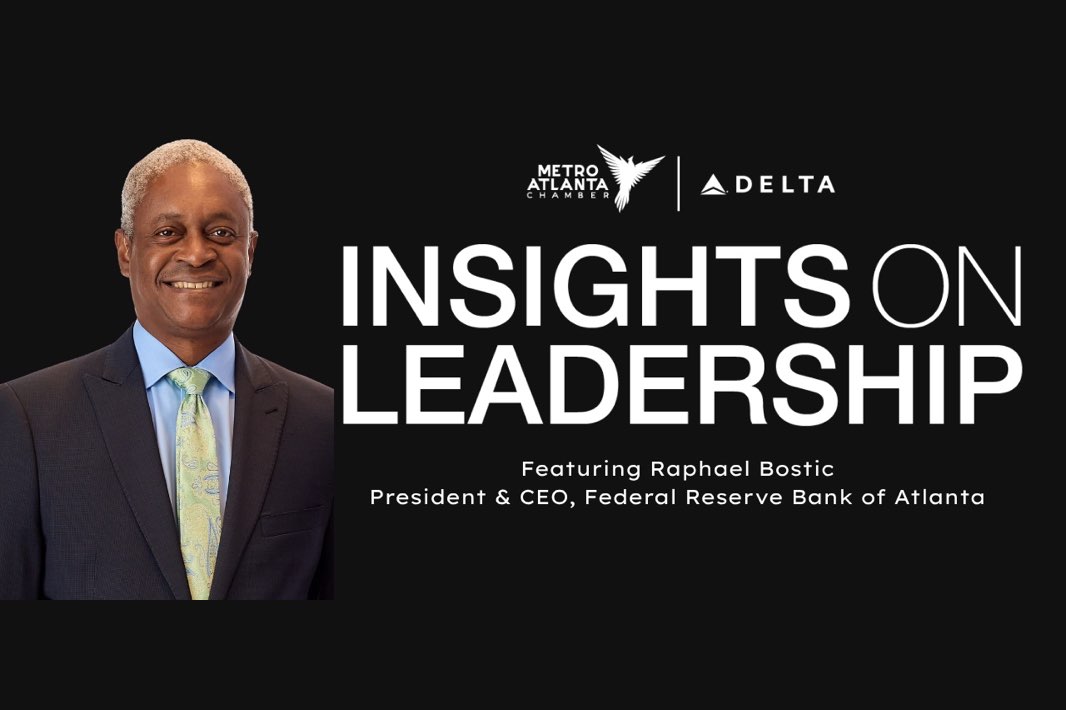
This analysis examines the February 7, 2026 Bloomberg interview with Federal Reserve Bank of Atlanta President Raphael Bostic, conducted by Bloomberg’s Michael McKee [1]. The interview provides critical insights into the current Fed leadership’s priorities, the ongoing debate about the central bank’s mandate, and the potential policy implications of Kevin Warsh’s nomination as Fed Chair. As the Federal Reserve navigates a pivotal transition period, Bostic’s comments illuminate the tensions between maintaining traditional monetary policy focus and addressing broader economic concerns.
President Bostic articulated that returning inflation to the Federal Reserve’s 2% target represents the “paramount” objective for the central bank [1]. This emphasis comes at a critical juncture when inflation has shown persistent stickiness above target levels, creating challenges for policymakers attempting to balance price stability with maximum employment. The strong language used by Bostic signals that even amid leadership transition, the institutional commitment to price stability remains foundational to Fed operations.
The inflation focus aligns with historical Federal Reserve doctrine but takes on added significance given the current economic environment where price pressures have proven more enduring than initially anticipated. Bostic’s framing suggests that regardless of who leads the Fed, the institutional bias toward achieving the 2% target will persist, providing some predictability for markets and economic actors.
The interview addressed growing concerns about political pressure on the Federal Reserve, including Department of Justice subpoenas and Supreme Court involvement in matters affecting the central bank [1]. Bostic’s defense of Fed independence reflects an institutional concern that has become increasingly prominent as the new administration examines the scope of Federal Reserve authority. This issue carries substantial implications for monetary policy credibility and the central bank’s ability to make decisions based on economic rather than political considerations.
The independence question intersects directly with the mission creep debate, as critics argue that an expanded Fed mandate creates more opportunities for political influence while defenders contend that the central bank’s broader economic role serves public interest. Bostic’s measured comments suggest a institutional preference for maintaining autonomy while acknowledging the need for public accountability.
The concept of “mission creep” at the Federal Reserve has gained prominence among critics who argue the central bank has expanded beyond its traditional focus on monetary policy into areas more appropriately addressed by fiscal policy or other governmental institutions [3]. This criticism typically centers on the Fed’s dual mandate (maximum employment and price stability), with opponents suggesting that employment considerations have increasingly influenced monetary policy decisions in ways that blur institutional boundaries.
Kevin Warsh’s nomination has amplified this debate, as he has publicly advocated for narrowing the Fed’s focus toward pure inflation targeting [2]. Proponents of this view argue that clearer boundaries would enhance Fed effectiveness and reduce political vulnerability, while critics contend that such an approach would diminish the central bank’s ability to address broader economic challenges including wealth inequality and labor market dynamics.
Bostic’s engagement with the K-shaped economy concept reflects awareness of divergent economic outcomes across different population segments [1]. The K-shaped characterization describes an economic recovery or expansion where wealthy segments experience robust gains while lower and middle-income groups face continued challenges, creating a bifurcated economic landscape that diverges at a central point like the two arms of the letter K.
This discussion carries implications for monetary policy effectiveness, as aggregate statistics may mask significant variation in economic experiences across demographic and income categories. If the Fed narrows its focus as Warsh suggests, the central bank may pay less attention to distributional outcomes, potentially concentrating policy benefits among asset holders and higher-income households who benefit most from lower interest rates and equity appreciation.
The interview occurred against a backdrop of strong equity market performance, with major indices posting substantial gains on February 6, 2026 [0]. The S&P 500 advanced 1.70% to approximately 6,932.31 points, while the NASDAQ gained 1.79% to reach around 23,031.21 points. The Dow Jones Industrial Average showed the strongest relative performance, rising 2.21% to approximately 50,115.68 points [0].
These gains suggest positive market sentiment surrounding the leadership transition and potential policy shifts. Investors appear to be pricing in a more accommodative monetary policy stance under new leadership, with the expectation that Kevin Warsh’s approach may include interest rate reductions. However, historical analysis of Warsh’s positions suggests nuanced considerations that may not fully align with market expectations.
The 10-year Treasury yield at 4.21% reflects ongoing debate about the trajectory of monetary policy [0]. Bond markets are currently pricing in approximately 48% probability of a rate cut by the June 2026 Federal Reserve meeting [2], suggesting substantial uncertainty about the policy path ahead. This positioning indicates that while markets anticipate some accommodation, the probability of aggressive easing remains limited.
The Treasury yield level represents a middle ground between the higher rates that characterized the inflation fighting period and the lower rates that might accompany successful disinflation. Market participants are likely to adjust expectations based on incoming economic data, Fed communications, and developments in the confirmation process for new leadership.
The K-shaped economy discussion carries sector-specific implications. Industries with significant employment of middle and lower-income workers may face different dynamics than sectors concentrated in higher-income consumption. Financial services, real estate, and interest-rate-sensitive sectors would respond differently to policy changes than consumer discretionary or technology companies whose customer bases span income distributions.
Kevin Warsh’s nomination as Fed Chair has generated significant market attention due to his articulated policy preferences [2]. His advocacy for lower interest rates, a smaller Federal Reserve balance sheet, and reduced “mission creep” creates a potentially complex policy matrix. Lower rates would typically support economic expansion and asset prices, while balance sheet reduction could introduce upward pressure on yields and increase market volatility.
The expectation of two 25-basis-point rate cuts in 2026, as currently priced by markets, reflects optimism about near-term policy accommodation [2]. However, Warsh’s historical positions on inflation have been characterized as hawkish, suggesting potential tension between short-term easing expectations and longer-term price stability commitments. If inflation proves more persistent than anticipated, this tension could produce policy outcomes different from current market pricing.
The Senate confirmation process for Warsh will likely include substantial questioning on his views regarding Fed independence, mission creep, and his tolerance for inflation above the 2% target [3]. These hearings will provide signals about the potential direction of monetary policy under his leadership and may clarify apparent contradictions between his stated positions and market expectations.
Senators are expected to press for specific commitments on maintaining Fed independence from political pressure, clarifying the boundaries of acceptable monetary policy action, and articulating how he would balance the dual mandate if confirmed [3]. The answers provided during these hearings may significantly influence market expectations and economic sentiment.
The primary risk factor emerging from this development involves uncertainty about actual policy implementation under new leadership [2]. While markets have priced in a favorable scenario involving rate cuts and continued accommodation, the possibility exists that policy will diverge from expectations based on Warsh’s historical positions and the inflation environment. Market participants should maintain awareness of this divergence potential.
Warsh’s advocacy for shrinking the Federal Reserve’s Treasury holdings could introduce additional market volatility and affect long-term interest rate dynamics [2]. The balance sheet reduction process (quantitative tightening) has implications for mortgage rates, Treasury liquidity, and the overall functioning of fixed income markets. Changes to the pace or ultimate size of the balance sheet could produce effects beyond those anticipated from interest rate policy alone.
The combination of leadership transition, political pressure, and mission creep debate creates potential risks for Federal Reserve institutional credibility. If the public perception emerges that monetary policy decisions are influenced by political considerations rather than economic analysis, the Fed’s effectiveness in managing inflation expectations could be compromised. Bostic’s emphasis on public trust signals awareness of this concern within the institution [1].
The February 2026 timing of this interview places it at a critical juncture in the economic calendar. Several factors converge to make the coming months particularly significant for monetary policy assessment:
The February Federal Reserve meeting will provide insight into current policymakers’ assessment of economic conditions and may reveal internal tensions or consensus views that inform expectations for the transition period. Meeting minutes and subsequent Fed communications will be scrutinized for signals about the trajectory of policy.
Upcoming inflation data releases, including PCE and CPI readings, will be critical for gauging progress toward Bostic’s “paramount” 2% target [1]. These data points will influence both current Fed decision-making and assessments of the environment that new leadership will inherit. Persistent above-target inflation could complicate the case for accommodation, while trending toward target would support the rate cut expectations currently priced by markets.
The K-shaped economy dynamics will likely receive continued attention as policymakers assess whether aggregate economic indicators accurately reflect the experience of ordinary Americans. If the recovery continues to benefit higher-income households disproportionately, pressure for policy response may intensify regardless of official mandate interpretations.
The Bostic interview provides valuable insight into the Federal Reserve’s institutional priorities amid a consequential leadership transition. The emphasis on the 2% inflation target as “paramount” suggests continuity in fundamental policy orientation, while the engagement with mission creep and K-shaped economy discussions indicates awareness of ongoing debates about Fed scope and effectiveness.
Market participants should recognize that the current positive sentiment may not fully account for potential policy complications under new leadership. The tension between Warsh’s hawkish inflation history and market expectations for accommodation creates a source of uncertainty that will likely persist until actual policy actions clarify the trajectory. Maintaining diversified risk management approaches and adjusting expectations based on incoming data and communications represents prudent positioning for the period ahead.
This analysis synthesizes information from multiple sources to present a comprehensive view of Federal Reserve policy considerations as of February 2026. The findings indicate a central bank in transition, with institutional commitments to price stability remaining foundational while debates about mandate scope and leadership direction create near-term uncertainty. Market pricing reflects optimism about accommodation, though actual policy implementation may diverge from current expectations based on inflation developments and new leadership positions.
The original event source was a Bloomberg Television interview published on February 7, 2026 [1], supplemented by market data [0] and additional contextual analysis from Morningstar [2] and Washington Post [3] coverage of the Fed leadership transition.
[0] Ginlix Analytical Database / Market Data - Quantitative market indicators including equity index performance and Treasury yield levels as of February 6-7, 2026
[1] Bloomberg Television - “Fed’s Bostic Discusses Inflation, Warsh & K-Shaped Economy” interview with Raphael Bostic, conducted by Michael McKee, published February 7, 2026, URL: https://www.youtube.com/watch?v=3KQA4IDykIE
[2] Morningstar - “What Kevin Warsh as Fed Chair Could Mean for Interest Rates” - Analysis of potential monetary policy trajectory under new Fed Chair nomination
[3] Washington Post - “Senators should press Trump’s Fed nominee on mission creep” (February 5, 2026) - Coverage of confirmation process considerations and mandate debate
Insights are generated using AI models and historical data for informational purposes only. They do not constitute investment advice or recommendations. Past performance is not indicative of future results.
About us: Ginlix AI is the AI Investment Copilot powered by real data, bridging advanced AI with professional financial databases to provide verifiable, truth-based answers. Please use the chat box below to ask any financial question.