Russia-Ukraine Conflict: Global Energy Markets Impact Analysis
Unlock More Features
Login to access AI-powered analysis, deep research reports and more advanced features
About us: Ginlix AI is the AI Investment Copilot powered by real data, bridging advanced AI with professional financial databases to provide verifiable, truth-based answers. Please use the chat box below to ask any financial question.
Related Stocks
Based on my comprehensive analysis of the Russia-Ukraine conflict’s impact on global energy markets and commodity prices, I present the following detailed assessment.
As the Russia-Ukraine conflict enters its fourth year in February 2026, the geopolitical crisis continues to exert significant influence on global energy markets, commodity prices, and related equity sectors. The recent diplomatic developments—including U.S.-brokered peace talks in Abu Dhabi and the European Union’s aggressive energy independence timeline—have created a complex market environment characterized by persistent volatility, structural shifts in energy trade flows, and evolving investment opportunities [1][2][3].
The Russia-Ukraine conflict has reached a critical juncture as of February 2026. Recent developments include:
- U.S.-brokered peace talksin Abu Dhabi (February 5-7, 2026) concluded with a large-scale prisoner exchange agreement but failed to achieve substantive breakthroughs on core issues including territorial arrangements and ceasefire terms [3].
- U.S. diplomatic pressurecontinues, with the Trump administration pushing for a March 2026 peace deal, though significant challenges remain [3].
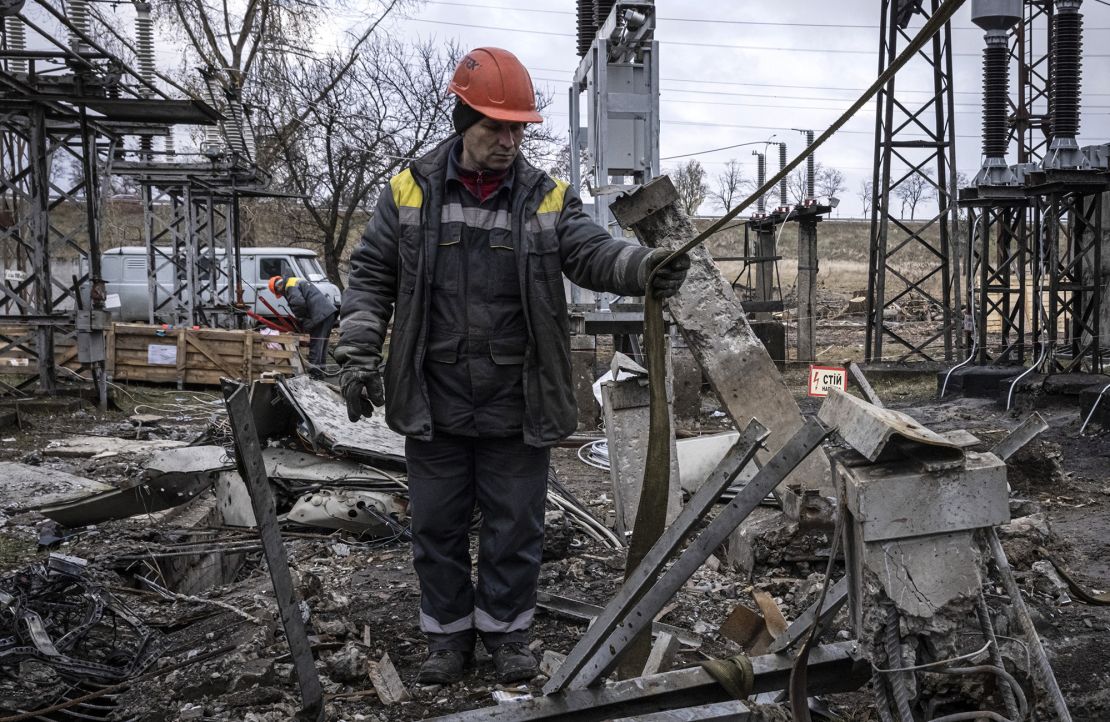
- Russian strikes on Ukrainian energy infrastructurepersist, maintaining pressure on Ukraine’s power generation and distribution systems [1][2].
- Combined war casualtiesare projected to reach 2 million by spring 2026, representing the highest troop deaths for any major power in any conflict since World War II [1].
Russian military strategy has consistently targeted Ukraine’s energy infrastructure, affecting:
- Thermal power generation facilities
- Transmission and distribution networks
- Natural gas storage and distribution systems
- Regional heating infrastructure
These strikes have had cascading effects on regional energy security and have reinforced European resolve to eliminate dependency on Russian energy supplies.
The European Union has accelerated its energy independence strategy with the following key milestones:
| Timeline | Policy Action | Impact |
|---|---|---|
| 2022-2023 | Initial sanctions and diversification | 40% reduction in Russian pipeline gas |
| 2024 | Increased LNG infrastructure | Record European LNG import capacity |
| 2025-2026 | Full ban implementation | Near-complete elimination of Russian gas |
| Late 2027 | Complete phase-out target | Zero Russian pipeline gas dependency [2] |
- European LNG imports have surged to record highs as reliance on LNG deepens [4]
- The EU has imposed a full ban to phase out Russian gas by late 2027 [2]
- Significant investments in alternative energy infrastructure have transformed Europe’s energy landscape
European Title Transfer Facility (TTF) gas prices have experienced significant volatility:
- January 2026: Gas prices surged during a “perfect storm” of supply concerns and winter demand [4]
- Early February 2026: TTF prices experienced a 15% sell-off, indicating market consolidation [4]
- Current market sentiment: Between bulls and bears as supply-demand fundamentals rebalance [4]
The gas price volatility reflects ongoing uncertainty regarding:
- Winter demand patterns
- LNG terminal utilization rates
- Storage inventory levels
- Geopolitical risk premiums
| Benchmark | Price | Status |
|---|---|---|
Brent Crude Oil |
$63.55/barrel | Under pressure |
WTI Crude Oil |
$60.35/barrel | Weaker than Brent |
The current oil price environment reflects:
- Oversupply concerns: Global production remains robust despite OPEC+ efforts
- Demand uncertainty: Economic growth forecasts vary significantly across regions
- Geopolitical risk premium: Remains relatively modest despite ongoing conflict
Based on current market conditions, we assess potential price movements under three scenarios:
| Scenario | Oil Price Impact | Gas Price Impact | Probability |
|---|---|---|---|
De-escalation |
-5% to -8% | -8% to -12% | 25% |
Status Quo |
+3% to +7% | +5% to +10% | 50% |
Escalation |
+10% to +20% | +20% to +30% | 25% |
The energy-related sectors are exhibiting mixed performance amid the ongoing geopolitical tensions:
| Sector | Daily Change | Status | Analysis |
|---|---|---|---|
Energy |
-0.26% | Underperforming | Pressure from commodity price weakness |
Basic Materials |
-1.13% | Underperforming | Demand concerns amid global uncertainty |
Utilities |
+1.83% | Outperforming | Defensive nature attracts capital |
Real Estate |
+3.07% | Strong Outperformance | Interest rate sensitivity |
The negative performance in the Energy sector reflects:
- Oil price weakness
- Uncertainty regarding production cuts
- Profit-taking after strong recent gains
| Index | Performance | Analysis |
|---|---|---|
S&P 500 |
+0.79% | Modest gains, broad stability |
NASDAQ |
-1.92% | Tech weakness amid growth concerns |
Dow Jones |
+4.18% | Strong industrial performance |
The Dow Jones’ relative outperformance reflects its higher composition of energy and industrial stocks, which benefit from continued geopolitical tensions.
| Period | Return |
|---|---|
| 1 Month | +25.77% |
| 3 Months | +27.13% |
| 6 Months | +40.65% |
| YTD | +21.50% |
| 1 Year | +36.85% |
- P/E Ratio: 22.38x
- Net Profit Margin: 8.91%
- Operating Margin: 10.48%
- ROE: 11.04%
- Strong Buy: 1 (1.9%)
- Buy: 21 (39.6%)
- Hold: 27 (50.9%)
- Sell: 4 (7.5%)
- Sales and Operating Revenue: $83.31B (55.0%)
- Energy Products: $44.34B (29.3%)
- Upstream: $14.02B (9.2%)
- Non-US Revenue: $97.31B (57.2%)
- EPS: $1.71 actual vs $1.70 estimate (+0.59% surprise)
- Revenue: $80.04B actual vs $80.63B estimate (-0.74% surprise)
| Metric | Value |
|---|---|
| Period Open | $146.95 |
| Period Close | $180.86 |
| Period High | $182.59 |
| Period Low | $132.04 |
| Total Return | +23.08% |
| Price Range | $133.73 - $181.23 |
| Daily Volatility | 1.51% |
| 50-Day MA | $158.91 |
| 200-Day MA | $152.25 |
| Metric | Value |
|---|---|
| Period Open | $72.35 |
| Period Close | $76.99 |
| Period High | $84.58 |
| Period Low | $60.67 |
| Total Return | +6.41% |
| Daily Volatility | 1.95% |
| 20-Day MA | $74.55 |
| 200-Day MA | $72.26 |
- Cautious: Oil prices face downward pressure from oversupply concerns
- Volatility expected: Peace talks and geopolitical developments will drive intraday swings
- Defensive positioning recommended: Utilities offer relative safety
- Constructive on energy majors: XOM and CVX remain well-positioned
- LNG infrastructure beneficiaries: Companies involved in LNG terminals and transport
- European energy independence: Long-term structural demand for non-Russian energy
- Structural transformation: European energy markets permanently altered
- Investment in alternatives: Renewable energy and efficiency investments accelerate
- Energy security premium: Permanent risk premium in European energy prices
| Risk | Impact | Probability |
|---|---|---|
Peace deal breakdown |
Oil +15-20%, Gas +25-30% | Medium |
Escalation in conflict |
Oil +10-15%, Gas +20-25% | Medium |
OPEC+ production cuts |
Oil +5-10% | Low-Medium |
Global recession |
Oil -15-25%, Gas -20-30% | Low |
Iran conflict |
Oil +20-30% | Low |
- Energy Majors (Overweight): XOM and CVX offer strong fundamentals and dividend yields
- Utilities (Neutral-Hold): Defensive positioning with stable earnings
- LNG Infrastructure (Overweight): Beneficiaries of European energy transition
- Oil Services (Neutral): Dependent on drilling activity levels
- Renewable Energy (Overweight): Long-term structural growth story
- Conservative investors: 5-10% portfolio weight in energy
- Moderate investors: 10-15% portfolio weight in energy
- Aggressive investors: 15-20% portfolio weight in energy
-
The Russia-Ukraine conflict continues to reshape global energy markets, with Europe on track to eliminate Russian gas dependency by late 2027.
-
Oil prices remain relatively containedat $60-64/barrel despite ongoing geopolitical tensions, reflecting oversupply concerns.
-
Energy majors (XOM, CVX) have delivered strong performance, with XOM returning +27.95% and CVX +23.08% since September 2024.
-
European LNG imports have reached record highs, fundamentally altering global gas trade flows.
-
Peace talks continue with U.S. pressure for a March 2026 resolution, though significant challenges remain.
-
The Energy sector underperformed on February 8, 2026(-0.26%), while Utilities (+1.83%) benefited from defensive positioning.
-
Long-term structural changesin European energy markets create lasting investment opportunities in alternative energy infrastructure.

[1] CTV News - “Russia-Ukraine War” (https://www.ctvnews.ca/world/russia-ukraine-war)
[2] China Daily - “Europe” (https://www.chinadaily.com.cn/world/europe/page_2.html)
[3] CGTN - “Russia-Ukraine talks stall, U.S. pushes for March peace deal” (https://news.cgtn.com/news/2026-02-07/Russia-Ukraine-talks-stall-U-S-pushes-for-March-peace-deal-1Kz7zJIPIeA/p.html)
[4] European Gas Hub - TTF Gas Prices Analysis (https://www.europeangashub.com/)
[5] Oil Price API - Live Oil Prices (https://www.oilpriceapi.com/)
[6] China Daily - “Russia-Ukraine conflict: Three years on” (https://www.chinadaily.com.cn/world/special_coverage/67b8453ea310c240449d6975)
[7] CGTN - “2nd round of Russia-Ukraine talks ends in UAE with prisoner swap deal” (https://news.cgtn.com/news/2026-02-06/2nd-round-of-Russia-Ukraine-talks-ends-in-UAE-with-prisoner-swap-deal-1Kx9RxN02mQ/p.html)
Analysis conducted using data from February 8, 2026. Past performance is not indicative of future results. Investors should conduct their own due diligence before making investment decisions.
Insights are generated using AI models and historical data for informational purposes only. They do not constitute investment advice or recommendations. Past performance is not indicative of future results.
About us: Ginlix AI is the AI Investment Copilot powered by real data, bridging advanced AI with professional financial databases to provide verifiable, truth-based answers. Please use the chat box below to ask any financial question.