Japan Severe Winter Weather 2026: Economic and Supply Chain Impact Analysis
Unlock More Features
Login to access AI-powered analysis, deep research reports and more advanced features
About us: Ginlix AI is the AI Investment Copilot powered by real data, bridging advanced AI with professional financial databases to provide verifiable, truth-based answers. Please use the chat box below to ask any financial question.
Based on my research, I can now provide a comprehensive analysis of how severe winter weather in Japan could disrupt supply chains and impact regional economic activity.
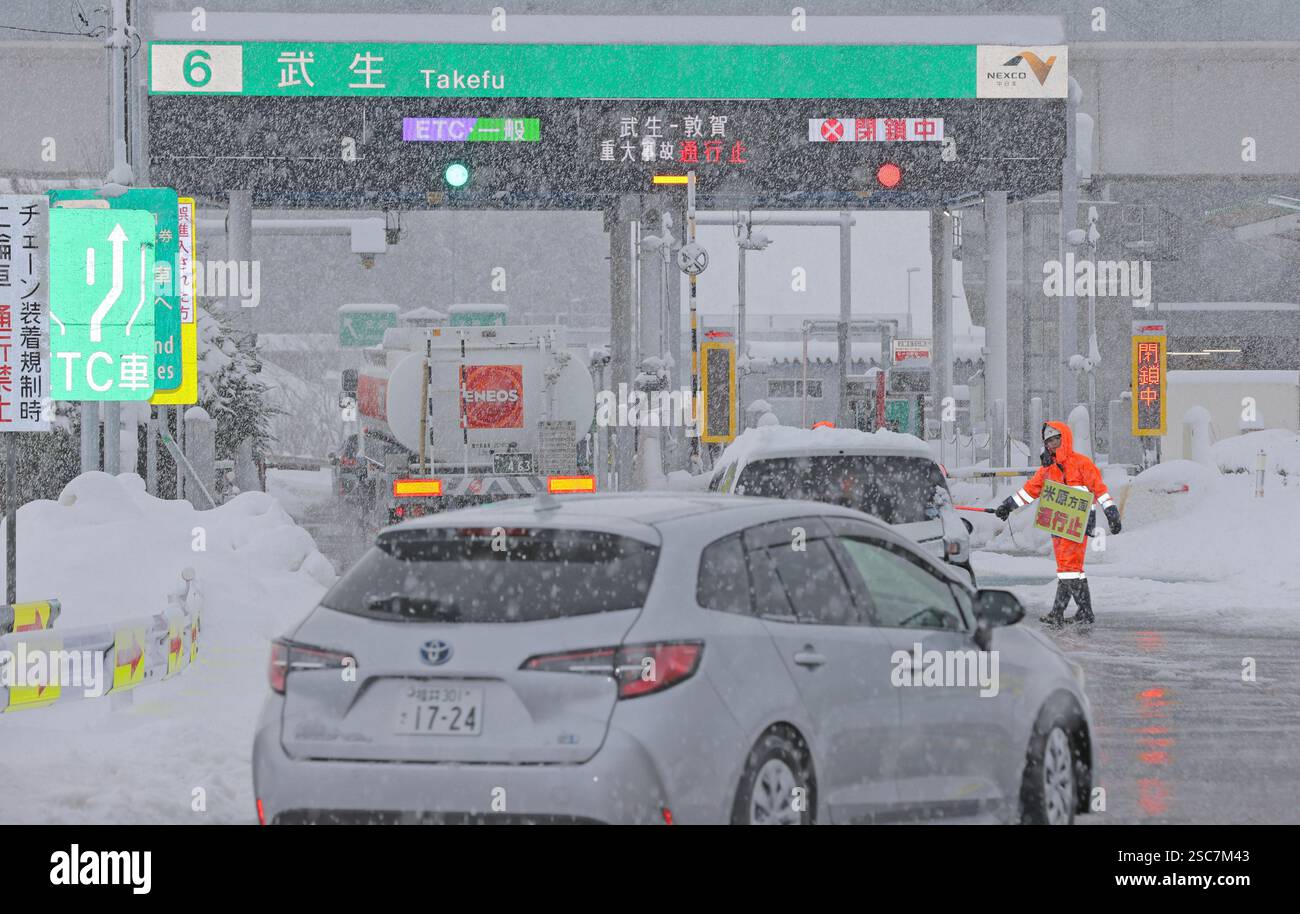
Record-breaking snowfall has struck Japan since January 20, 2026, blanketing northern regions and the Sea of Japan coast with devastating consequences. According to reports, the death toll has reached 46 with over 500 injuries as the nation grapples with its most severe winter weather in decades [1]. The northern city of Aomori recorded 183 cm (72 inches) of accumulated snow, breaking a 40-year record set in 1986, while several cities reported积雪 accumulation of at least 135 cm (53 inches) [2]. The Japan Meteorological Agency issued urgent warnings for heavy snowfall along the Sea of Japan coast, with forecasts of up to 60 cm in Niigata Prefecture, 50 cm in Hokkaido, and 40 cm in the Hokuriku region within 24-hour periods [3].
The transportation sector has borne the immediate and most visible impact of the severe weather. Major expressways—including the Meishin Expressway, Shin-Meishin Expressway, and Hokuriku Expressway—experienced preventive closures, effectively severing critical freight corridors across the nation [3]. National highways and major roads from Hokkaido through Chugoku and Shikoku regions were closed, creating substantial barriers to ground transportation. Rail services faced similar disruptions, with the Tokaido Shinkansen experiencing delays between Nagoya and Kyoto, while conventional lines spanning from Hokkaido to Chugoku and Shikoku were delayed or suspended entirely [3].
These transportation dislocations have profound implications for the movement of goods. Road freight, which constitutes a significant portion of Japan’s domestic logistics network, faced severe constraints, while rail-based container movement—particularly along the Sea of Japan corridor essential for east-west distribution—experienced substantial delays. The Japan Weather Association’s risk assessment indicates that heavy snowfall along the Sea of Japan coast creates conditions where snow accumulation reduces road safety and vehicle performance, leading to delivery delays, increased transit times, and the necessity for route re-planning with extra loading and unloading time requirements [4].
Japan’s manufacturing sector faces multiple vulnerabilities from extended winter weather events. According to industry analysis from the Japan Weather Association, snow-induced delivery delays create stock-out risks for manufacturing operations that rely on just-in-time supply chains [4]. The manufacturing sector is particularly exposed to cold spell impacts that cause price volatility in raw materials, such as vegetables for food processing, while equipment freezing and safety hazards can result in potential downtime for production facilities.
Historical patterns from similar events demonstrate that Japan’s automotive manufacturers, including Honda and Toyota, have previously suspended production at domestic facilities during severe weather events [5]. The country’s position as a global leader in semiconductor manufacturing—with Japanese companies accounting for approximately 29% of global semiconductor manufacturing equipment production—creates additional exposure, as the highly specialized and temperature-sensitive fabrication processes require consistent logistics support for both raw material inputs and finished product distribution [6].
The supply chain implications extend far beyond immediate transportation delays. The Japan Weather Association identifies several cascading risk factors that businesses must consider:
The economic geography of Japan’s manufacturing base concentrates production facilities along the Sea of Japan coast and in regions currently experiencing the heaviest snowfall. Prefectures including Niigata, Ishikawa, and Tottori—areas with significant manufacturing and food processing operations—have reported the most severe conditions [3]. The deployment of military troops to clear snow from homes, particularly for elderly residents, underscores the severity of the situation and suggests that normal economic activity in affected areas has been substantially curtailed.
For the broader Asia-Pacific region, Japan serves as a critical node in supply chains connecting East Asian manufacturing hubs with global markets. Any sustained disruption to Japanese logistics networks creates ripple effects throughout the regional economy, potentially affecting automotive assembly plants in Southeast Asia, electronics manufacturers in South Korea, and technology companies worldwide that rely on Japanese components [6].
Industry observers recommend several mitigation strategies for businesses navigating these disruptions. These include early shipping with ample lead time, planning alternative routes and hub transfers, equipping vehicles with winter tires, chains, and winter gear, and integrating high-resolution snow forecast APIs into operational planning systems [4]. Companies are advised to adjust power-generation schedules for snow risk, update fuel procurement plans, and review logistics strategies weekly as forecast accuracy improves.
The Japan Weather Association’s advanced warning systems, including the Snow Accumulation Information API providing 1-kilometer resolution snow depth and density data with 96-hour forecasts, and ENeAPI offering snowfall forecasts up to two weeks in advance, represent tools that businesses are increasingly incorporating into supply chain resilience planning [4].
The severe winter weather in Japan represents a significant supply chain risk event with potential implications extending throughout the Asia-Pacific manufacturing ecosystem. The combination of record snowfall, extensive transportation disruptions, and concentrated manufacturing activity in affected regions creates conditions where supply chain resilience will be tested. As the full economic assessment of this event develops, businesses with exposure to Japanese supply chains should anticipate potential delays, cost increases, and the need for alternative sourcing arrangements in the near-term outlook.
[1] Euronews - Heavy Snowfall in Japan Leaves at Least 45 Dead, More Than 500 Injured (https://www.euronews.com/video/2026/02/07/heavy-snowfall-in-japan-leaves-at-least-45-dead-more-than-500-injured)
[2] Al Jazeera - Record-Breaking Snow Blankets Japan, Killing at Least 30 People (https://www.aljazeera.com/news/2026/2/3/record-breaking-snow-blankets-japan-killing-at-least-30-people)
[3] Japan Times - Heavy Snow Continues Along Sea of Japan Coast, Disrupting Transportation (https://www.japantimes.co.jp/news/2026/01/25/japan/japan-heavy-snow-ishikawa-tottori/)
[4] Japan Weather Association - Japan’s 2025–2026 Winter Snow Risks: Business Impacts (https://weather-jwa.jp/en/news/articles/post9778)
[5] Various News Sources - Honda Production Suspension in Japan (https://www.globaltimes.cn/page/202512/1350920.shtml)
[6] CSIS - Semiconductor Manufacturing Equipment Market Share (https://www.csis.org/analysis/semiconductor-supply-chains-japan)
杭电股份概念炒作事件分析:A股非理性投资行为警示
Insights are generated using AI models and historical data for informational purposes only. They do not constitute investment advice or recommendations. Past performance is not indicative of future results.
About us: Ginlix AI is the AI Investment Copilot powered by real data, bridging advanced AI with professional financial databases to provide verifiable, truth-based answers. Please use the chat box below to ask any financial question.