U.S. Labor Market "Deep Freeze": Hiring Slowdown and Economic Implications Analysis
Unlock More Features
Login to access AI-powered analysis, deep research reports and more advanced features
About us: Ginlix AI is the AI Investment Copilot powered by real data, bridging advanced AI with professional financial databases to provide verifiable, truth-based answers. Please use the chat box below to ask any financial question.
Related Stocks
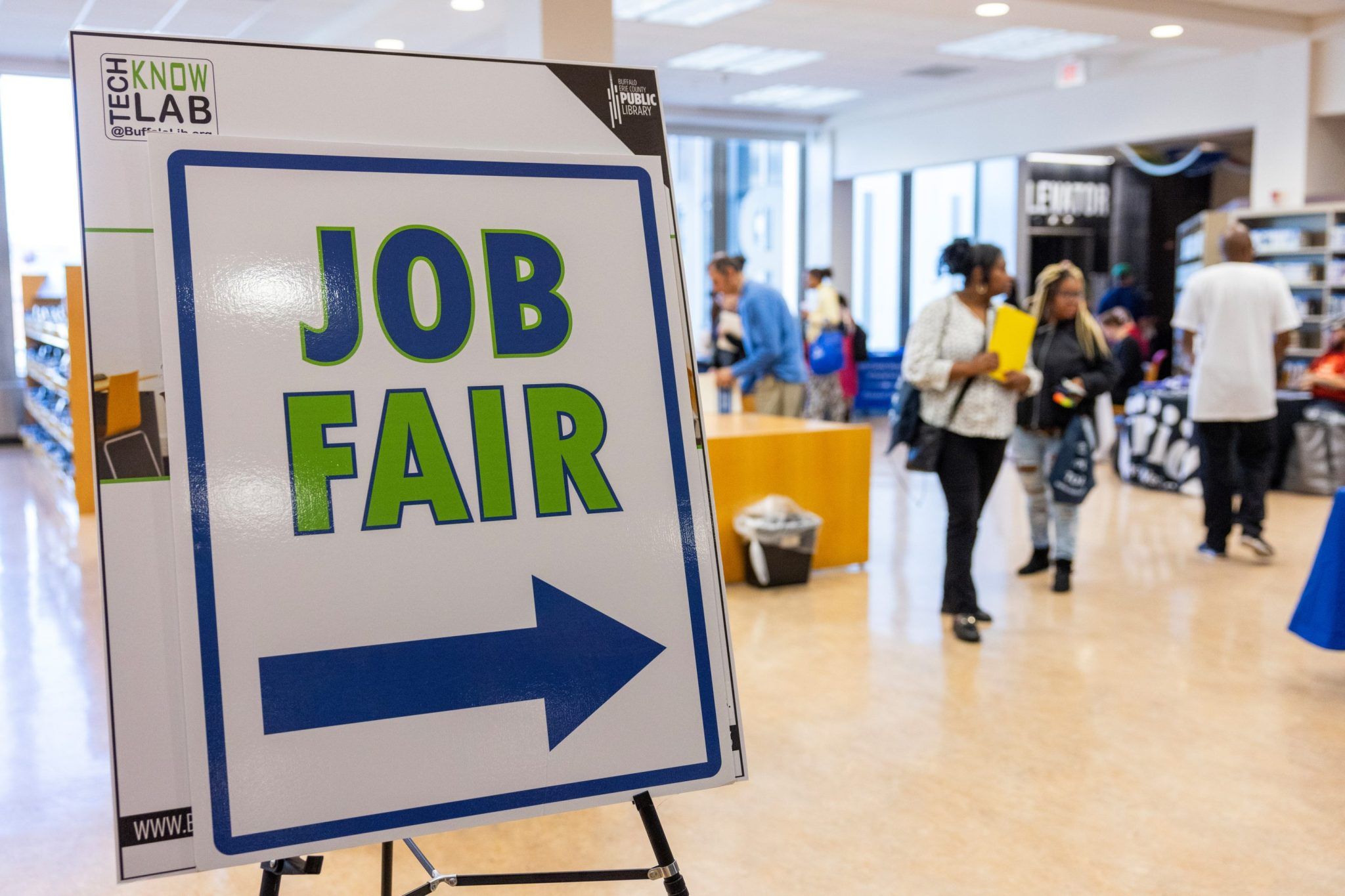
The Wall Street Journal’s February 8, 2026 report documents a significant deterioration in U.S. labor market conditions, characterizing the current environment as a “deep freeze” that has enveloped the American economy [1]. This characterization is supported by quantitative data across multiple dimensions, revealing a labor market undergoing a fundamental transition from the tight conditions that prevailed throughout 2023-2024 to a state of pronounced weakness with far-reaching implications for workers, employers, and policymakers alike.
The deceleration in hiring appears to stem from a confluence of structural and cyclical factors that have converged to create a particularly challenging environment for job seekers. Workers demonstrating increased reluctance to leave their current positions has reduced labor market fluidity, while tariff-related policy uncertainty has made corporate planning increasingly difficult, leading many companies to adopt a wait-and-see approach to headcount expansion [1]. Federal sector contraction adds another dimension to this slowdown, with universities and government agencies reducing or freezing hiring amid concerns about federal funding continuity. Simultaneously, companies across multiple industries have demonstrated a marked preference for maintaining lean operations and leveraging technology for productivity gains rather than expanding their workforce through traditional hiring [1].
The quantitative evidence supporting the “deep freeze” characterization is compelling. ADP reported just 22,000 private sector jobs added in January 2026, falling approximately 50% below economist expectations of around 45,000 positions [3]. Job openings have declined to 6.5 million, representing a decrease of 386,000 from November 2025 levels, while initial weekly jobless claims have risen to 231,000, an increase of 22,000 from the prior week [2]. Most significantly, the labor market has experienced a structural reversal: there are now more unemployed individuals than job openings available, a complete inversion of conditions that prevailed just two years earlier when there were approximately two job openings for every unemployed worker [2]. The professional and business services sector has been particularly hard hit, with unemployment in this category approaching double digits—a level that signals meaningful distress in a sector traditionally associated with white-collar employment stability [2].
The temporal context of this labor market deterioration provides important analytical insight. The year 2025 recorded only 584,000 total job additions, representing the weakest annual job growth recorded since 2020, when pandemic-related disruptions created unprecedented labor market dislocation [3]. This represents a dramatic deceleration from the 2 million jobs added in 2024, suggesting that the current weakness is not merely a seasonal or temporary adjustment but rather a more fundamental shift in labor market dynamics. The December 2025 unemployment rate of 4.4%, coupled with labor force participation at 62.4%, indicates that the weakness is manifesting across multiple dimensions of labor market health [4]. Perhaps most concerning from a policy-making perspective, the official January 2026 jobs report has been delayed due to the ongoing government shutdown, creating a significant information gap that impairs the ability of Federal Reserve officials and other policymakers to assess current conditions accurately and calibrate their responses accordingly [3].
The transformation in labor market conditions from 2024 to 2026 represents one of the more rapid deteriorations in recent economic history. The complete reversal from a job seeker’s market with two openings per unemployed worker to a condition where unemployed individuals outnumber available positions marks a fundamental structural shift that carries profound implications for wage dynamics, consumer spending power, and ultimately broader economic growth. This transition occurred over approximately 18 months, illustrating how quickly labor market conditions can shift when multiple headwinds converge simultaneously.
The sectoral concentration of weakness provides important diagnostic information about the nature of the current downturn. Professional and business services unemployment approaching double digits suggests that the pain is not limited to traditionally cyclical industries but has spread to sectors that typically provide stable white-collar employment [2]. This sectoral breadth indicates that the labor market weakness may be more deeply rooted in corporate strategy and structural economic factors rather than being confined to specific industry downturns. The spread of weakness across sector boundaries typically signals broader economic restructuring rather than sector-specific challenges.
Policy uncertainty emerges as a recurring theme in the current labor market analysis, with tariff-related planning difficulties cited by the Wall Street Journal as a significant factor suppressing corporate hiring decisions [1]. This finding aligns with broader observations about economic policy uncertainty reaching elevated levels, as businesses facing unpredictable regulatory and trade environments rationally adopt cautious stances regarding long-term commitments such as new hires. The federal sector dimension adds another layer of policy-related uncertainty, with academic institutions and government agencies facing funding concerns that translate directly into hiring freezes and workforce reductions [1].
The technology substitution dynamic identified in the analysis deserves particular attention as a potential structural rather than cyclical factor. Companies’ demonstrated preference for maintaining lean operations and leveraging automation rather than expanding headcount suggests that some portion of the current hiring weakness may reflect permanent changes in how businesses configure their workforces rather than temporary hesitation during an uncertain period [1]. If this dynamic proves persistent, it could have longer-term implications for labor force participation rates and the nature of employment relationships in the American economy.
The structural imbalance between job seekers and available positions represents the most immediate and consequential risk identified in the current labor market analysis. With more unemployed individuals than job openings for the first time since the post-pandemic recovery began, competition for available positions has intensified dramatically, putting downward pressure on wages and increasing the duration of unemployment spells for affected workers [2]. Extended periods of unemployment carry long-term earnings penalties and can erode human capital, creating scarring effects that persist even after labor market conditions improve.
The professional and business services sector approaching double-digit unemployment signals sector-specific distress that may be underappreciated in aggregate labor market statistics [2]. This concentration of weakness in white-collar employment categories suggests that the current downturn is affecting workers across the educational and skill spectrum, potentially limiting the effectiveness of worker retraining or career transition strategies that typically assume continued strength in professional services employment.
The government shutdown’s delay of official employment statistics creates an information environment that impairs decision-making across multiple stakeholder categories [3]. Investors, policymakers, and business leaders operating with incomplete information face heightened uncertainty, potentially leading to suboptimal decisions that could exacerbate economic weakness or miss opportunities for constructive intervention. The lack of timely data also complicates Federal Reserve efforts to assess the appropriate stance of monetary policy.
Despite the challenging labor market conditions, several opportunity windows merit consideration. The market rebound observed on February 6, 2026—with the S&P 500 gaining 1.70%, the NASDAQ advancing 1.79%, the Dow Jones rising 2.21%, and the Russell 2000 adding 2.26%—suggests that equity markets may be pricing in expectations for policy response or may be viewing labor market weakness as compatible with continued economic expansion [0]. Investors monitoring for signs of labor market stabilization or policy response may find tactical opportunities in market segments most sensitive to labor market conditions.
The current period of labor market weakness may also provide employers with opportunities to access talent that would have been unavailable during the tighter labor market conditions of 2023-2024. Companies with strategic hiring needs and clear visibility into their operating environment may find reduced competition for qualified candidates, potentially allowing them to strengthen their workforces at favorable compensation levels. This opportunity is particularly relevant for organizations whose planning horizons extend beyond the current period of uncertainty.
The U.S. labor market is experiencing a significant and multifaceted slowdown characterized by a hiring “deep freeze” driven by multiple converging factors. Key quantitative indicators include job openings declining to 6.5 million, initial weekly jobless claims rising to 231,000, and January 2026 ADP private hiring coming in at only 22,000 positions—approximately half of economist expectations [2][3]. The annual perspective reveals that 2025 recorded only 584,000 total job additions, the weakest full-year performance since 2020, representing a dramatic deceleration from the 2 million jobs added in 2024 [3].
The structural factors identified as contributing to current conditions include reduced labor market fluidity as workers remain in their current positions, tariff-related policy uncertainty impairing corporate planning, federal sector contraction affecting universities and government agencies, and corporate preference for lean operations supplemented by technology rather than headcount expansion [1]. The reversal from approximately two job openings per unemployed worker to a situation where unemployed individuals outnumbers available positions represents a fundamental transformation in labor market dynamics with significant implications for workers, employers, and economic policy [2].
Market reaction to the evolving labor market conditions has been characterized by volatility followed by rebounds, with the February 6, 2026 trading session recording solid gains across major indices despite ongoing concerns about labor market direction [0]. The delay of official January 2026 employment data due to government shutdown creates an information gap that complicates policy responses and market assessments [3]. Stakeholders across the economic spectrum should monitor upcoming data releases, federal funding decisions, and trade policy developments for indicators of labor market trajectory and potential policy responses.
Insights are generated using AI models and historical data for informational purposes only. They do not constitute investment advice or recommendations. Past performance is not indicative of future results.
About us: Ginlix AI is the AI Investment Copilot powered by real data, bridging advanced AI with professional financial databases to provide verifiable, truth-based answers. Please use the chat box below to ask any financial question.