January 2026 U.S. Jobs Report: Labor Market Weakness and Market Implications
Unlock More Features
Login to access AI-powered analysis, deep research reports and more advanced features
About us: Ginlix AI is the AI Investment Copilot powered by real data, bridging advanced AI with professional financial databases to provide verifiable, truth-based answers. Please use the chat box below to ask any financial question.
Related Stocks
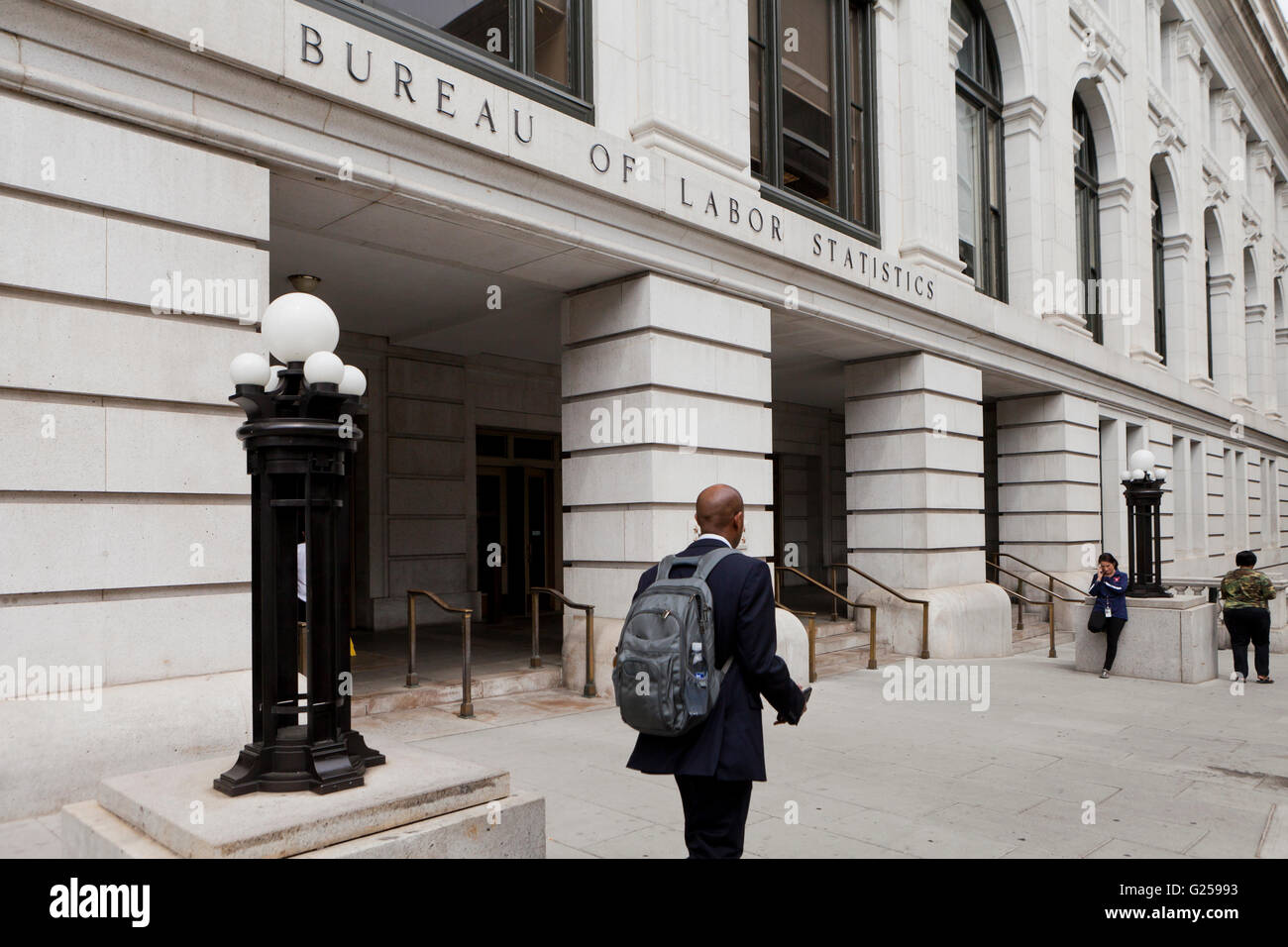
This analysis examines the upcoming January 2026 U.S. Jobs Report, rescheduled for release on February 11, 2026, following a partial government shutdown, and its potential impact on financial markets and Federal Reserve policy. The Bureau of Labor Statistics will release the delayed employment data at 8:30 AM EST, with investors closely scrutinizing the report for signs of labor market trajectory amid growing concerns about economic weakness [1][5]. The ADP private payrolls survey, released on February 4, 2026, revealed that private employers added only 22,000 jobs in January—approximately half of the 45,000 jobs economists had expected [1][2]. Combined with weak December 2025 data showing just 50,000 nonfarm payroll additions, the labor market signals vulnerabilities that could influence Fed policy decisions throughout 2026 [3][4]. Market volatility during the shutdown week reflected investor anxiety, with the S&P 500 experiencing a 0.97% decline on February 3 before recovering with a 1.70% gain on February 6 [0].
The U.S. labor market demonstrated a clear pattern of deceleration throughout 2025, culminating in concerning signals as the calendar turned to 2026. The December 2025 employment situation report revealed that nonfarm payrolls increased by only 50,000 positions, while the unemployment rate held steady at 4.4%—a level that, while not historically high, obscures underlying structural weaknesses in workforce participation and job quality [3][4]. This follow-up report will be the first official BLS data point measuring January 2026 labor conditions, providing critical insight into whether the weakness observed in late 2025 has persisted or accelerated.
The ADP National Employment Report, considered a leading indicator for the BLS survey, delivered a notably disappointing signal on February 4, 2026. Private sector job creation of just 22,000 positions fell dramatically short of consensus expectations, suggesting that employers may have initiated 2026 with heightened caution regarding hiring decisions [1][2]. Education and health services represented the primary sources of January gains per ADP data, while other sectors showed either minimal growth or continued contraction. This sectoral concentration raises questions about the breadth and sustainability of any employment recovery.
Federal Reserve officials have acknowledged these labor market concerns in their communications. At the January 2026 FOMC meeting, the Federal Open Market Committee voted to maintain the federal funds rate in the 3.50% to 3.75% range, while noting increased attention to downside risks in the labor market [7]. Fed Governor Mary Daly, in recent commentary, explicitly characterized the labor market as exhibiting “vulnerabilities” while indicating that the central bank maintains “room to cut interest rates” in 2026 if economic conditions deteriorate further [8]. This dovish stance reflects the Fed’s dual mandate considerations, balancing price stability against employment objectives.
Financial markets exhibited pronounced volatility throughout the government shutdown period, reflecting uncertainty about both the economic outlook and the timing of critical data releases. The shutdown’s impact on federal government operations delayed the January jobs report by approximately one week, creating a vacuum of official labor market information during a period when investors were already concerned about economic weakness [5][6]. This data blackout amplified market reactions to any available information, including the ADP private payrolls report and various economic indicators.
The S&P 500’s reaction pattern illustrated the market’s anxious state. Following the ADP report release on February 3, 2026, the index declined 0.97%, reflecting investor disappointment with the private hiring data [0]. However, by February 6, markets had reversed course substantially, with the S&P 500 gaining 1.70% and the Russell 2000 (small-cap index) advancing 2.26% [0]. This recovery suggested that some market participants were positioning for potential Federal Reserve easing in response to weakening economic conditions, viewing labor market softness as a catalyst for accommodative policy.
The divergence between large-cap and small-cap performance carries significance for forward-looking market analysis. Small-capitalization stocks, which tend to be more domestically focused and rate-sensitive, outperformed during the recovery phase, potentially indicating investor expectations that Fed easing would disproportionately benefit smaller companies facing greater financing constraints. This sector rotation dynamic may continue following the January jobs report release, depending on the data’s implications for the interest rate trajectory.
The partial government shutdown that delayed the January jobs report release added an additional layer of complexity to the economic assessment. Federal employee payroll data, which would typically be included in the BLS establishment survey, may exhibit distortions related to the shutdown period’s timing and duration [4]. Additionally, federal contractors and government-adjacent industries may show impacts that partially reflect political dysfunction rather than underlying economic conditions.
Continued funding uncertainty beyond the immediate shutdown resolution introduces ongoing volatility risk for federal payrolls and related service-sector employment. Any additional shutdown episodes in 2026 could create further data distortions and market reactions, making it essential for analysts to distinguish between structural labor market trends and politically-induced noise in the employment statistics.
The substantial gap between ADP private payrolls (22,000 jobs) and consensus expectations (45,000 jobs) represents a significant leading indicator signal that warrants careful attention. While the ADP and BLS methodologies differ—ADP measures private payrolls only, while BLS includes government positions and applies different seasonal adjustment procedures—both series generally track directionally similar trends over time. A significant ADP disappointment historically correlates with below-consensus BLS readings, though the magnitude of divergence varies across reporting periods.
The January 2026 ADP-BLS gap appears particularly pronounced, suggesting the potential for the official January nonfarm payrolls figure to fall short of economist expectations. Morningstar and other forecasters have noted that consensus expectations for the January BLS report range approximately between 71,000 and 80,000 jobs added, a range that may prove optimistic given the ADP signal [5][6]. Investors should prepare for the possibility that the actual figure comes in notably below these expectations, particularly if government hiring was also affected by the shutdown.
The January jobs report carries heightened significance for Federal Reserve policy considerations due to timing and precedent factors. The February 11 release will provide the first comprehensive labor market snapshot following the January FOMC meeting, offering Fed officials their initial official data point for assessing whether labor conditions deteriorated further at the start of 2026 [7]. If the BLS report confirms the ADP signal of continued weakness, Fed officials may accelerate their consideration of rate cuts, potentially moving from a “wait and see” posture to more active easing discussions.
Governor Daly’s recent comments regarding “labor market vulnerabilities” and the existence of “room to cut rates” suggest that multiple Fed officials share concerns about employment conditions [8]. The upcoming jobs report will either reinforce or challenge this narrative, influencing the probability market assigns to various Fed rate path scenarios. Currently, markets price in multiple rate cuts for 2026, but the timing and magnitude of cuts remain contingent on incoming economic data, with the jobs report representing a critical input.
The concentration of January ADP gains in education and health services reflects broader structural shifts in the U.S. labor market that extend beyond cyclical economic concerns [2]. Healthcare and education sectors have demonstrated relative resilience throughout the post-pandemic recovery period, serving as employment anchors even as other industries experienced volatility. However, this concentration also means that weakness in goods-producing sectors, professional services, or retail trade could mask underlying labor market fragility that the aggregate payrolls figure might not fully capture.
The December 2025 data showed particular weakness in sectors sensitive to interest rates and economic confidence, including manufacturing, construction, and financial activities [3][4]. A continuation of these patterns in January would reinforce concerns about Fed policy transmission and the lag between monetary tightening and economic impact. The January report’s sectoral breakdown will provide essential detail beyond the headline number, enabling more nuanced assessment of labor market health across industry categories.
The January 2026 jobs report carries exceptional time sensitivity due to multiple converging factors. The one-week delay from the original release schedule has compressed the timeline between data availability and near-term Fed decision-making, with the March 2026 FOMC meeting approaching rapidly. Each day of additional economic uncertainty without official labor data adds to market anxiety and positioning constraints.
Investors should note the February 11, 2026, 8:30 AM EST release time as a critical calendar marker [5]. The report’s implications for Fed policy, equity valuations, and currency markets will be processed rapidly by algorithmic trading systems and fundamental analysts alike. Any significant deviation from consensus expectations will trigger immediate market responses, with the most pronounced effects likely occurring within the first thirty to sixty minutes following release.
The January 2026 U.S. Jobs Report, rescheduled for February 11, 2026, at 8:30 AM EST following a partial government shutdown, represents a critical data point for assessing labor market trajectory and Federal Reserve policy path [5][6]. The ADP private payrolls report, released February 4, 2026, signaled significant hiring weakness with only 22,000 jobs added versus 45,000 expected, falling roughly halfway to consensus forecasts [1][2]. This follows the December 2025 BLS report showing just 50,000 nonfarm payroll additions and a 4.4% unemployment rate, confirming a pattern of labor market deceleration throughout late 2025 [3][4].
The Federal Reserve acknowledged these concerns at its January 2026 FOMC meeting, maintaining rates at 3.50%-3.75% while signaling increased attention to downside labor market risks [7]. Fed Governor Daly’s subsequent comments describing “labor market vulnerabilities” and noting “room to cut rates” in 2026 indicate the central bank’s receptiveness to easing should economic conditions warrant [8]. Market volatility during the shutdown week—exemplified by the S&P 500’s 0.97% decline on February 3 and 1.70% recovery on February 6—reflects investor uncertainty about both the economic outlook and policy response [0].
Consensus expectations for the January BLS nonfarm payrolls figure range approximately between 71,000 and 80,000 jobs added, though the ADP signal suggests upside risk to these forecasts [5][6]. The report’s sectoral composition, unemployment rate trajectory, and labor force participation details will provide essential context beyond the headline payrolls number, enabling more nuanced assessment of labor market health. Investors should prepare for elevated volatility around the release and consider positioning for potential Fed policy recalibration contingent on the data outcome.
Insights are generated using AI models and historical data for informational purposes only. They do not constitute investment advice or recommendations. Past performance is not indicative of future results.
About us: Ginlix AI is the AI Investment Copilot powered by real data, bridging advanced AI with professional financial databases to provide verifiable, truth-based answers. Please use the chat box below to ask any financial question.