Thailand's Political Landscape and Investment Implications
Unlock More Features
Login to access AI-powered analysis, deep research reports and more advanced features
About us: Ginlix AI is the AI Investment Copilot powered by real data, bridging advanced AI with professional financial databases to provide verifiable, truth-based answers. Please use the chat box below to ask any financial question.
Based on my research, I can provide a comprehensive analysis of Thailand’s political situation and its implications for foreign investment and Southeast Asian markets.
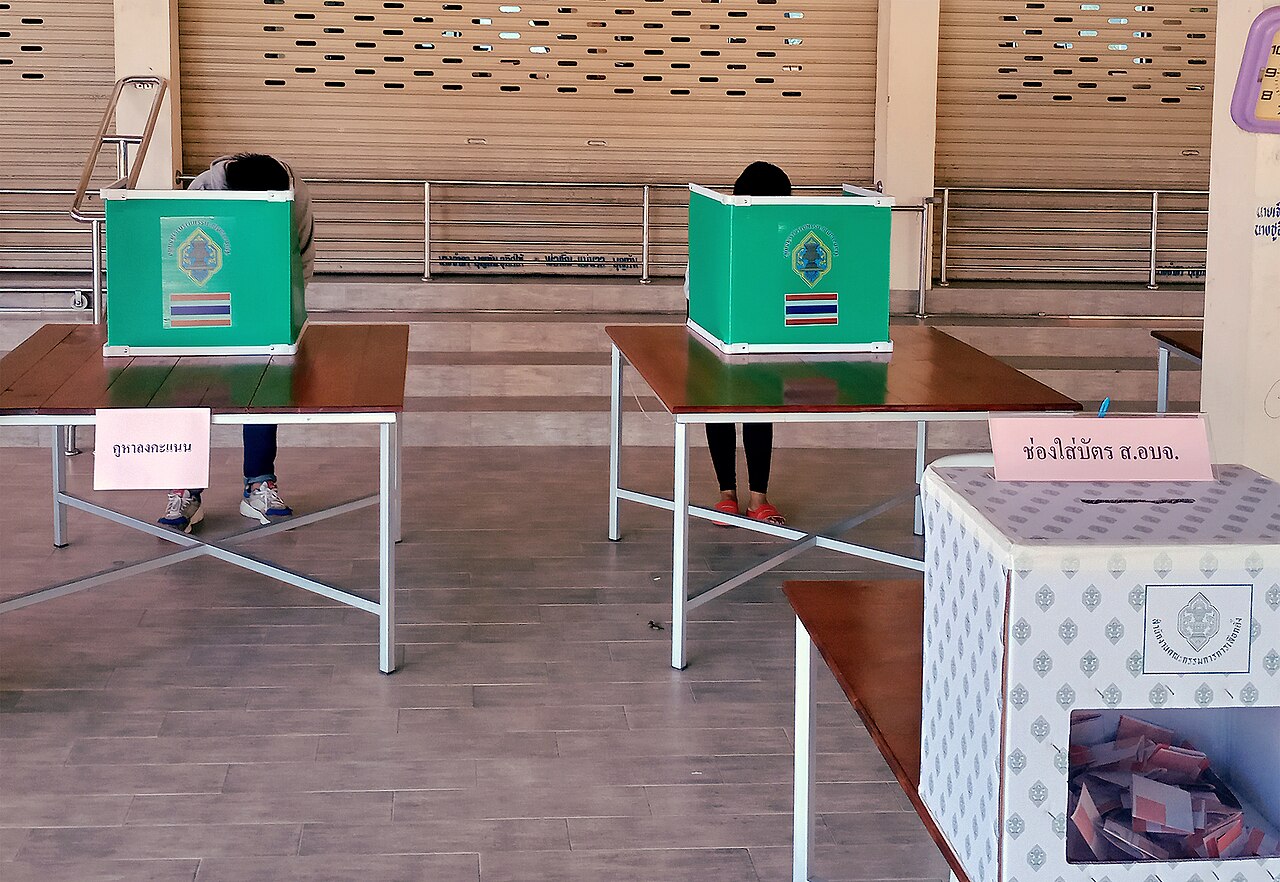
Thailand held a general election on
- Bhumjaithai Party(led by Anutin Charnvirakul)
- People’s Party(led by Natthaphong Ruengpanyawut)
- Pheu Thai Party(led by Yodchanan Wongsawat)
Each major party has articulated distinct economic priorities [1]:
| Party | Key Economic Focus |
|---|---|
Bhumjaithai |
Economic recovery, disaster response, infrastructure development |
People’s Party |
Youth-oriented reforms: SME loans, single-wage formula, labor skill development, agricultural sustainability |
Pheu Thai |
Economic revitalization through startup growth, farmer profitability programs, and social welfare schemes |
The political uncertainty has raised significant concerns among investors and economists:
- Chief Economist Burin Adulwattanawarned that Thailand is being labeled as“the forgotten man of Asia”, with global fund managers pulling back from the market [1]
- Rating agencies have issued warnings about the undermining effect of political tensionon Thailand’s investment-grade credit rating
- There is an urgent need to remove economic distortionsand enact responsible policies to avoid a potential credit downgrade
Thailand’s political instability has broader implications for ASEAN integration:
- Anti-Cambodian sentimentis projected to persist for10-20 years, potentially hindering regional cooperation
- A shift toward conservative, nationalist positionsreduces policy differentiation and may limit Thailand’s ability to attract distinctive foreign investment
- The geopolitical tensions could affect supply chains and regional tradewithin ASEAN
| Risk Factor | Potential Impact |
|---|---|
Coalition instability |
May lead to policy gridlock and delayed implementation of economic reforms |
Budgetary constraints |
New governments prioritizing social programs over fiscal discipline could strain public finances |
Regulatory uncertainty |
Frequent policy changes may increase compliance costs for foreign investors |
Credit rating risk |
Deterioration could increase borrowing costs and reduce foreign investor appetite |
- Coalition formation outcome– identifying which parties will govern and their policy platform
- Fiscal policy stance– whether the new government pursues deficit reduction or expansionary spending
- Regulatory reforms– particularly regarding SMEs, agriculture, and foreign investment frameworks
- Geopolitical developments– any escalation with Cambodia that could affect supply chains
Thailand faces increasing competition from regional peers:
- Vietnamhas emerged as a preferred destination for manufacturing FDI, particularly in electronics and textiles
- Thailand’s Eastern Economic Corridor (EEC)initiative aims to elevate Thai industries through technology and innovation, but political instability may slow implementation
- The country must balance infrastructure development(including controversial border wall projects) with fiscal sustainability
Thailand’s political uncertainty presents both challenges and opportunities for foreign investment in Southeast Asia. The February 2026 election results will be crucial in determining the country’s economic trajectory. Investors should:
- Monitor coalition negotiationsclosely for signs of policy direction
- Assess fiscal commitmentsof the incoming government against credit rating implications
- Evaluate sector-specific opportunitiesin infrastructure, manufacturing, and services
- Consider regional diversificationgiven Thailand’s competitive pressures from Vietnam and Indonesia
The outcome of Thailand’s political situation will have ripple effects across ASEAN, particularly regarding regional integration initiatives and supply chain resilience in the post-pandemic economic landscape.
[1] China Daily - “Thailand awaits poll results amid prolonged political instability” (February 8, 2026)
http://www.chinadaily.com.cn/a/202602/08/WS6988812da310d6866eb3818f.html
Insights are generated using AI models and historical data for informational purposes only. They do not constitute investment advice or recommendations. Past performance is not indicative of future results.
About us: Ginlix AI is the AI Investment Copilot powered by real data, bridging advanced AI with professional financial databases to provide verifiable, truth-based answers. Please use the chat box below to ask any financial question.