S&P Global Ratings Worsens China Property Sales Forecast for 2026
Unlock More Features
Login to access AI-powered analysis, deep research reports and more advanced features
About us: Ginlix AI is the AI Investment Copilot powered by real data, bridging advanced AI with professional financial databases to provide verifiable, truth-based answers. Please use the chat box below to ask any financial question.
This analysis is based on the CNBC report published on February 9, 2026, which cited S&P Global Ratings’ revised forecast for China’s property sector [1]. The ratings agency’s assessment represents a fundamental reassessment of the structural challenges facing China’s real estate market, with significant implications for domestic economic growth, financial system stability, and global commodity demand.
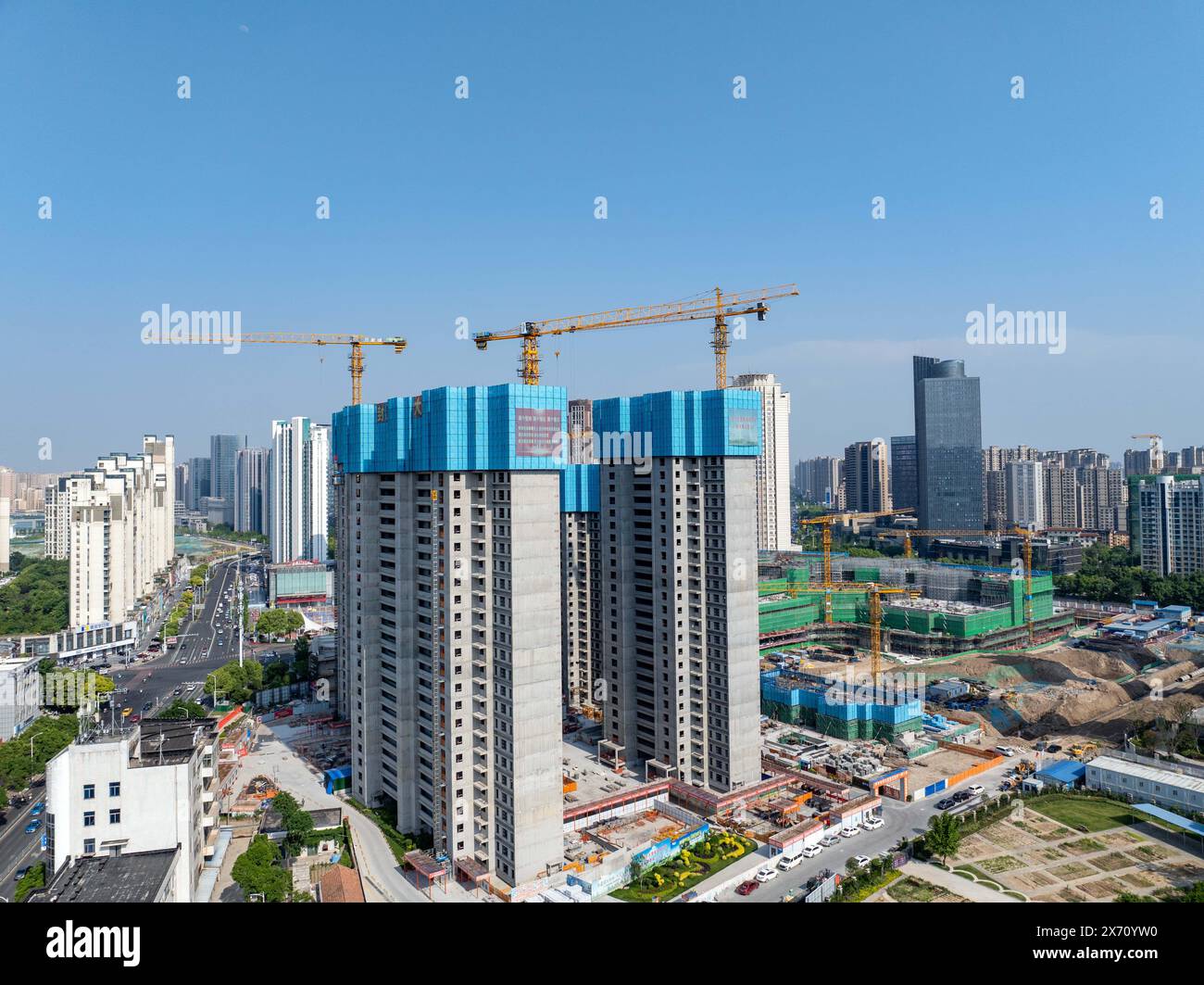
The S&P forecast revision reveals that China’s property market contraction is accelerating beyond previously anticipated levels. The projected 10-14% sales decline for 2026 marks a substantial deterioration from the 5-8% decline forecast just four months earlier in October 2025 [1]. This accelerated deterioration occurs against a backdrop where annual sales volume has already halved over the past four years, indicating a persistent and deep-seated decline rather than a temporary market adjustment.
The ratings agency identified six consecutive years of completed, unsold new housing as evidence of an entrenched oversupply situation [1]. This extended inventory buildup has created what analysts describe as a “vicious cycle” in which falling prices erode homebuyer confidence, leading to further sales declines that subsequently push prices down even more. The self-reinforcing nature of this dynamic has proven resistant to conventional policy interventions, explaining S&P’s assessment that only government capacity can meaningfully address the excess inventory.
The downturn is exhibiting significant geographic differentiation across major Chinese cities, with implications for investment strategies and policy targeting. Beijing, Guangzhou, and Shenzhen each experienced home price declines of 3% or more during the fourth quarter of 2025, reflecting broader weakness in markets with substantial supply expansions [1]. In contrast, Shanghai recorded a 5.7% price appreciation in 2025 compared to the prior year, making it the only major Chinese city to demonstrate meaningful price growth.
This geographic divergence suggests that the crisis is more acute in cities lacking Shanghai’s economic dynamism or constrained housing supply dynamics. Tier 2 and Tier 3 cities are generally facing more severe oversupply pressures, with limited economic diversification to offset property sector weakness. The implication for policymakers is that one-size-fits-all intervention approaches may be ineffective, requiring targeted strategies that account for local market conditions.
China achieved its 2025 GDP growth target of 5.0%, with GDP reaching 140.18 trillion yuan, representing approximately 17.65% of global economic output [2][3]. However, this overall economic performance masks the continued drag from the property sector, which historically accounted for more than 25% of the nation’s economy [1]. The China Daily’s analysis of the 2026 economic outlook emphasizes that policymakers are shifting focus from “how fast” the economy can grow to “how sustainably, equitably, and compositionally” growth can be achieved [4].
This philosophical reorientation reflects recognition that traditional growth engines, particularly real estate development, can no longer drive expansion at previous levels. The 15th Five-Year Plan (2026-2030) explicitly emphasizes quality over quantity in development priorities, signaling acceptance that property-driven expansion is no longer viable as a primary economic driver [4]. The challenge for policymakers lies in managing the sector’s contraction while containing systemic risks and supporting alternative growth drivers.
S&P’s analysis identifies significant credit risks facing rated developers, with four out of ten rated Chinese developers potentially facing downward rating pressure if sales fall 10 percentage points below the base case projection [1]. This narrow margin of error reflects the challenging operating environment where persistent sales declines directly impact cash flows needed for debt servicing and ongoing operations.
The exclusion of China Vanke from rating analysis due to its debt repayment deferment request highlights the extreme stress facing even the largest and previously most stable developers [1]. This development suggests that traditional credit analysis frameworks may require substantial revision to account for the structural nature of the current downturn, with implicit government support no longer serving as a reliable credit mitigant for all developers.
The S&P assessment explicitly identifies government intervention as the only viable mechanism to absorb excess inventory [1]. However, the ratings agency’s characterization of current government buying efforts as “piecemeal” suggests that existing interventions lack the scale or coordination necessary to fundamentally alter market dynamics [1]. This creates an unprecedented situation where private demand has contracted significantly, developer balance sheets are stressed, and government fiscal capacity is being tested as the primary source of demand.
The fundamental constraint facing policymakers is that large-scale government buying could create moral hazard by signaling that losses will be socialized. Additionally, market expectations of continued price declines undermine the economics of government purchasing, as bought inventory may continue to depreciate. The China Daily analysis emphasizes that coordinated assessment of land-supply decisions versus price outcomes is critical to maintaining both fiscal health and price stability [4].
The prolonged downturn is accelerating structural changes in the developer landscape that will have long-term implications for the industry. State-owned developers are potentially benefiting from implicit government support and superior access to financing, while private developers face heightened liquidity pressures and market share erosion. Foreign developers continue to reduce exposure or seek joint venture arrangements with local partners to limit direct exposure to market volatility.
These dynamics suggest a fundamental reconfiguration of the Chinese property sector’s competitive structure, with state actors assuming larger market roles. The implications for efficiency, innovation, and long-term sector health remain subjects of significant analytical uncertainty, as historical precedent for this degree of state involvement in housing markets is limited.
The extended property sector weakness creates cascading risks throughout the financial system. Construction materials producers including steel and cement manufacturers face reduced demand, while construction firms confront declining backlogs and challenging labor deployment. Financial institutions face growing exposure to developer loan defaults and reduced mortgage lending volumes, requiring enhanced provisioning and credit analysis capabilities.
Local government finances remain under pressure from reduced land sales revenue, though the 5% GDP growth achieved in 2025 suggests alternative revenue sources are partially compensating [2][3]. The sustainability of this compensation mechanism remains uncertain, particularly if property sector weakness persists beyond current projections.
Despite the challenging environment, several opportunity windows emerge from the current market conditions. For households and investors, improving housing affordability in declining markets may create entry points for long-term property acquisition, though timing and location selection become critical success factors. Geographic diversification toward resilient markets like Shanghai offers potential downside protection compared to oversupplied Tier 2 and 3 cities.
The sector’s structural transformation may also create opportunities for companies positioned to benefit from the transition away from quantity-driven development. This includes firms involved in urban services, property management, and potentially technology-enabled property solutions that can operate efficiently in a lower-volume environment.
The near-term outlook (3-6 months) presents elevated sensitivity to policy developments, particularly ahead of key political meetings where intervention program intensification is possible. Rating actions and potential restructuring events among weaker developers could introduce additional market volatility. The medium-term outlook (1-2 years) suggests the market appears to be in a multi-year bottoming process rather than a cyclical downturn, implying that traditional recovery timelines may not apply.
S&P Global Ratings’ February 2026 forecast revision provides critical visibility into the structural challenges facing China’s property sector. The projected 10-14% sales decline for 2026, combined with six consecutive years of oversupply and halving sales volumes over four years, confirms an entrenched downturn that market-based corrections alone cannot resolve. The explicit acknowledgment that government intervention is the only mechanism capable of absorbing excess inventory signals the scale of the challenge facing policymakers.
The 5% GDP growth achieved in 2025 demonstrates China’s economy’s capacity to expand despite property sector drag, validating the strategic reorientation toward quality growth priorities outlined in the 15th Five-Year Plan [2][3][4]. However, the property sector’s continued contraction poses risks to financial system stability, local government finances, and related industries that warrant careful monitoring.
Geographic differentiation between resilient markets like Shanghai and struggling Tier 2/3 cities underscores the importance of location-specific analysis for any stakeholders with property sector exposures. Credit vulnerability among rated developers, illustrated by potential rating pressure on four of ten rated entities and China Vanke’s exclusion from rating coverage, highlights the need for enhanced credit analysis frameworks that account for structural rather than cyclical market challenges.
Insights are generated using AI models and historical data for informational purposes only. They do not constitute investment advice or recommendations. Past performance is not indicative of future results.
About us: Ginlix AI is the AI Investment Copilot powered by real data, bridging advanced AI with professional financial databases to provide verifiable, truth-based answers. Please use the chat box below to ask any financial question.