Dow Jones Industrial Average Crosses 50,000: Historic Milestone Analysis
Unlock More Features
Login to access AI-powered analysis, deep research reports and more advanced features
About us: Ginlix AI is the AI Investment Copilot powered by real data, bridging advanced AI with professional financial databases to provide verifiable, truth-based answers. Please use the chat box below to ask any financial question.
Related Stocks
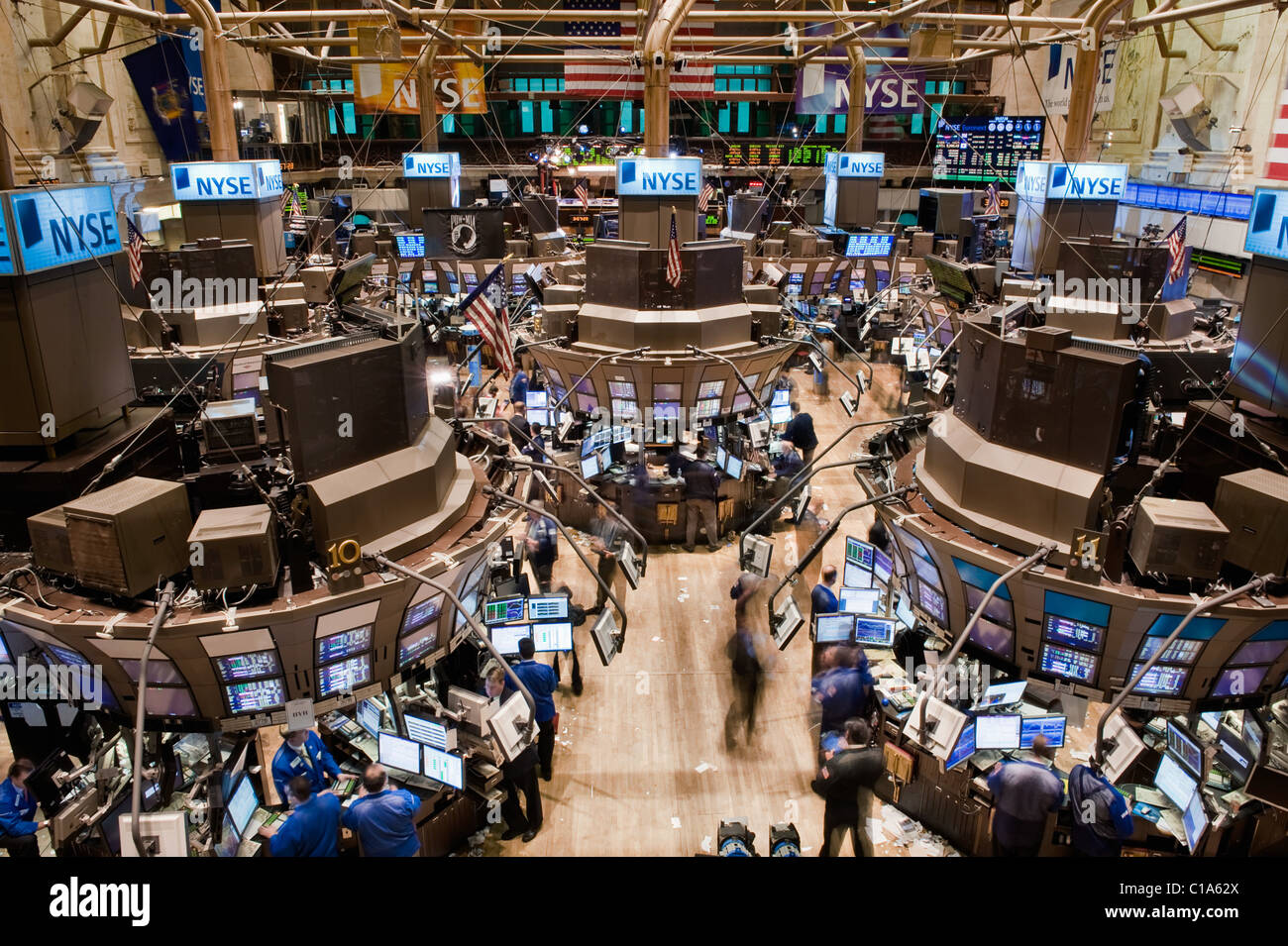
The Dow Jones Industrial Average’s crossing of 50,000 on February 6, 2026, represents a pivotal moment in market history, encapsulating 129 years of American economic evolution. The index closed at 50,115.67, gaining 1,206.94 points in a single session—a demonstration of robust market momentum that contrasted sharply with the three-day technology selloff that had preceded it [0][1]. This milestone carries particular resonance when viewed through the lens of generational wealth creation, as highlighted by Kenny Polcari’s observation of the “6200% increase” between his first day on Wall Street and last week’s achievement [1]. The compound growth trajectory underlying this milestone reflects approximately 8.3% annualized returns, a testament to the index’s role as a barometer of American economic resilience through challenges including the Great Depression, dot-com bubble, 2008 financial crisis, and COVID-19 pandemic [1][2].
The historical progression of the Dow illustrates the economy’s structural transformation over more than a century: from its creation in 1896 with 12 stocks at approximately 40 points, through the 1,000 milestone in 1972, the 10,000 mark during the dot-com era in 1999, and the accelerated progression through the 20,000, 30,000, 40,000, and now 50,000 thresholds in recent years [2]. The narrowing time intervals between milestones—particularly the rapid ascent from 40,000 in May 2024 to 50,000 in February 2026—reflects the compounding effects of technological innovation, monetary policy support, and evolving market composition through strategic constituent changes.
The trading session accompanying the milestone crossing demonstrated exceptional market participation, with volume surging to 775.50 million shares—substantially above the 544.68 million average—indicating strong conviction among market participants [0]. The 2.47% single-day gain ranked among the strongest performances of the year, driven by broad-based sector rotation away from technology and into industrials, financials, real estate, and consumer discretionary stocks. Real estate led daily gains at +3.07%, suggesting investor confidence in a potential interest rate cut environment and rotation into rate-sensitive sectors [0].
The technical indicators reveal a market experiencing healthy volatility with 0.96% daily standard deviation, positioned near the upper boundary of its 52-week range of $36,611.78 to $50,169.65 [0]. The Fear & Greed Index’s shift from “fear” to “neutral” sentiment reflects the improving market psychology, while defensive sectors including Utilities, Healthcare, and Consumer Defensive also demonstrated outperformance—indicating balanced participation across the market spectrum rather than narrow, concentration-driven gains [0].
Individual stock contributions to the milestone rally highlighted the breadth of market participation. Caterpillar (CAT) surged +7.06% as the industrial rally leader, Goldman Sachs (GS) gained +4.31% reflecting financial sector strength, and Nvidia (NVDA) posted an exceptional +7.87% daily gain—demonstrating the continued significance of this recent Dow addition following its replacement of Intel in November 2024 [0][3]. Amazon (AMZN), which joined the Dow in February 2024, also contributed meaningfully to the advance, validating the index committee’s strategy of updating constituents to better reflect the modern economy [3].
The modern Dow composition now allocates approximately 23% of weight to technology across seven stocks, a significant shift from the index’s traditional industrial character that may amplify sector-specific volatility while maintaining relevance to contemporary economic dynamics [3]. Nvidia’s technical profile reveals extraordinary long-term performance metrics: $185.41 price level with +38.81% year-over-year returns and a remarkable +729.95% three-year gain [0]. Apple’s more modest but steady +0.80% daily performance with +22.17% year-over-year returns exemplifies the broader market’s more measured trajectory compared to the AI-driven concentration leaders.
Industry experts have offered nuanced assessments of the milestone’s significance. Matt Dmytryszyn, Chief Investment Officer at Composition Wealth, characterized the crossing as evidence that “we’re seeing a broadening in the market” beyond technology-only gains, a structural positive suggesting underlying economic strength [2]. Ken Mahoney of Mahoney Asset Management called the achievement an “incredible milestone” that followed a period of tariff-related volatility, while Rob Haworth of US Bank Asset Management emphasized that “fundamentals remain solid” with improving earnings across sectors [2].
However, Daniel Skelly of Morgan Stanley provided a cautionary perspective, noting that “valuations are already high” despite the positive market positioning—a warning that warrants attention given the historical tendency for milestone crossings to coincide with periods of elevated expectations [2]. Doug Beath from Wells Fargo Investment Institute adopted a more constructive stance, advising investors to “treat pullbacks as opportunities,” reflecting the view that the fundamental backdrop remains supportive despite valuation concerns.
Multiple factors have contributed to the Dow’s milestone achievement. Federal Reserve policy outlook, with expectations of interest rate cuts, has provided structural support for equity valuations and rate-sensitive sectors. Strong corporate earnings across industrials and financials have validated the broadening market thesis, while the strategic rebalancing of Dow constituents to include Nvidia and Amazon has enhanced the index’s representation of the AI-driven economy [2][3]. The combination of these factors has created an environment where market participation extends beyond the “Magnificent Seven” technology leaders into the broader industrial and financial sectors that have historically defined American economic strength.
Several risk factors merit monitoring. The AI sector has experienced recent volatility, exemplified by Amazon’s 5.6% decline following announcements of $200 billion AI capital spending—raising questions about the efficiency of capital allocation in artificial intelligence initiatives [4]. Tariff policies have reached their highest effective levels since 1935, creating regulatory uncertainty that could impact industrial and consumer-facing companies [4]. The elevated valuation environment identified by Morgan Stanley’s Skelly suggests that new capital deployment should account for the reduced margin of safety compared to historical entry points.
Upcoming catalysts that will test the market’s resilience include Nvidia’s Q4 FY2026 earnings report on February 25, 2026—a key indicator for AI sector sentiment—and the upcoming Federal Open Market Committee meeting outcomes that will provide guidance on the interest rate trajectory [2]. The full economic effects of 2025 tariff policies continue to unfold, creating uncertainty that could introduce volatility even as the fundamental market structure remains constructive.
The Dow Jones Industrial Average’s crossing of 50,000 represents both a historic psychological barrier and evidence of the ongoing bull market’s fundamental support. Trading volume reached 775.50 million shares with 2.47% daily gains driven by Caterpillar (+7.06%), Nvidia (+7.87%), and Goldman Sachs (+4.31%) [0]. The index’s 52-week range spans $36,611.78 to $50,169.65, with the current level near the upper boundary [0]. Market breadth improvement beyond technology suggests structural positive momentum, though elevated valuations and AI sector volatility warrant caution for risk management purposes. The milestone reflects generational wealth creation with approximately 8.3% annualized returns over multi-decade holding periods.
Insights are generated using AI models and historical data for informational purposes only. They do not constitute investment advice or recommendations. Past performance is not indicative of future results.
About us: Ginlix AI is the AI Investment Copilot powered by real data, bridging advanced AI with professional financial databases to provide verifiable, truth-based answers. Please use the chat box below to ask any financial question.