2026 Market Outlook: Bob Lang's Volatility and Opportunity Analysis
Unlock More Features
Login to access AI-powered analysis, deep research reports and more advanced features
About us: Ginlix AI is the AI Investment Copilot powered by real data, bridging advanced AI with professional financial databases to provide verifiable, truth-based answers. Please use the chat box below to ask any financial question.
Related Stocks
The analysis from Bob Lang arrives at a pivotal moment in market history. On February 6, 2026, the Dow Jones Industrial Average closed above 50,000 points for the first time at 50,115.67, marking a gain of 1,206.95 points or 2.47% in a single session [2][4]. This unprecedented milestone represents both a psychological breakthrough and a significant technical achievement for the venerable index, which was created in 1896.
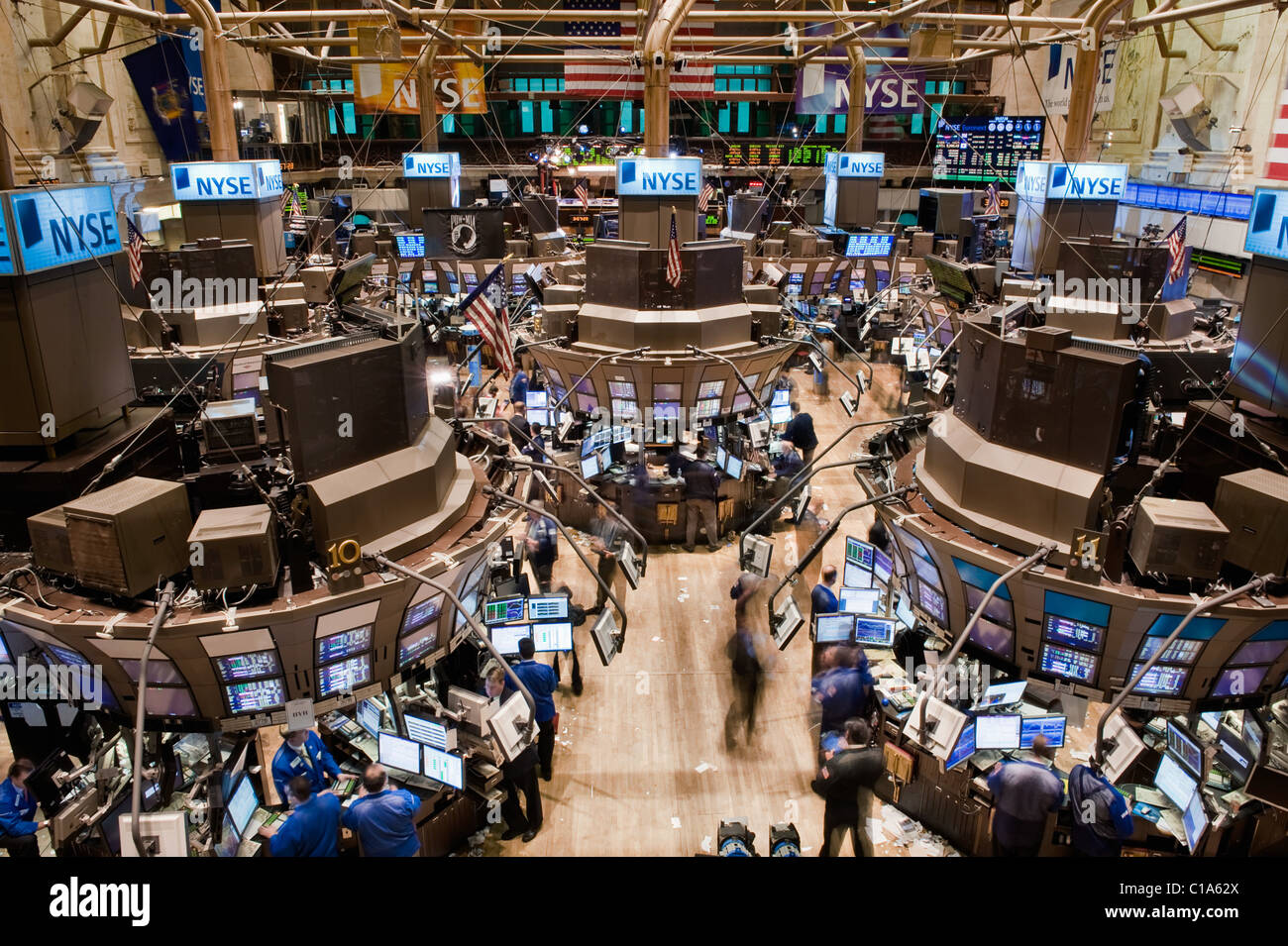
The market’s path to this milestone was notably volatile. Just days earlier, the VIX had surged past 20.00 on January 20, 2026, amid tariff concerns and global bond market turbulence, signaling a sharp shift in investor sentiment [3][5]. The index experienced a three-day consecutive decline period in early February, with the Dow shedding approximately 600 points on February 5 before staging a dramatic reversal [6]. This volatility pattern establishes the context for Lang’s analysis and supports his thesis that 2026 will be characterized by significant price swings.
Recent market data reveals a notable broadening of market participation beyond mega-cap technology stocks [0]. The Russell 2000 small-cap index has outperformed with a 7.16% gain year-to-date through February 6, while the Dow Jones Industrial Average advanced 4.18% during the same period. In contrast, the Nasdaq Composite has declined 1.92%, suggesting a meaningful rotation away from technology-heavy growth stocks toward value-oriented and small-cap names [0].
The sector rotation pattern on February 9, 2026, further illustrates this defensive positioning trend. Real estate stocks led daily gains with a 3.07% advance, followed by utilities (+1.83%), healthcare (+1.76%), and consumer defensive stocks (+1.72%) [0]. This rotation into defensive sectors indicates investors are hedging against economic uncertainty—a pattern entirely consistent with Lang’s volatility theme. The weakness in basic materials (-1.13%) further confirms the risk-off sentiment pervading the market.
Bob Lang’s core thesis centers on the expectation of elevated volatility paired with positive annual returns [1][8]. His outlook identifies the Federal Reserve’s anticipated rate cuts and potential quantitative easing as the primary drivers of market direction. Lang projects mid to high single-digit returns for the major indices over the course of 2026, contingent upon accommodative Federal Reserve policy providing increased market liquidity.
This projection stands in contrast to more bearish forecasts from some analysts. John Rogers of Ariel Investments has projected a potential 15-20% retracement in the Dow by year-end 2026, anticipating a “small recession” [12]. The divergence between Lang’s constructive outlook and Rogers’ caution underscores the uncertainty characterizing 2026 market expectations.
Lang has identified three technology sector leaders as potential opportunities for investors navigating the volatility [1]:
Lang specifically cites Walmart’s approach to all-time highs ahead of its Q4 FY2026 earnings report as a potential indicator of “more rockiness ahead” [1]. This observation reflects a well-documented market phenomenon where pre-announcement strength frequently gives way to post-earnings volatility.
Walmart’s stock has demonstrated exceptional performance, trading near $131 on February 9, 2026, within striking distance of its 52-week high of $131.70 [9][10]. The stock’s 200-day moving average stands at $103.89, indicating significant recent momentum. Oppenheimer has raised its price target to $140, reflecting analyst confidence in continued performance [10].
The company has raised its FY2026 net sales guidance to 4.8-5.1% growth at constant currency, with Q4 sales growth forecast at 3.75-4.75% [11]. Analysts project EPS growth of 18.43% over the coming year, rising from $2.55 to $3.02 [10]. However, the stock’s elevated trailing P/E ratio of 45.87x leaves limited margin for disappointment, which may explain Lang’s caution regarding potential post-earnings volatility [10].
The convergence of multiple factors suggests elevated volatility may persist throughout 2026 rather than representing a temporary phenomenon. The VIX’s brief touch of 23.1 in early 2026 marked its highest level of the year amid technology and cryptocurrency sell-offs [7]. This volatility spike occurred despite overall positive index performance, indicating that individual security and sector-level turbulence may continue even during periods of broad market advancement.
The historical context matters significantly: the Dow’s trajectory from 40,000 to 50,000 occurred in approximately 17 months, representing remarkable compression in the time required to achieve such large milestone increments. This acceleration suggests either fundamentally improved economic conditions or speculative excess—potentially both.
The rotation from technology-heavy indices toward small-cap and value-oriented names represents a meaningful structural shift. The Nasdaq Composite’s underperformance (-1.92% YTD) contrasted with the Russell 2000’s strength (+7.16%) suggests capital reallocation away from previously dominant mega-cap technology stocks [0]. This broadening typically indicates healthier market participation and potentially more sustainable advances, though Lang’s emphasis on stock selection rather than index-level positioning acknowledges that not all market segments will participate equally.
Lang’s constructive outlook hinges substantially on Federal Reserve accommodation through rate cuts and quantitative easing [1][8]. This dependency creates meaningful forecast risk, as Fed policy decisions will likely prove the pivotal variable determining whether 2026 delivers positive returns or satisfies more bearish recession forecasts. The timing and magnitude of any policy easing remain uncertain, introducing significant forecast variability.
Several factors require ongoing observation to validate or challenge the analytical framework presented. Federal Reserve meeting outcomes will directly impact liquidity conditions and interest rate expectations that underpin constructive market scenarios. Walmart’s Q4 actual results compared to elevated expectations will test whether pre-earnings strength translates to sustainable performance or disappointment. AI investment return metrics from major technology companies will determine whether current infrastructure spending proves economically justified. Recession indicators and leading economic data will clarify whether the bearish 2026 recession thesis or constructive growth scenario proves more accurate. Volatility control fund positioning may amplify or dampen market moves depending on risk appetite shifts [5].
The analytical environment presents genuine uncertainty regarding 2026 market outcomes, with credible arguments supporting both constructive and bearish positions. The only consistent element across analyses is the expectation of elevated volatility, creating an environment where tactical positioning and active risk management may prove more valuable than passive holding strategies.
Insights are generated using AI models and historical data for informational purposes only. They do not constitute investment advice or recommendations. Past performance is not indicative of future results.
About us: Ginlix AI is the AI Investment Copilot powered by real data, bridging advanced AI with professional financial databases to provide verifiable, truth-based answers. Please use the chat box below to ask any financial question.