Trump Announces Tariff Reductions on Food Products to Address Consumer Price Concerns
Unlock More Features
Login to access AI-powered analysis, deep research reports and more advanced features
About us: Ginlix AI is the AI Investment Copilot powered by real data, bridging advanced AI with professional financial databases to provide verifiable, truth-based answers. Please use the chat box below to ask any financial question.
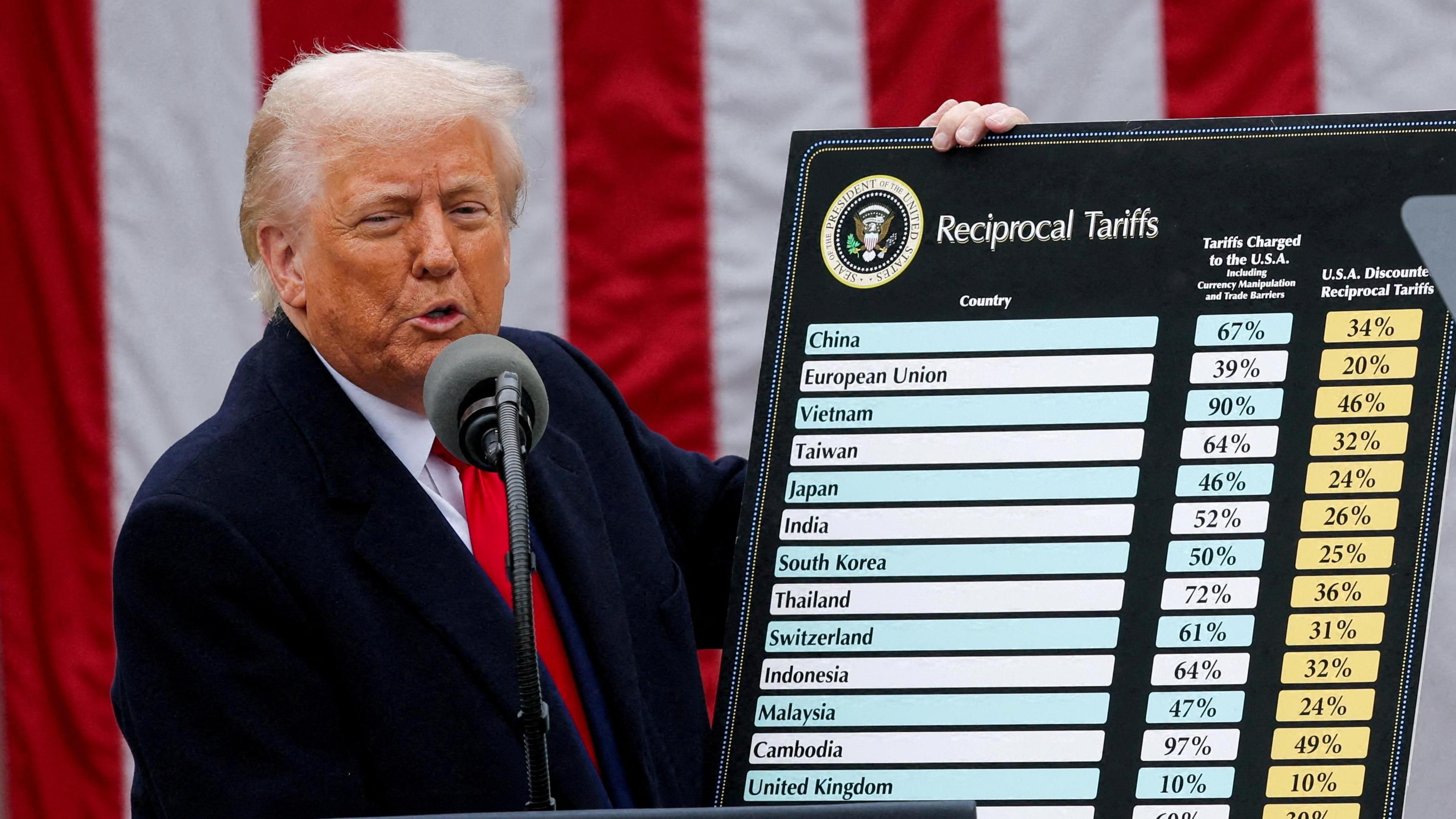
This analysis is based on the Reuters report [1] published on November 14, 2025, covering President Trump’s executive order to eliminate tariffs on food products as inflation concerns mount. The announcement represents a significant policy reversal from Trump’s earlier tariff-heavy approach and reflects growing political pressure following Democratic victories in off-year elections where economic affordability was the dominant voter concern [1][2].
The executive order took effect retroactively at midnight on November 13, 2025, covering more than 200 food items ranging from coffee, beef, and bananas to tomatoes, orange juice, cocoa, and even communion wafers [1]. The administration simultaneously announced framework trade deals with Argentina, Ecuador, Guatemala, and El Salvador to eliminate tariffs on specific food categories [1][2]. This targeted approach focuses on products either not grown domestically or in insufficient supply, such as coffee and bananas which rely heavily on foreign suppliers [2].
The tariff reduction addresses significant price pressures in the food sector. Ground beef prices were nearly 13% higher in September, with steaks up almost 17% year-over-year, representing the largest beef price increases in more than three years [1]. Banana prices rose approximately 7%, while overall food-at-home costs increased 2.7% in September [1]. Despite being a major beef producer, the U.S. faces a persistent cattle shortage expected to last through 2026, contributing to elevated domestic prices [1].
The policy shift follows Democratic wins in Virginia, New Jersey, and New York City where voter concerns about affordability were paramount [1][2]. Trump acknowledged that tariffs “may in some cases” raise prices while maintaining that the U.S. has “virtually no inflation” [1]. The administration also proposed $2,000 payments to lower- and middle-income Americans funded by tariff revenues, suggesting awareness that tariff reductions alone may not fully address economic anxieties [1].
This reversal marks a sharp departure from Trump’s earlier insistence that sweeping import duties were not fueling inflation [1]. The framework agreements with Latin American countries represent a diplomatic pivot from pressure tactics toward a strategy focused on lowering household costs and strengthening regional economic security relationships [2]. Trade analysts noted that Trump’s previous tariffs on Brazil had contributed to rising global beef costs, making this reversal particularly significant for international trade dynamics [2].
The FMI-Food Industry Association praised the action, noting benefits for both consumers and U.S. manufacturers utilizing these products in supply chains [1]. However, the Distilled Spirits Council criticized the exclusion of spirits from the European Union and Britain, highlighting the selective nature of the tariff reductions [1]. The policy specifically targets products where domestic supply cannot meet demand, creating a strategic approach to trade policy that addresses consumer concerns while maintaining some protectionist elements [2].
Democratic Representative Richard Neal criticized the administration for “putting out a fire that they started and claiming it as progress” [1], while Republican Senator Rand Paul noted that “this means that tariffs were taxes all along” [2]. The move appears strategically timed ahead of the 2026 election cycle, directly addressing the top voter concern that contributed to Democratic gains in recent elections [1][2].
While the policy should lead to lower retail prices for affected food categories, the timeline for price reductions depends on retailer pass-through and inventory cycles [1]. Trump predicted coffee prices would be “on the low side in a very short period” [1], but actual consumer savings remain unquantified. The effectiveness of this measure in addressing broader inflation concerns remains uncertain, as the exemptions cover specific categories rather than representing comprehensive trade policy reform [1][2].
The framework agreements could strengthen U.S. economic relationships with Latin American partners, but the selective nature of tariff reductions may create tensions with other trading partners [2]. The exclusion of spirits from the EU and Britain highlights ongoing trade frictions that could impact other sectors [1]. The administration’s ability to complete additional agreements before year-end will be crucial for determining the long-term success of this strategic shift [1].
The reversal demonstrates the political sensitivity of food prices and could indicate greater flexibility in trade policy heading into 2026 [2]. However, the policy’s sustainability depends on continued political pressure and economic conditions. The proposed $2,000 payments funded by tariff revenues suggest the administration recognizes that tariff reductions alone may not suffice to address voter economic concerns [1].
- Executive order took effect November 13, 2025, covering 200+ food products [1]
- Framework agreements with Argentina, Ecuador, Guatemala, and El Salvador [1][2]
- Targets products not grown domestically or in insufficient supply [2]
- Represents reversal from earlier 10% base tariff on all imports [1]
- Ground beef prices up 13%, steaks up 17% year-over-year [1]
- Banana prices increased 7%, tomatoes up 1% [1]
- Food-at-home costs rose 2.7% in September [1]
- Cattle shortage expected to persist through 2026 [1]
- Follows Democratic victories in Virginia, New Jersey, NYC [1][2]
- Trump proposed $2,000 payments to lower/middle-income Americans [1]
- Policy shift ahead of 2026 election cycle [1][2]
- Nine framework deals completed, two final reciprocal trade agreements [1]
Insights are generated using AI models and historical data for informational purposes only. They do not constitute investment advice or recommendations. Past performance is not indicative of future results.
About us: Ginlix AI is the AI Investment Copilot powered by real data, bridging advanced AI with professional financial databases to provide verifiable, truth-based answers. Please use the chat box below to ask any financial question.