Starmer's Operational Reforms and UK Market Implications
Unlock More Features
Login to access AI-powered analysis, deep research reports and more advanced features
About us: Ginlix AI is the AI Investment Copilot powered by real data, bridging advanced AI with professional financial databases to provide verifiable, truth-based answers. Please use the chat box below to ask any financial question.
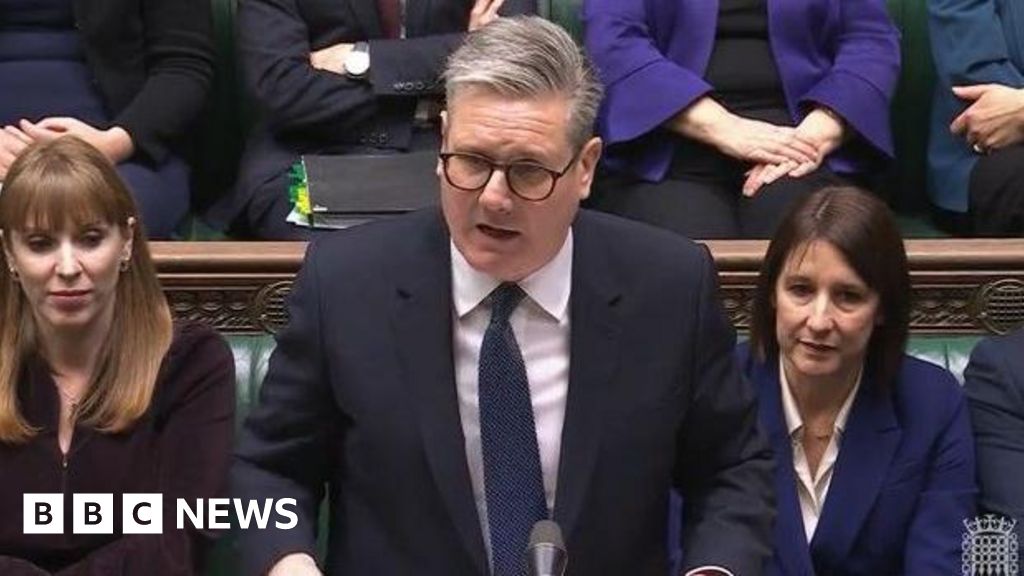
Prime Minister Keir Starmer is facing a significant political crisis in February 2026, despite his administration’s operational reform agenda. The situation involves:
- Resignation Wave: Morgan McSweeney (Chief of Staff) resigned on February 8, 2026, followed by Tim Allan (Communications Director) on February 9, 2026—the fourth communications chief to leave in less than a year [1][2].
- Mandelson Controversy: The crisis stems from revelations regarding Peter Mandelson’s past ties to Jeffrey Epstein, particularly his appointment as UK ambassador to Washington [1][2].
- Market Reaction: The pound and gilts are under pressure as investors fear political turbulence [3].
Despite the current turmoil, Starmer has proposed significant operational reforms designed to enhance policy execution:
- Axel Heitmuellerappointed as Head of the Prime Minister’s Delivery Unit and Expert Adviser on Delivery (January 2026).
- Centralization of delivery functions in 10 Downing Street under the Chief Secretary to the Prime Minister, Darren Jones.
- Functions of the former Mission Delivery Unit have been moved to Downing Street.
- Jones has acquired expanded roles: Chancellor of the Duchy of Lancaster, Minister for Intergovernmental Relations, and oversight of Cabinet Office work—effectively replacing Pat McFadden [4].
- Starmer has emphasized cutting “regulations, consultations and arm’s-length bodies” to accelerate policy implementation.
- The “Plan for Change” (December 2024) outlined a 5-year mission-led government agenda with five core missions: economic growth, clean-energy superpower, streets, opportunity, and NHS reform [4].

The FTSE 100 has demonstrated resilience despite political uncertainty, delivering a
| Metric | Value |
|---|---|
| Period Open | 9,931.29 |
| Period Close | 10,386.23 |
| Period High | 10,481.54 |
| Volatility (Daily Std Dev) | 0.41% |
| Best Single Day | +1.15% (Feb 2) |
| Worst Single Day | -0.90% (Feb 5) |
-
Institutional Reforms Are Sound: The creation of a dedicated Delivery Unit with direct ministerial authority represents a coherent attempt to address chronic implementation challenges in UK governance.
-
Cabinet Support Exists: Key allies like Deputy Prime Minister Angela Rayner have publicly affirmed their support, stating Starmer has her “full support” [5].
-
Long-Term Policy Framework: The mission-led approach with clear milestones provides a structured framework for economic policy continuity.
-
Political Instability Undermines Reforms: The current crisis threatens to derail the reform agenda entirely. Telegraph analysis warns that leadership changes could trigger a “mini, mini-budget reaction” in markets [6].
-
Policy Execution Capacity: With key aides resigning, the administrative capacity to implement reforms is compromised at a critical juncture.
-
Investor Sentiment Deteriorating: Financial markets are actively pricing in leadership uncertainty. UK government bond yields (gilts) have risen while sterling has weakened—a clear signal of investor concern about fiscal discipline [3][7].
-
Contextual Economic Challenges: The Bank of England has downgraded 2026 growth forecasts to 0.9% (from 1.2%) and raised unemployment expectations to 5.3% [8].
- Resolution of the leadership crisis
- Clear demonstration of policy continuity
- Restoration of investor confidence in fiscal discipline
The disconnect between the reform agenda’s structural merits and the current political chaos illustrates a critical lesson:
[1] BBC News - “Starmer’s director of communications Tim Allan quits” (https://www.bbc.com/news/articles/c89kwj8kjy9o)
[2] Evening Standard - “Morgan McSweeney resigns as Starmer’s chief of staff” (https://www.standard.co.uk/news/uk/morgan-mcsweeney-resigns-as-starmer-s-chief-of-staff-following-epstein-scandal-b1270117.html)
[3] Financial Times - “Pound and gilts under pressure as leadership crisis threatens Starmer” (https://www.ft.com/content/32614126-b836-4719-a681-acb4718e4928)
[4] The Ideas Lab - “Delivery for Sir Keir Starmer: the big push for '26” (https://theideaslab.substack.com/p/delivery-for-sir-keir-starmer-the)
[5] The Columbian - “British PM fights to keep his job after revelations about former ambassador’s ties to Epstein” (https://www.columbian.com/news/2026/feb/09/british-pm-fights-to-keep-his-job-after-revelations-about-former-ambassadors-ties-to-epstein/)
[6] The Telegraph - “Investors slash exposure to Britain as leadership battle looms” (https://www.telegraph.co.uk/business/2026/02/09/stocks-surge-after-japans-thatcher-wins-landslide/)
[7] First Online - “UK: Starmer’s government is falling apart, and the market is pricing in the crisis” (https://www.firstonline.info/en/regno-unito-il-governo-starmer-perde-pezzi-e-il-mercato-prezza-la-crisi-salgono-i-rendimenti-dei-bond-britannici/)
[8] Digital Journal - “Bank of England hold interest rates: What does this signal about Starmer’s Britain?” (https://www.digitaljournal.com/business/bank-of-england-hold-interest-rates-what-does-this-signal-about-starmers-britain/article)
[0] Ginlix API Data (Market Indices and FTSE 100 Performance Data)
2026年ETF资金格局剧变:市场预期与投资主线的深度解析
Insights are generated using AI models and historical data for informational purposes only. They do not constitute investment advice or recommendations. Past performance is not indicative of future results.
About us: Ginlix AI is the AI Investment Copilot powered by real data, bridging advanced AI with professional financial databases to provide verifiable, truth-based answers. Please use the chat box below to ask any financial question.