Gold Price Decline Analysis: February 2026
Unlock More Features
Login to access AI-powered analysis, deep research reports and more advanced features
About us: Ginlix AI is the AI Investment Copilot powered by real data, bridging advanced AI with professional financial databases to provide verifiable, truth-based answers. Please use the chat box below to ask any financial question.
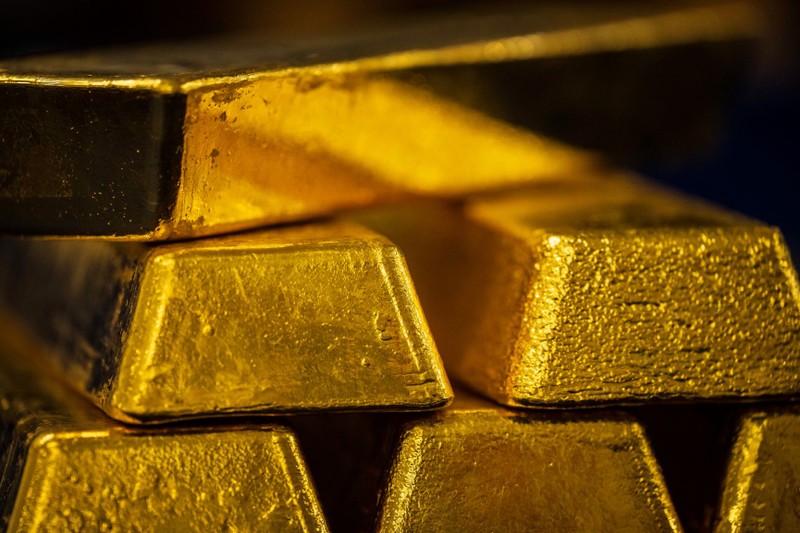
New York gold futures have experienced significant volatility, falling below the critical $5,050 per ounce level with a 0.62% intraday decline amid broader market uncertainty. This analysis examines the multifaceted factors driving gold’s retreat and assesses implications for global inflation expectations and central bank policy trajectories.
The most significant factor pressuring gold prices has been the strengthening US dollar, bolstered by market expectations surrounding Federal Reserve leadership. President Trump’s nomination of Kevin Warsh as Fed Chair has been interpreted as a hawkish, pro-independence choice, signaling a potentially tougher stance on inflation and fewer aggressive interest rate cuts ahead [1]. A stronger dollar directly diminishes gold’s appeal as it makes the non-yielding asset more expensive for foreign buyers while reducing its hedge value against currency depreciation.
The 10-year US Treasury yield has surged to approximately
The Chicago Mercantile Exchange (CME) increased margin requirements over the weekend preceding the decline, forcing leveraged gold futures traders to post additional collateral [1]. This technical mechanism accelerated the sell-off as market participants with speculative positions faced liquidation pressure, creating a cascading effect that amplified downward price momentum.
Heavy speculative buying during gold’s record-breaking rally—including substantial positions in gold call options and leveraged futures—created significant “short-interest pile-up” [1]. As prices began declining, the forced covering of these positions intensified the sell-off. This speculative excess had built up throughout late 2025 and early 2026, making the market vulnerable to sharp corrections.
While central banks have maintained strong net buying throughout 2025 (approximately 850 tonnes added to reserves), some tactical profit-taking has emerged as prices reached record levels [2]. The consensus estimate of around 800 tonnes of central bank purchases for 2026 remains supportive, but the pace of accumulation has slowed from peak levels, removing a key price floor [3].
Gold’s retreat from record highs may signal evolving market expectations regarding inflation trajectories:
| Scenario | Inflation Forecast | Gold Price Projection |
|---|---|---|
Bull Case |
3.5%-5.0% | $5,000-$5,995/oz |
Base Case |
4.0% | ~$5,500/oz |
Bear Case |
2.0% | $3,905-$4,100/oz |
Source: WisdomTree 2026 Outlook [2]
The current price action suggests markets are pricing
Despite short-term volatility, gold’s structural rally in 2025—the strongest since 1979—reflects persistent
The market’s interpretation of the Warsh nomination has significant implications:
-
Hawkish Repricing: Federal funds rate expectations have adjusted upward, with markets now pricingfewer rate cuts in 2026than previously anticipated [1]
-
Higher-for-Longer Yield Environment: Extended period of elevated rates strengthens the dollar and Treasury yields, maintaining pressure on gold prices
-
Quantitative Tightening Continuation: Balance sheet runoff remains intact, reducing liquidity that typically supports precious metals
RBC’s February 2026 analysis indicates both the
- No immediate rate cut catalystfor gold
- Stable dollar regimelimiting gold’s upside
- Reduced monetary policy divergenceacross developed economies
Despite short-term price weakness,
Based on current technical readings:
| Level | Type | Significance |
|---|---|---|
$5,050 |
Resistance | Major psychological barrier; failed breakout |
$4,850 |
Support | Key consolidation level; 50-day MA proximity |
$4,742 |
Support | Secondary technical support zone |
$4,600 |
Support | Bull case threshold for year-end recovery |
Current price action suggests
Gold retains underlying support from macro uncertainty, institutional demand, and central bank accumulation. A sustained recovery above $5,000 would reconfirm bullish momentum, particularly if Treasury yields retreat toward 3.5%-4.0% later in 2026.
- Extended dollar strengthabove 102-106 DXY could push gold toward bear case ($3,900-$4,100)
- Aggressive Fed tighteningwould compound pressure
- Geopolitical risk reductioncould diminish safe-haven demand
Gold’s trajectory remains
The recent gold price decline represents a
For inflation expectations, current price action suggests
[1] AOL Finance - “Why Gold Crashed So Fast” (https://www.aol.com/articles/why-gold-crashed-fast-retirees-131645998.html)
[2] WisdomTree - “Gold Outlook to Q4 2026: Into Uncharted Territory” (https://www.wisdomtree.com/investments/-/media/us-media-files/documents/resource-library/market-insights/wisdomtree-commentary/gold-outlook-to-q4-2026.pdf)
[3] Union Bancaire Privée - “Gold’s Bull Market is Set to Continue into 2026” (https://www.ubp.com/en/news-insights/newsroom/gold-s-bull-market-is-set-to-continue-into-2026-investment-outlook-2026)
[4] RBC - “Steady as She Goes–Central Banks Hold the Line in 2026” (https://www.rbc.com/en/economics/financial-markets-monthly/steady-as-she-goes-central-banks-hold-the-line-in-2026/)
[5] LikeRebateForex - “Technical Analysis: XAU/USD 6 February 2026” (https://likerebateforex.com/technical-analysis-gold-xau-usd-6-february-2026)
Insights are generated using AI models and historical data for informational purposes only. They do not constitute investment advice or recommendations. Past performance is not indicative of future results.
About us: Ginlix AI is the AI Investment Copilot powered by real data, bridging advanced AI with professional financial databases to provide verifiable, truth-based answers. Please use the chat box below to ask any financial question.