U.S. Stocks Outperformed by Foreign Markets: International Investment Opportunities Emerge
Unlock More Features
Login to access AI-powered analysis, deep research reports and more advanced features
About us: Ginlix AI is the AI Investment Copilot powered by real data, bridging advanced AI with professional financial databases to provide verifiable, truth-based answers. Please use the chat box below to ask any financial question.
Related Stocks
The Barron’s headline captures a significant market phenomenon: international equities are decisively outperforming U.S. stocks, creating a notable divergence that investors are increasingly recognizing. Recent market data illustrates this gap with striking clarity [0]:
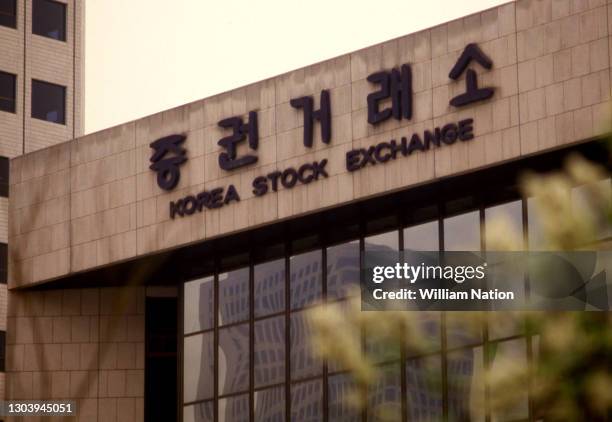
The South Korean Kospi has surged 14.26% over the recent period, making it the clear leader among major global indices, while Japan’s Nikkei 225 has advanced 9.17%, representing robust performance among developed markets [0][1]. In contrast, U.S. indices have delivered mixed results, with the technology-heavy NASDAQ declining 1.43% and the S&P 500 managing only a 0.30% gain [0]. The Russell 2000 small-cap index has outperformed with a 2.87% gain, and the Dow Jones Industrial Average has shown healthy momentum at +1.29% [0].
This performance gap challenges the traditional assumption that U.S. equities offer superior returns, particularly as value-oriented domestic indices like the Dow have outperformed growth-oriented indices like the NASDAQ. The Barron’s article suggests investors “play it like Buffett,” referencing Warren Buffett’s significant investments in Japanese trading companies, which have benefited from structural reforms and global diversification strategies [1].
Alphabet has executed the largest bond issuance in the company’s history, raising $20 billion through a multi-currency offering that significantly exceeded initial expectations of $15 billion [2][3][4]. The sale includes several notable features that reflect both investor confidence in AI growth trajectories and the current state of credit markets.
The offering includes a rare 100-year sterling bond, marking the first such issuance by a tech company since 1997 [2][4]. This ultra-long-duration debt signals that investors are willing to bet on Alphabet’s sustainability over multi-generational timeframes, though it has drawn attention given investor Michael Burry’s warnings about a potential “Motorola moment” for AI-focused companies [2]. The company also issued Swiss franc-denominated debt as part of the diversified offering [4].
The strong investor demand enabled Alphabet to expand the offering from its originally planned $15 billion size, reflecting confidence in the company’s credit quality and AI strategy [3]. This massive capital raise underscores the substantial investment requirements facing tech companies in the AI “arms race,” where capital expenditures for data centers, semiconductors, and infrastructure continue to mount.
Fundamentally, Alphabet maintains a market capitalization of $3.92 trillion with a P/E ratio of 29.62x, and the company delivered Q4 FY2025 earnings per share of $2.82, beating estimates by 9.73%, alongside revenue of $113.90B that exceeded expectations by 9.62% [0]. Analysts maintain a consensus BUY rating with a target price of $365.00, representing approximately 12.5% upside from current levels [0].
Holtec International has confidentially filed for an initial public offering that could value the company at over $10 billion, representing the most significant nuclear sector IPO in several years [5]. This development signals growing institutional and investor interest in nuclear energy infrastructure as a component of the energy transition and energy security strategies.
Holtec’s plans extend beyond its traditional engineering role, as the company intends to build and potentially operate its own nuclear facilities [5]. This vertical integration strategy represents a significant expansion of the company’s business model and reflects the broader reevaluation of nuclear power’s role in meeting clean energy goals and baseload power requirements.
Federal Reserve Governor Stephen Miran has expressed optimism regarding the U.S. fiscal outlook and economic growth trajectory, projecting a potential 1 percentage point increase in GDP growth driven by tax policy changes, regulatory burden reductions, and artificial intelligence productivity impacts [6][7]. Despite this positive growth outlook, Miran has maintained his advocacy for interest rate cuts during 2026, suggesting the Fed sees room for policy normalization without jeopardizing economic expansion [7].
This optimistic fiscal assessment from a Fed official provides context for understanding the current monetary policy debate and the potential for a “soft landing” scenario that accommodates both growth and inflation management.
Several interconnected themes emerge from this analysis that span multiple market dimensions. The AI investment cycle represents a common thread connecting Alphabet’s massive bond issuance, Fed expectations of productivity gains, and the sector rotation evident in market performance data [0][6]. Utilities and basic materials sectors outperformed on February 9, 2026, with gains of 2.09% and 1.81% respectively, while consumer defensive and cyclical sectors lagged, suggesting investors are positioning for industrial and infrastructure expansion rather than consumer-driven growth [0].
The international market outperformance may reflect structural factors beyond relative valuation, including Japan’s corporate governance reforms that have enhanced shareholder returns and Korea’s exposure to global technology supply chains. Buffett’s investments in Japanese trading companies have benefited from yen movements and commodity exposure, while the Warren Buffett comparison in the Barron’s article implicitly critiques the concentration risk in U.S. technology-focused strategies [1].
The return of 100-year bonds to the market, last seen in significant numbers in 1997, carries historical significance that investors should consider carefully. While the century-bond issuance demonstrates investor confidence in Alphabet’s long-term viability, historical patterns suggest such offerings sometimes coincide with market peaks when credit conditions become overly accommodative. Berkshire Hathaway’s substantial cash position, which has enabled the company to outperform during periods of tech sector weakness, provides an instructive counterpoint to aggressive capital allocation strategies [8].
The nuclear sector IPO potential represents more than a single company’s public offering; it signals a fundamental reassessment of nuclear energy’s role in the global energy mix following energy security concerns and the recognition that intermittent renewable sources require baseload complements. Holtec’s valuation exceeding $10 billion reflects this structural shift in investor sentiment toward nuclear infrastructure.
The divergence between U.S. and international equity performance may indicate shifting capital flows and portfolio rebalancing as investors seek diversification from concentration risk in U.S. technology stocks. The modest 0.30% gain in the S&P 500 versus the 14.26% gain in the Kospi represents a substantial return differential that could prompt institutional reallocation decisions [0].
The Alphabet bond sale, as the largest ever for the company, demonstrates the debt market’s willingness to finance massive AI infrastructure investments at historically low interest rates relative to the long duration of the obligations. This suggests that credit markets are supporting the AI investment thesis through capital provision, though the ultimate returns on these investments remain to be demonstrated.
The AI investment cycle presents notable risks as capital expenditures potentially outpace revenue generation, a concern reflected in the NASDAQ’s 1.43% decline while other indices advanced [0]. The technology sector’s volatility during this period suggests investor skepticism about the return timeline for AI investments, and Alphabet’s borrowing at 100-year maturities underscores the scale of capital commitment required.
Credit market conditions warrant monitoring, as the reintroduction of century bonds after their 1997 absence could indicate either confidence in long-term stability or excess in credit markets. Historical patterns around such offerings sometimes correlate with market peaks, making timing considerations relevant for risk-conscious investors.
International market exposure introduces currency volatility risks, particularly regarding the Japanese yen’s potential strength, along with political risks associated with leadership changes in Japan and liquidity considerations in Korean markets [0]. These risks require active management for investors pursuing international equity exposure.
The nuclear sector faces execution risk as Holtec transitions from engineering services to potential plant ownership and operation, a business model with different risk characteristics than the company’s historical operations. Regulatory approval, public acceptance, and construction cost overruns represent sector-specific challenges that could affect returns.
The international equity outperformance creates potential opportunity for investors seeking diversification from U.S. technology concentration. The Barron’s article’s Buffett reference highlights the potential for Japanese trading company investments, which benefit from global diversification, commodity exposure, and improved corporate governance [1].
Nuclear energy infrastructure investment opportunities are emerging as the sector experiences its most significant revival in years, with Holtec’s potential IPO representing an accessible entry point for investors previously constrained by the limited public company universe in the nuclear space [5].
The Federal Reserve’s supportive stance on growth, combined with Miran’s advocacy for rate cuts, suggests a potentially favorable environment for interest-rate-sensitive sectors and growth investments as policy normalizes through 2026 [6][7].
The market environment as of February 10, 2026, presents a complex picture of divergent performance, capital reallocation, and structural sector shifts. International equities, particularly in Korea and Japan, have substantially outperformed U.S. indices, with the Kospi’s 14.26% gain and Nikkei’s 9.17% advance contrasting sharply with the NASDAQ’s 1.43% decline and the S&P 500’s modest 0.30% gain [0][1].
Alphabet’s record $20 billion bond sale, including the tech sector’s first 100-year bond since 1997, demonstrates both investor confidence in the company’s AI strategy and the credit market’s capacity to finance massive infrastructure investments [2][3][4]. The company’s strong Q4 earnings, with EPS beating estimates by 9.73% and revenue exceeding expectations by 9.62%, provides fundamental support for this capital market activity [0].
Holtec’s potential $10 billion IPO would mark the largest nuclear sector offering in years, reflecting growing institutional interest in nuclear infrastructure as a component of energy transition and security strategies [5]. This development merits monitoring for investors seeking exposure to the nuclear renaissance theme.
Federal Reserve Governor Miran’s optimistic growth outlook, projecting potential 1 percentage point GDP improvement from policy changes and AI productivity, combined with his support for rate cuts, provides context for the broader economic environment [6][7]. This suggests a potentially accommodative policy backdrop that could support continued market expansion.
Market participants should monitor AI revenue realization in upcoming tech earnings, Fed policy trajectory based on inflation data, nuclear sector developments, international fund flows, and credit spreads as indicators of market stress or sector rotation sustainability [0].
Insights are generated using AI models and historical data for informational purposes only. They do not constitute investment advice or recommendations. Past performance is not indicative of future results.
About us: Ginlix AI is the AI Investment Copilot powered by real data, bridging advanced AI with professional financial databases to provide verifiable, truth-based answers. Please use the chat box below to ask any financial question.