Fed's Hammack: Monetary Policy Is in a Good Place to Stay on Hold
Unlock More Features
Login to access AI-powered analysis, deep research reports and more advanced features
About us: Ginlix AI is the AI Investment Copilot powered by real data, bridging advanced AI with professional financial databases to provide verifiable, truth-based answers. Please use the chat box below to ask any financial question.
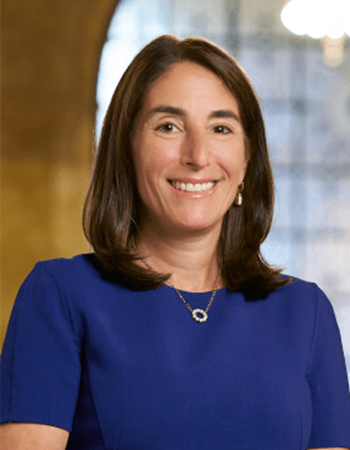
Cleveland Fed President Beth Hammack’s remarks on February 10, 2026, at the Ohio Bankers League 2026 Economic Summit in Columbus, Ohio, represent a significant communication from a traditionally hawkish FOMC voter endorsing a prolonged policy pause [1][2]. This comes after the Federal Reserve implemented three consecutive rate reductions at the end of 2025, making Hammack’s endorsement of patience particularly noteworthy given her historical policy orientation. Her assertion that “monetary policy is in a good place to stay on hold” carries added credibility because it comes from a policy maker who has previously advocated for more restrictive stances [1][3].
The timing of these remarks is particularly relevant as market participants continue to assess the Fed’s path forward following the year-end 2025 easing cycle. Hammack’s characterization of rates being on hold for “quite some time” and “for the foreseeable future” provides forward guidance that helps calibrate market expectations for the March 2026 FOMC meeting and beyond [2][3]. This communication aligns with the Fed’s broader strategy of providing clear signals about its policy trajectory to maintain market stability.
Hammack’s remarks establish a clear causal framework connecting several key economic factors. First, the three consecutive rate reductions at the end of 2025 have created what she characterizes as an appropriate policy stance, meaning the Fed believes it has achieved sufficient accommodation [1][3]. Second, the emphasis on “erring on the side of patience” suggests that the Fed views the risks of premature tightening as outweighing the risks of holding rates steady longer than necessary. Third, her explicit acknowledgment that inflation remains “too high” near 3% indicates that the Fed sees no immediate urgency to begin raising rates again, accepting current inflation levels as manageable within the broader policy framework [2].
The “low hire, low fire” characterization of the labor market reveals an important structural insight about current economic conditions. This suggests the labor market has reached a sustainable equilibrium where job creation and separations have both moderated, reducing urgency for the Fed to adjust policy based on employment concerns [2]. Meanwhile, the continued emphasis on tariff uncertainties introduces an external risk factor that complicates the inflation outlook, as potential trade policy developments could either fuel price pressures or constrain economic growth [2][3].
The muted market reaction to Hammack’s comments provides important context for assessing their impact. The S&P 500’s modest decline of 0.18%, the NASDAQ’s 0.27% decrease, and the Dow Jones’ slight 0.13% increase on February 10, 2026, all fall within normal daily fluctuation ranges [0]. This muted response indicates that market participants had largely priced in expectations for a prolonged rate pause, suggesting that Hammack’s remarks reinforced rather than reshaped market consensus.
The absence of significant market volatility following remarks from a voting FOMC member carries its own analytical significance. It suggests that communication from Fed officials is increasingly viewed as providing confirmation of established expectations rather than introducing new information that would warrant repricing. This dynamic has important implications for how future Fed communications will be interpreted by market participants.
The most significant insight from Hammack’s remarks is that a traditionally hawkish FOMC voter has fully embraced the patience narrative. Hammack’s hawkish credentials, which typically would suggest preference for higher rates and quicker inflation normalization, now support an extended policy hold [1][3]. This alignment between hawkish and moderate FOMC members on the need for patience reduces the probability of near-term policy divergence and suggests broad committee consensus on the current stance.
Hammack’s explicit acknowledgment that inflation could “remain near 3% for the rest of the year” represents important expectations management [2]. Rather than projecting a rapid return to the 2% target, the Fed appears to be communicating acceptance of a more gradual disinflation path. This framing helps prepare markets for an extended period of above-target inflation without triggering expectations of an immediate policy response, potentially reducing market volatility associated with inflation data releases.
The continued emphasis on tariff-related uncertainties indicates that the Fed is actively incorporating trade policy developments into its economic assessments [2][3]. This suggests that future monetary policy decisions may be significantly influenced by tariff developments, creating an additional variable that market participants must monitor when assessing the policy outlook.
Based on the analytical findings, the following information synthesis supports decision-making:
Insights are generated using AI models and historical data for informational purposes only. They do not constitute investment advice or recommendations. Past performance is not indicative of future results.
About us: Ginlix AI is the AI Investment Copilot powered by real data, bridging advanced AI with professional financial databases to provide verifiable, truth-based answers. Please use the chat box below to ask any financial question.