Dallas Fed President Logan's Hawkish Hold Stance Reinforces Cautious Fed Policy Path
Unlock More Features
Login to access AI-powered analysis, deep research reports and more advanced features
About us: Ginlix AI is the AI Investment Copilot powered by real data, bridging advanced AI with professional financial databases to provide verifiable, truth-based answers. Please use the chat box below to ask any financial question.
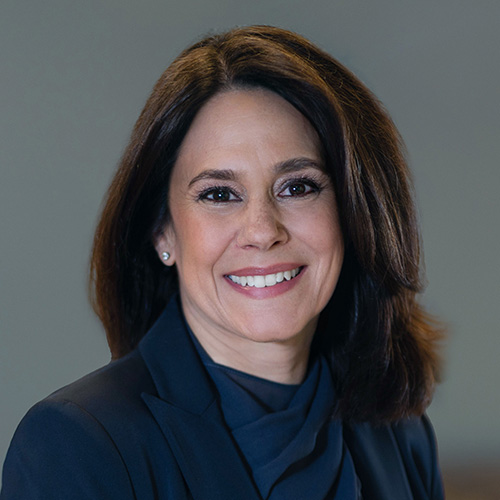
This analysis is based on the Wall Street Journal report [1] published on February 10, 2026, covering remarks delivered by Federal Reserve Bank of Dallas President Lorie Logan at the Futures Industry Association (FIA) conference. Logan, who holds voting rights on the Federal Open Market Committee in 2026, provided forward guidance that reinforces the central bank’s current accommodative stance while expressing caution about premature easing.
The timing of these remarks is significant, coming ahead of the March FOMC meeting and amid ongoing debates about the appropriate path for monetary policy. Logan’s comments represent her most detailed public articulation of the policy rationale underlying her January vote, offering investors and market participants insight into the internal deliberations shaping the Fed’s decision-making framework.
Logan’s characterization of the current policy stance as “well-positioned” reflects a nuanced assessment of the economic landscape. She articulated a “cautiously optimistic” view that the current 3.50%-3.75% federal funds rate range will prove sufficient to achieve the Fed’s dual mandate objectives of 2% inflation and maximum sustainable employment [2]. This assessment carries substantial weight given her voting position and her role overseeing the Eleventh Federal Reserve District, which encompasses a significant portion of the energy sector and southern economic activity.
The Dallas Fed president’s remarks suggest she views the current policy rate as approximating the neutral rate—the level at which monetary policy neither stimulates nor restrains economic growth. This interpretation implies limited room for both rate cuts and rate hikes from current levels, potentially signaling a period of policy stability absent significant economic developments [3]. Her conditional framework for future rate adjustments requires the convergence of two factors: meaningful progress on inflation and notable deterioration in labor market conditions.
Logan expressed explicit concern about inflation remaining “stubbornly high,” identifying several specific risk factors that could prolong price pressures [2]. Her enumeration of tariff effects, fiscal policy developments, and regulatory changes under the new administration signals heightened vigilance toward potential inflation triggers. This hawkish inflation assessment contrasts with more optimistic projections from some market participants and represents a significant data point for those attempting to gauge the Fed’s policy trajectory.
The attention to tariff-related inflation risks reflects growing concern among Fed officials about trade policy developments and their potential pass-through effects on consumer prices. Logan’s willingness to explicitly reference these factors suggests they occupy a prominent position in her economic forecasting framework and merit close monitoring by market participants assessing inflation outlooks.
While acknowledging ongoing labor market strength, Logan noted that downside risks have “meaningfully dissipated” since the series of rate cuts implemented in the latter half of 2025 [1]. This assessment suggests diminishing urgency for policy accommodation aimed at supporting employment, as the labor market no longer exhibits the weakness that partially justified the previous easing cycle.
The Dallas Fed president’s conditional framework for considering future rate cuts requires both disinflation progress and labor market softening—a dual threshold that sets a relatively high bar for policy easing. This approach reflects lessons from previous policy cycles and demonstrates a preference for maintaining restraint until clear evidence of economic slack emerges.
Market response to Logan’s remarks reflected cautious optimism, with equity indices advancing while Treasury yields declined modestly [0]. The S&P 500 gained 0.54% to approximately 6,954, the NASDAQ rose 0.94% to roughly 23,169, and the Dow Jones advanced 0.39% to around 50,187. The 10-year Treasury yield declined by approximately 2 basis points to 4.15%, reflecting reduced expectations for near-term rate cuts.
The muted market response suggests that Logan’s comments largely aligned with existing market expectations for continued policy restraint. The absence of significant volatility indicates that market participants had already priced a low probability of rate cuts in the near term, with Logan’s remarks serving primarily to reinforce rather than reshape policy expectations.
Logan’s hawkish hold stance intersects with multiple market dynamics and policy considerations. The approaching conclusion of Fed Chair Jerome Powell’s tenure in May introduces an element of uncertainty regarding future policy direction, particularly given recent political tensions between the administration and the central bank. Market pricing of rate cuts before May remains below 40%, suggesting significant skepticism about pre-leadership transition easing [1].
The confluence of Logan’s policy views with those of other hawkish FOMC voters, including New York Fed President John Williams and Governor Michelle Bowman, suggests a potentially coherent bloc within the committee favoring continued restraint. However, the January 10-2 vote split indicates meaningful dissenting opinion favoring more aggressive easing, a dynamic worth monitoring in upcoming meetings.
Market participants should recognize several risk factors embedded in the current policy environment. The “higher-for-longer” interest rate scenario carries implications for sector valuations, particularly for interest-sensitive industries such as housing, financials, and capital-intensive growth sectors. Logan’s emphasis on stubborn inflation risks suggests tolerance for maintaining restrictive conditions longer than some market participants anticipate.
The potential for policy divergence between the Fed and other central banks introduces currency and capital flow considerations. Additionally, the interaction between fiscal policy developments and monetary policy effectiveness warrants careful monitoring, as does the trajectory of regulatory changes affecting financial conditions and economic activity.
Based on the analytical framework established, the key informational elements for ongoing assessment include the following data points: Logan’s January vote aligned with the 10-2 majority holding rates steady; her conditional rate cut framework requires both inflation progress and labor market weakening; her neutral rate assessment implies limited policy flexibility; her cited inflation risks include tariffs, fiscal policy, and deregulation; and the market reaction suggests alignment with existing expectations for continued restraint.
Upcoming data releases, particularly the February CPI and PPI reports scheduled for February 13-14, will provide critical tests of Logan’s inflation assessment and inform market expectations for the March FOMC meeting. Additional Fed speeches throughout the week, including remarks from President Williams, Governor Cook, and President Goolsbee, will offer opportunities to assess the degree of consensus or divergence within the committee regarding the appropriate policy path.
Insights are generated using AI models and historical data for informational purposes only. They do not constitute investment advice or recommendations. Past performance is not indicative of future results.
About us: Ginlix AI is the AI Investment Copilot powered by real data, bridging advanced AI with professional financial databases to provide verifiable, truth-based answers. Please use the chat box below to ask any financial question.