Trump Criticizes Fed Chair Powell Over Construction Costs, Questions Oversight
Unlock More Features
Login to access AI-powered analysis, deep research reports and more advanced features
About us: Ginlix AI is the AI Investment Copilot powered by real data, bridging advanced AI with professional financial databases to provide verifiable, truth-based answers. Please use the chat box below to ask any financial question.
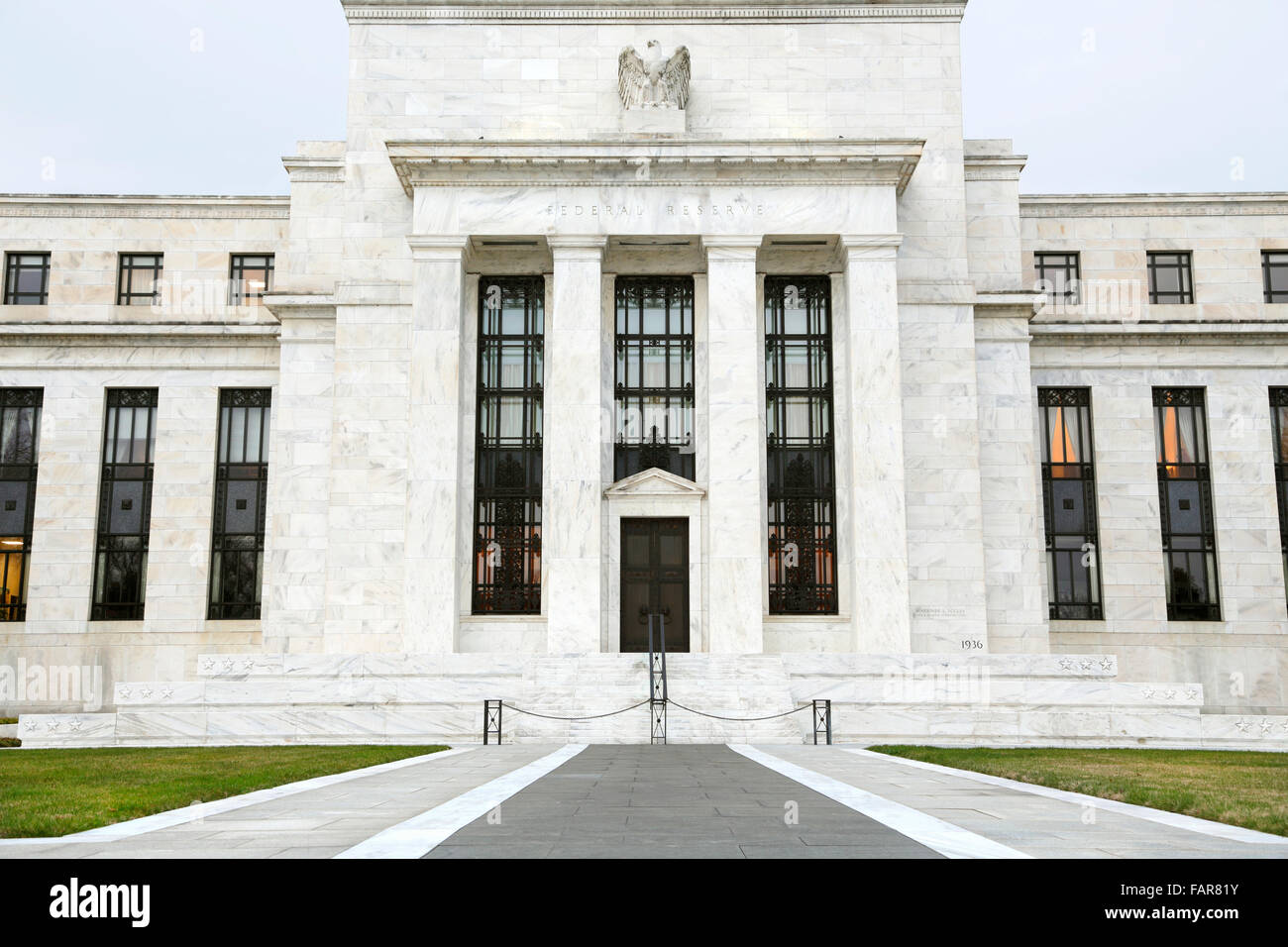
On February 10, 2026, President Donald Trump sat down with FOX Business host Larry Kudlow for an extensive interview that escalated ongoing tensions between the White House and the Federal Reserve. The confrontation marks a significant escalation in the President’s public criticism of Fed Chair Jerome Powell, centering on the controversial renovation of the Federal Reserve’s headquarters in Washington, D.C. The project, previously cited at approximately $3.1 billion, has become a focal point for administration scrutiny of Fed governance and spending practices [1].
The interview occurred at 2:30 PM EST and built upon a confrontation that began when Trump toured the Fed building with Powell in July 2025. During that visit, Trump publicly questioned the renovation costs, calling the project “crazy” and expressing disbelief at the expense involved. The February 2026 appearance represented a hardening of the President’s position, with more direct language and explicit claims about potential legal investigations targeting the Fed Chair [1][2].
The Federal Reserve headquarters renovation has emerged as a central point of contention between the administration and the central bank. Trump characterized the construction project as “the most expensive construction job built” during the Kudlow interview, suggesting that either corruption or gross incompetence must explain the escalating costs [2]. The renovation, which has been underway for several years, has faced criticism from various quarters regarding its budget overruns and management.
This focus on Fed infrastructure spending represents an unusual but targeted line of attack. By emphasizing construction costs, the administration has found a tangible, visible issue that resonates with broader concerns about government waste and inefficiency. The approximately $3.1 billion price tag—significantly higher than initial estimates—provides a concrete figure that can be communicated to public audiences without requiring understanding of complex monetary policy matters [1].
President Trump’s assertion that the Department of Justice is conducting a criminal probe targeting Jerome Powell represents a significant escalation in the confrontation. If accurate, such an investigation would raise profound questions about the independence of the Federal Reserve and the potential for political interference in monetary policy decisions. The Federal Reserve Act was designed to insulate the central bank from political pressure, and any perceived erosion of this independence could have lasting implications for market confidence in U.S. monetary policy [1].
The legal basis for such an investigation remains unclear, and no official DOJ announcements have confirmed the President’s claims. However, the mere assertion of an ongoing criminal probe creates uncertainty that could affect risk premiums in financial markets. Investors and market participants are likely to monitor any official developments closely, as confirmation of a criminal investigation into a sitting Fed Chair would represent unprecedented territory in American economic governance.
Treasury Secretary Scott Bessent confirmed during related comments that President Trump is considering up to 10 candidates to potentially replace Powell when his term expires [1]. The President’s expressed preference for Kevin Warsh—a former Federal Reserve Board member who served from 2011 to 2018—provides insight into the administration’s thinking about future Fed leadership. Warsh is viewed as more aligned with market-friendly policies and has been mentioned as a potential successor in previous administrations.
The succession uncertainty adds another layer of complexity to the current situation. While Powell’s current term continues, the public discussion of replacements and the harsh criticism of the incumbent Chair creates a governance vacuum that markets may find unsettling. The Fed’s effectiveness depends significantly on its perceived independence and the confidence of market participants in its decision-making process.
Financial markets exhibited modest declines on February 10, 2026, with the S&P 500 closing down 0.47%, the NASDAQ falling 0.73%, the Dow Jones declining 0.01%, and the Russell 2000 dropping 0.45% [0]. However, these figures must be interpreted with caution for several reasons. First, the interview occurred mid-afternoon, meaning the full reaction may not have been reflected in closing prices. Second, the slight declines could be attributed to various concurrent market factors unrelated to the Fed controversy. Third, extended session trading and international market reactions during Asian and European sessions will provide additional insight into how global investors perceive the situation [0].
The currency and bond markets may prove more revealing than equity indices in assessing the immediate impact of the controversy. The 10-year Treasury yield will be closely monitored for any signs of investors demanding higher risk premiums in response to perceived policy uncertainty. Similarly, the dollar’s value against major currencies could provide insight into international confidence in U.S. monetary policy continuity.
This episode represents one of the most direct challenges to Federal Reserve independence in the institution’s history. While previous administrations have occasionally expressed disagreement with Fed policy decisions, the public labeling of a sitting Fed Chair as “corrupt” or “grossly incompetent,” combined with claims of DOJ investigation, represents an unprecedented level of confrontation. The long-term implications for central bank independence—and the willingness of future administrations to engage in similar confrontations—remain to be seen.
The escalation of criticism comes at a particular moment in the economic cycle that may amplify its significance. Market participants are already navigating uncertainty related to broader economic policies, and the Fed controversy adds an additional layer of complexity. The timing suggests either a deliberate strategic choice by the administration or an organic escalation that has gathered momentum over several months.
The choice to conduct this interview on FOX Business, a network known for its business-friendly audience and alignment with conservative economic principles, indicates a deliberate communication strategy. By选择在商业友好的平台上公开发表批评, administration 可能希望向投资者和商界传递特定信息,同时避免在全国性新闻网络上可能产生的更广泛公众影响。
This analysis presents factual information regarding the February 10, 2026 confrontation between President Trump and Federal Reserve Chair Jerome Powell, based on the FOX Business “Kudlow” interview and related reporting. Key factual findings include the President’s characterization of Powell as “corrupt” or “grossly incompetent,” the approximately $3.1 billion renovation cost figure that has been cited, the claim of an ongoing DOJ criminal probe, and the identification of Kevin Warsh as the President’s preferred successor [1][2][3]. Market data from February 10, 2026 shows modest declines across major indices, though the full market impact remains to be assessed through extended and international trading sessions [0].
The analysis identifies significant institutional, legal, and market implications that warrant continued monitoring. Key information sources include the original FOX Business interview, Fox Business reporting on the President’s statements, AOL Finance coverage of the construction cost criticism, and MEAWW reporting on succession preferences [1][2][3]. Internal analytical database provides market indices data for the trading day in question [0].
[0] Ginlix Analytical Database - Market Indices Data (February 10, 2026)
[1] Fox Business - “Fed’s Powell either ‘corrupt’ or ‘incompetent’ over building project, Trump tells Kudlow”
[2] AOL Finance - “Trump calls Fed construction ‘most expensive’”
[3] MEAWW - “Trump says appointing Jerome Powell as Federal Reserve Chairman was a big mistake in first term”
Insights are generated using AI models and historical data for informational purposes only. They do not constitute investment advice or recommendations. Past performance is not indicative of future results.
About us: Ginlix AI is the AI Investment Copilot powered by real data, bridging advanced AI with professional financial databases to provide verifiable, truth-based answers. Please use the chat box below to ask any financial question.