January 2026 Jobs Report: "Low-Hire, Low-Fire" Labor Market Analysis
Unlock More Features
Login to access AI-powered analysis, deep research reports and more advanced features
About us: Ginlix AI is the AI Investment Copilot powered by real data, bridging advanced AI with professional financial databases to provide verifiable, truth-based answers. Please use the chat box below to ask any financial question.
Related Stocks
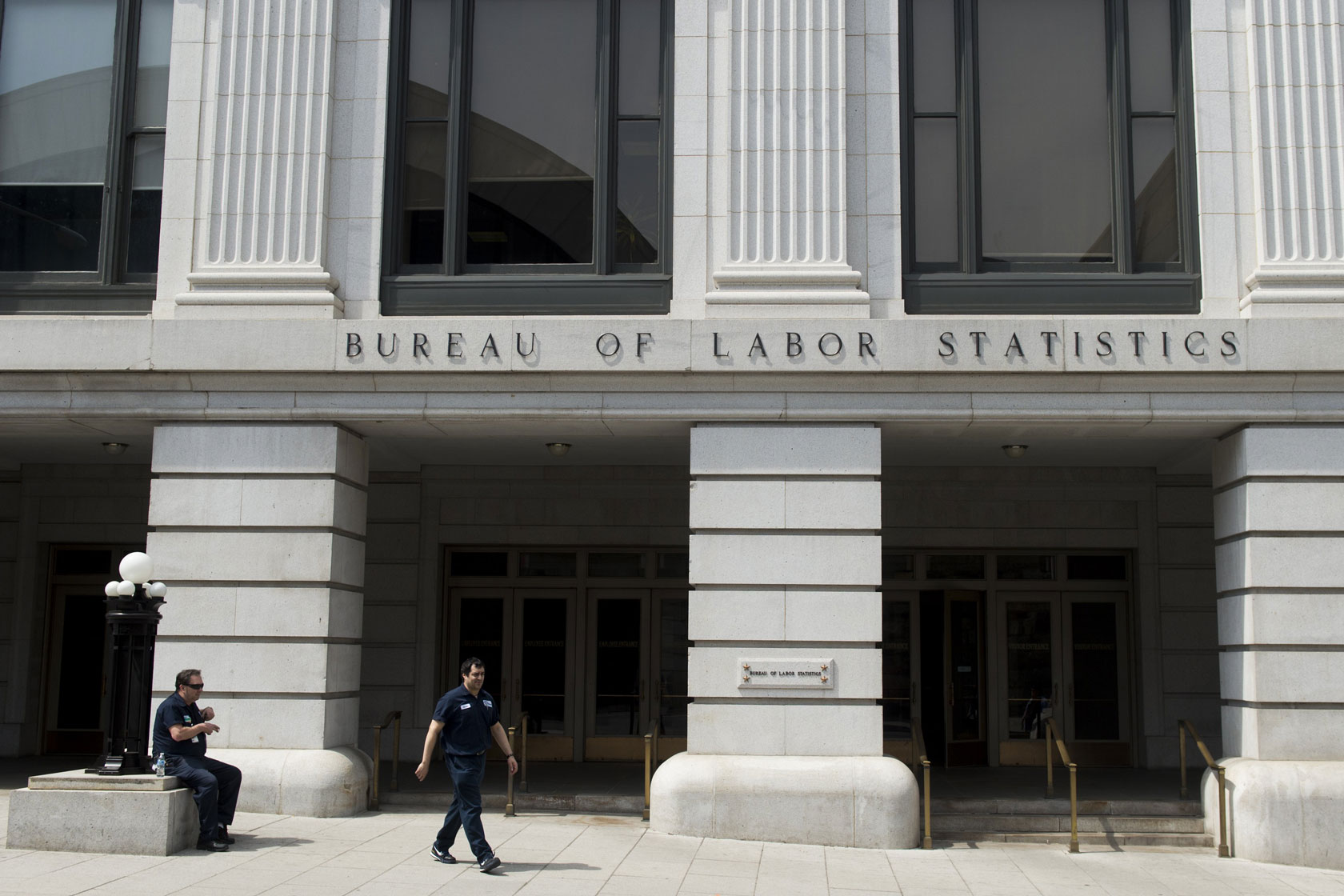
This analysis is based on the YouTube/Shorts interview featuring JPMorgan Asset Management Fixed Income Portfolio Manager Kelsey Berro [Event Source] published on February 11, 2026, which reported that the January jobs data revealed the economy is in a “low-hire, low-fire environment.” The January 2026 Employment Situation report from the Bureau of Labor Statistics was notably delayed by one week due to federal staffing constraints from a partial government shutdown [2][3].
The January 2026 jobs report presented a complex and somewhat contradictory picture of labor market conditions. Nonfarm payrolls increased by approximately 130,000 positions, beating Wall Street expectations of around 75,000 by a significant margin [1][2]. The unemployment rate improved to 4.3% from 4.4% in the prior month, suggesting continued strength in labor market outcomes despite broader economic uncertainties.
However, the headline numbers masked significant underlying concerns that informed Berro’s “low-hire, low-fire” characterization. The Bureau of Labor Statistics announced substantial downward revisions to 2025 data, reducing the full-year job creation estimate by 403,000 jobs—from what was initially reported as a robust 584,000 net gain to a revised figure of just 181,000 jobs [1][2]. This revision fundamentally altered the market’s understanding of 2025 labor market trends and raised questions about the reliability of monthly employment data.
The sector-level analysis revealed a highly concentrated pattern of job growth that further supports the “low-hire” thesis. Healthcare and social assistance sectors dominated employment gains, with healthcare adding 81,900 positions and social assistance contributing an additional 41,600 jobs [2]. Construction expanded by 33,000 positions, while business and professional services added 34,000 jobs. In stark contrast, retail trade and leisure and hospitality—typically sectors that drive substantial monthly hiring—each contributed approximately 1,000 jobs or less, while the federal government showed a net decline in employment [2].
This sector concentration raises important questions about economic breadth and the sustainability of job creation. When healthcare alone accounts for nearly two-thirds of monthly hiring, the labor market’s fundamental strength becomes more difficult to assess. The weakness in retail, hospitality, and government sectors suggests ongoing structural challenges in these industries that may persist regardless of aggregate economic conditions.
The “low-fire” component of Berro’s characterization gained substantial support from independent labor market data. January 2026 recorded 108,435 job cuts, representing a 118% increase year-over-year and the highest January layoff level since 2009 [6]. Challenger, Gray & Christmas confirmed that January hiring reached its lowest level since 2009, while December job openings fell to a five-year low according to BLS data [6].
This divergence between elevated layoffs and weak hiring—without a corresponding surge in unemployment—reflects what economists describe as a “labor marketquiet recession” dynamic. Workers are experiencing anxiety about job security, as evidenced by the New York Federal Reserve survey showing only 44.9% of workers expressed confidence in finding new employment as of September 2025 [6]. However, this sentiment has not translated into actual unemployment increases, creating a disconnect between perception and hard data.
Daniel Zhao of Glassdoor captured this dynamic succinctly: “Worker anxiety about layoffs is high, even if it’s not trending 1-to-1 with the hard data” [6]. Laura Ullrich of the Indeed Hiring Lab provided additional context, noting that “the probability of losing a job hasn’t risen dramatically; many cuts are from over-hired or AI-heavy firms” [6]. This suggests that recent layoffs have been concentrated in specific sectors—particularly technology companies that expanded aggressively during 2021-2022 and are now right-sizing their workforces.
The January jobs report triggered a nuanced market response that revealed investor concerns about the economic implications of “low-hire, low-fire” dynamics. Major indices showed mixed performance on February 11, 2026, with the S&P 500 declining 0.47%, the Dow Jones Industrial Average falling 0.13%, the NASDAQ dropping 1.04%, and the Russell 2000 showing the sharpest decline at 1.61% [3][4].
The sector rotation pattern was particularly illuminating. Basic materials emerged as the best-performing sector with a 1.38% gain, followed by consumer defensive stocks at 1.27% and healthcare at 0.37% [0]. Conversely, financial services suffered the steepest decline at 1.60%, followed by technology at 1.33% and consumer cyclical stocks at 1.16% [0]. This rotation from cyclical and growth-oriented sectors toward defensive industries suggests investors recalibrated their growth expectations following the stronger-than-expected labor data, potentially anticipating a longer period of elevated interest rates.
The bond market’s reaction to the jobs report provided clear signals about monetary policy expectations. The two-year Treasury yield increased by 6 basis points to 3.518%, the 10-year yield rose by 3 basis points to 4.182%, and the 30-year bond yield climbed by 2 basis points to 4.81% [5]. This steepening of the yield curve reflects market pricing of stronger economic growth expectations and a reduced probability of near-term Federal Reserve rate cuts.
Financial analysts interpreted the data as definitively hawkish for Fed policy. José Torres of Interactive Brokers observed that “the hot jobs number decreases expectations for lower rates” [3]. Brad Conger of Hirtle Callaghan noted that “January’s employment report was strong, which likely keeps the Fed on hold for now” [3]. Kay Haigh of Goldman Sachs indicated that “the Fed’s gaze will turn to the inflation picture” [3], suggesting that stronger labor data shifts the policy debate toward price pressures rather than employment concerns.
A critical insight from the January report concerns the reliability of monthly employment data. The 403,000-job downward revision to 2025 data—transforming what appeared to be a robust employment year into a notably weak one—highlights the substantial revision risk inherent in BLS estimates [1][2]. Market participants should exercise caution when interpreting headline payroll numbers, particularly during periods when seasonal adjustments and birth-death model assumptions may introduce significant误差 (error).
The delayed release of the January report due to the partial government shutdown added another layer of complexity. Federal staffing constraints may have affected data collection and processing, potentially introducing additional noise into the estimates [2][3]. Investors and analysts should monitor subsequent revisions carefully and consider the full context of data collection challenges when evaluating labor market trends.
The analysis reveals several risk factors warranting attention from market participants:
Despite the risks, several opportunity considerations emerge from the analysis:
The January 2026 Employment Situation report presents a labor market characterized by paradoxical dynamics that support Kelsey Berro’s “low-hire, low-fire” characterization [Event Source]. Headline job creation of 130,000 positions exceeded expectations but masked significant weaknesses: the weakest January hiring since 2009, the highest January layoffs since 2009, record-low worker confidence, and substantial downward revisions to prior-period data.
Healthcare sector concentration—accounting for approximately 63% of January job gains—raises questions about economic breadth and sustainability. The robust headline numbers combined with weak underlying hiring metrics suggest a transitional labor market where firms are neither aggressively expanding nor significantly contracting, resulting in modest net job creation despite substantial churn.
Market implications include rotation into defensive sectors, elevated Treasury yields reflecting reduced rate cut expectations, and heightened attention to subsequent employment data releases for confirmation of trends. The significant 2025 revisions underscore the importance of monitoring BLS revisions and exercising appropriate caution when interpreting monthly headline figures.
Key data points for ongoing monitoring include the February employment situation report (to assess whether January strength was transient or the start of a trend), BLS revision patterns (to evaluate data quality), sector employment trends (particularly healthcare concentration), Federal Reserve commentary (for policy trajectory signals), and wage growth data (for inflation assessment).
[0] Ginlix Analytical Database - Market Indices and Sector Performance Data
[1] USA Today - US economy added 130,000 jobs in January, unemployment at 4.3%
[2] Indeed Hiring Lab - January 2026 Jobs Report
[3] CNN Business - Stocks are mixed as January hiring jumps
[4] Investopedia - Stock Market Today: Major Indexes Fall
[5] CNBC - U.S. Treasury yields surge on strong January jobs report
[6] CNBC - The ‘low-hire, low-fire’ economy may be starting to shift
[Event Source] YouTube/Shorts - January jobs report reveals “we’re in a low-hire, low-fire environment”
Insights are generated using AI models and historical data for informational purposes only. They do not constitute investment advice or recommendations. Past performance is not indicative of future results.
About us: Ginlix AI is the AI Investment Copilot powered by real data, bridging advanced AI with professional financial databases to provide verifiable, truth-based answers. Please use the chat box below to ask any financial question.