David Einhorn's 2026 Fed Rate Cut Forecast: Greenlight Capital's dovish outlook and market implications
Unlock More Features
Login to access AI-powered analysis, deep research reports and more advanced features
About us: Ginlix AI is the AI Investment Copilot powered by real data, bridging advanced AI with professional financial databases to provide verifiable, truth-based answers. Please use the chat box below to ask any financial question.
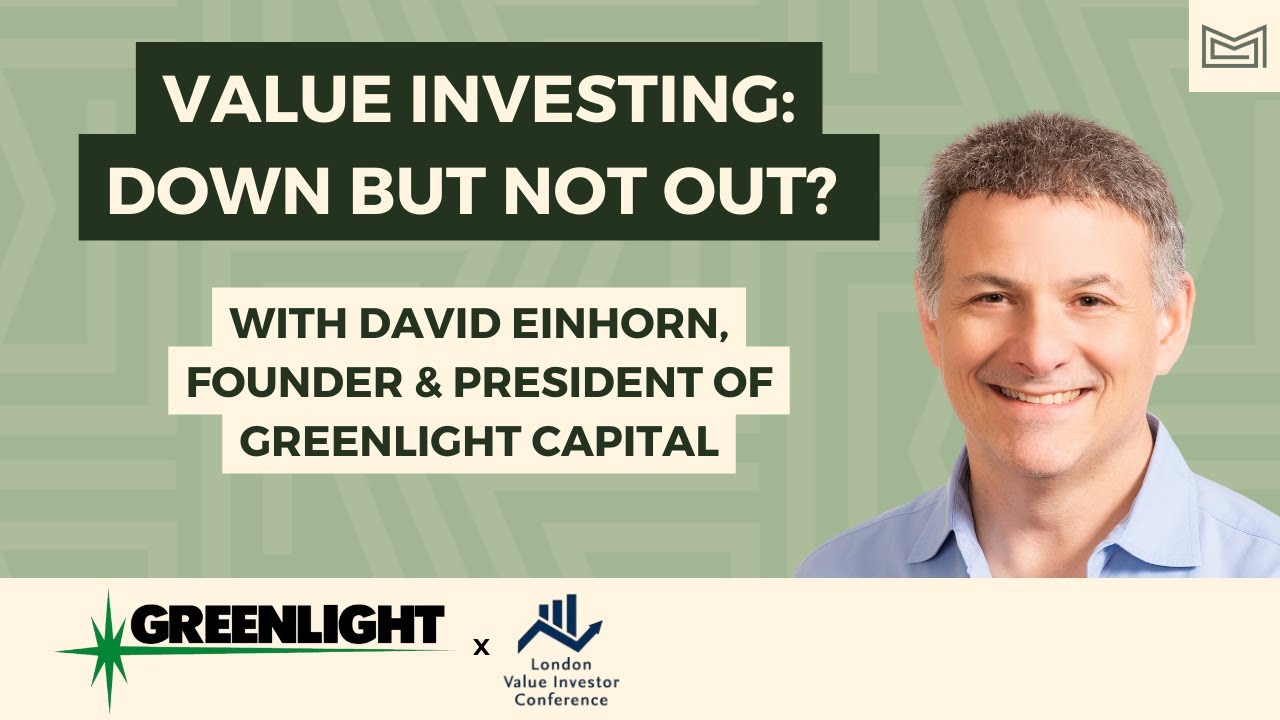
This analysis is based on reports published on February 11, 2026, primarily sourced from CNBC coverage [1] and aggregated across major financial news platforms including MSN [2] and Seeking Alpha [4]. David Einhorn, a prominent and often contrarian hedge fund manager known for his accurate market predictions, including his early 2023 short position on car rental stocks, articulated his monetary policy outlook during televised interviews and published commentary. The timing of this announcement is particularly significant given ongoing market speculation about the Federal Reserve’s leadership transition and the trajectory of interest rate policy in 2026.
Einhorn’s forecast represents a notable departure from consensus market expectations, which currently price in approximately two rate cuts for 2026 with roughly 88% probability [1][2]. His characterization of the anticipated Fed cuts as “substantially more than two times” suggests he expects either a more aggressive easing cycle or cuts extending beyond the current two-cut baseline pricing. This differential between Einhorn’s view and market pricing constitutes the primary analytical interest of this event, as it may signal either an underappreciated dovish shift in Fed policy or potential mispricing in interest rate-sensitive markets.
Einhorn’s thesis is intimately connected to his expectations regarding incoming Fed Chair Kevin Warsh, whose nomination and potential confirmation represent a critical variable in the monetary policy outlook. According to the analyst reports, Einhorn believes that under Warsh’s leadership, the Federal Reserve will demonstrate a willingness to cut rates even when economic conditions remain robust—a characterization of “running hot” that would traditionally constrain dovish policy shifts in a conventional Fed framework [1][2].
This expectation reflects a significant reassessment of Warsh’s policy orientation compared to historical precedent. Warsh, who previously served as a Fed Governor from 2006 to 2011 during the Bernanke era, has historically been characterized as more hawkish on inflation concerns. However, Einhorn’s interpretation suggests either a perceived evolution in Warsh’s policy views or an expectation that economic conditions will deteriorate sufficiently to warrant aggressive easing regardless of the incoming chair’s predispositions.
The uncertainty surrounding Warsh’s confirmation timeline and eventual policy direction introduces material execution risk into Einhorn’s thesis. Market participants should monitor Fed Governor nominations, Warsh’s confirmation proceedings, and any policy signals emerging from the transition team as critical leading indicators for validating or refuting this outlook [1].
The market environment on February 11, 2026, presents a mixed picture of risk sentiment that complicates attribution of price movements to any single catalyst. Major U.S. equity indices posted declines across the board, with the S&P 500 closing at 6,939.68 for a 0.53% decrease, the NASDAQ falling 0.93% to 23,060.97, the Dow Jones Industrial Average declining 0.26% to 50,114.38, and the Russell 2000 experiencing the sharpest drop at 1.23% to 2,667.09 [0].
The Russell 2000’s outsized decline is particularly noteworthy given its sensitivity to domestic economic conditions and interest rate expectations. Small-capitalization stocks traditionally exhibit higher beta to rate expectations, making this index potentially more responsive to shifts in Fed policy outlook. However, attributing the February 11 decline solely to Einhorn’s comments would be analytically premature, as multiple factors likely contributed to the negative sentiment. The decline may reflect broader macroeconomic concerns, technical selling pressure, or sector-specific headwinds unrelated to monetary policy expectations.
The modest magnitude of the declines—ranging from 0.26% to 1.23%—suggests that while market participants absorbed Einhorn’s comments, the reaction was measured rather than dramatic. This could indicate that his views, while notable given his reputation, represent one perspective among many competing narratives rather than a paradigm-shifting insight that fundamentally altered market pricing.
Einhorn’s explicit disclosure of substantial gold positions provides important context for evaluating his Fed outlook and introduces potential considerations regarding analytical objectivity. Gold has appreciated approximately 17% year-to-date as of February 2026 and has achieved approximately 120% cumulative gains since 2024, representing a significant concentration in his portfolio [1][2].
This positioning raises legitimate questions about potential confirmation bias in Einhorn’s monetary policy analysis. A gold-positive thesis is inherently correlated with expectations of accommodative monetary policy, declining real interest rates, and potential currency debasement concerns. If Einhorn holds substantial gold positions, his Fed forecast may reflect analytical reasoning that validates his existing portfolio positioning rather than purely objective policy analysis.
From a risk management perspective, investors should consider the following implications: first, Einhorn’s gold holdings represent concentrated exposure that amplifies both upside and downside risk depending on policy outcomes; second, his public advocacy for positions he personally holds introduces transparency but also raises questions about the boundary between analytical insight and position promotion; third, the magnitude of gold’s appreciation—particularly the 120% gain since 2024—suggests that much of the anticipated policy easing may already be priced into precious metals valuations.
Beyond gold, Einhorn disclosed positioning in SOFR (Secured Overnight Financing Rate) futures as another vehicle for expressing his rate-cut thesis. SOFR futures provide direct exposure to expectations for short-term interest rates and serve as a pure bet on Federal Reserve policy trajectory without the commodity-specific variables that complicate gold analysis.
The SOFR futures market has historically served as a reliable indicator of market-implied policy expectations, with futures prices reflecting aggregate participant views on the path of short-term rates. Einhorn’s willingness to commit capital to this market suggests conviction in his rate-cut thesis that extends beyond rhetorical advocacy into material financial positioning.
For market observers, the interplay between SOFR futures positioning and public commentary from prominent investors like Einhorn creates potential for self-fulfilling dynamics. As his views gain traction and attract following capital to rate-sensitive positions, the resulting positioning may itself influence market pricing in ways that validate the original thesis, creating feedback loops that complicate causal analysis.
Einhorn’s forecast of “substantially more than two” rate cuts places him in notable disagreement with current market consensus pricing. This positioning is consistent with his historical approach as a hedge fund manager who frequently adopts contrarian views that ultimately prove profitable. However, the mere existence of contrarian positioning does not validate its accuracy; rather, it establishes a clear analytical thesis that can be monitored against subsequent market developments.
The distinction between “two cuts” and “substantially more than two” may appear nuanced, but it carries significant implications for asset allocation and risk management. If market pricing assigns 88% probability to exactly two cuts, Einhorn’s view implies either a higher probability of a three-cut or four-cut scenario, or alternatively, a scenario where the timing or magnitude of cuts exceeds current expectations. Either interpretation suggests current yield curve positioning may underappreciate dovish policy outcomes.
Einhorn’s commentary highlighted gold’s role as a “reserve asset to own among central banks,” referencing the documented trend of official sector gold purchases by monetary authorities across emerging markets [1]. This structural demand factor provides a fundamental underpinning for his gold thesis that extends beyond pure monetary policy speculation.
Central bank gold purchases have indeed accelerated in recent years, with countries including China, India, Russia, and numerous emerging market nations increasing their gold reserves as part of diversification strategies away from U.S. dollar-denominated assets. This trend reflects both geopolitical considerations and long-term reserve management objectives that are largely insensitive to short-term monetary policy fluctuations.
The combination of Einhorn’s rate-cut thesis with structural central bank demand creates a multi-factor framework for evaluating gold’s outlook. Even if the Federal Reserve’s policy path diverges from Einhorn’s expectations, continued official sector purchases could provide baseline support for precious metals valuations.
The event’s emergence on February 11, 2026, followed by market decline on the same day, introduces questions about information transmission and market efficiency. While attribution of daily price movements to specific news events is inherently imprecise, the temporal coincidence warrants monitoring for follow-on effects.
If Einhorn’s views represent genuinely new information that shifts market expectations, one might anticipate subsequent adjustments in interest rate-sensitive assets including Treasuries, currencies, and rate-sensitive equity sectors. The absence of dramatic immediate reaction does not preclude delayed effects as the investment community processes and debates his thesis.
David Einhorn of Greenlight Capital has articulated a dovish Federal Reserve outlook for 2026, predicting rate cuts that will “substantially more than two times” exceed current market pricing. His thesis is predicated on expectations for aggressive easing under incoming Fed Chair Kevin Warsh, even in conditions of economic strength. Einhorn is backing this view with material positions in gold and SOFR futures, noting gold’s strong performance—17% year-to-date and 120% since 2024—as validation of his macro thesis [1][2].
Market reaction on February 11, 2026, saw equities decline across major indices, though the modest magnitude of declines (0.26% to 1.23%) suggests measured absorption of the information rather than dramatic reassessment. The Russell 2000’s 1.23% decline was the steepest, consistent with its sensitivity to interest rate expectations [0].
Key variables requiring monitoring include the Warsh confirmation timeline, Treasury yield movements across the curve, official sector central bank gold purchasing trends, and any subsequent adjustments in SOFR futures positioning by market participants. The convergence of Einhorn’s public advocacy with his disclosed personal positioning introduces considerations regarding analytical objectivity that investors should independently evaluate.
Insights are generated using AI models and historical data for informational purposes only. They do not constitute investment advice or recommendations. Past performance is not indicative of future results.
About us: Ginlix AI is the AI Investment Copilot powered by real data, bridging advanced AI with professional financial databases to provide verifiable, truth-based answers. Please use the chat box below to ask any financial question.