Jeffrey Small on Fed's Balancing Act and Mag 7 AI Capital Expenditure Potential
Unlock More Features
Login to access AI-powered analysis, deep research reports and more advanced features
About us: Ginlix AI is the AI Investment Copilot powered by real data, bridging advanced AI with professional financial databases to provide verifiable, truth-based answers. Please use the chat box below to ask any financial question.
Related Stocks
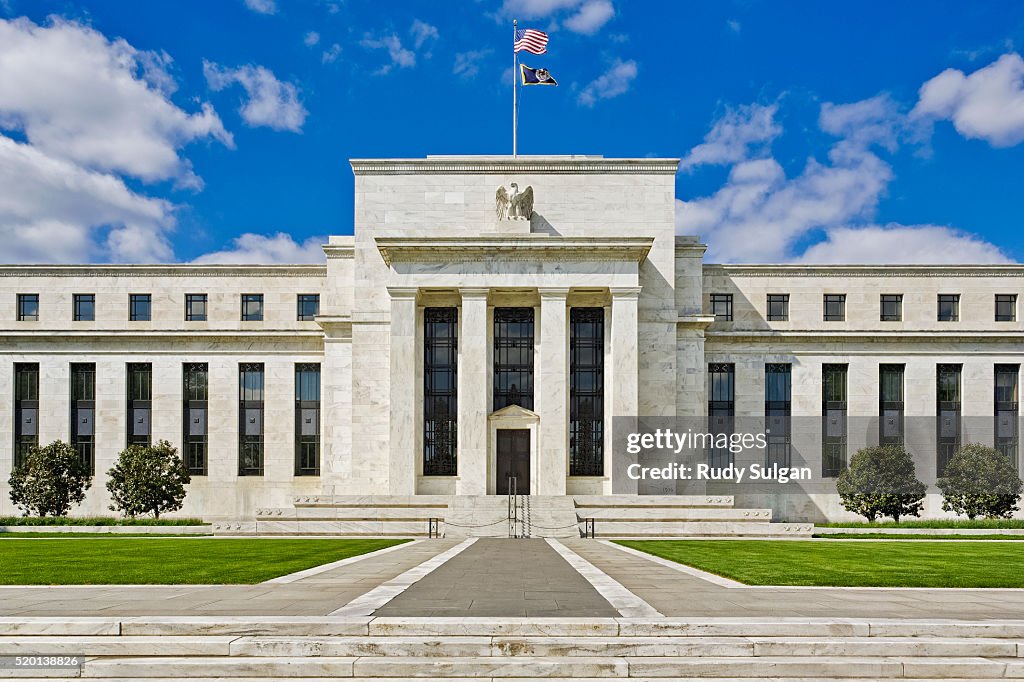
Jeffrey Small’s analysis centers on a fundamental market tension: the U.S. economy’s resilience is simultaneously challenging near-term Federal Reserve rate cut expectations while pressuring equity valuations through elevated interest rate expectations. The Federal Reserve held rates in the 3.50-3.75% range as of late January 2026, maintaining a data-dependent posture [2][3]. Markets are currently pricing two rate cuts for 2026, reflecting bond market participants’ anticipation of policy easing [2]. However, the resilient labor market—with unemployment at 4.3%, down from 4.4%—complicates the Fed’s case for near-term cuts [3].
Federal Reserve research indicates that productivity growth has averaged 2.2% annually since 2020, faster than the 1.5% pace in the previous business cycle, potentially supporting sustained economic growth without inflationary pressure [4]. J.P. Morgan Global Research has adjusted its outlook, noting that “the economy seems to have settled into an equilibrium of slower labor supply growth met by slower labor demand growth, though with few signs of further deterioration” [5]. This economic equilibrium suggests the Fed may maintain its restrictive stance longer than market participants anticipate, creating potential repricing risk in both bond and equity markets.
The February 2026 market data corroborates Small’s observations about elevated volatility and sector rotation. The NASDAQ declined 0.91% on February 11, significantly underperforming the S&P 500’s 0.50% decline and the Dow Jones’ 0.24% drop [0]. The Russell 2000’s 1.14% decline indicates broader market weakness extending beyond large-cap technology names [0].
Sector performance reveals a classic risk-off rotation pattern. The Technology sector’s 1.01% decline on February 11 directly supports Small’s characterization of high-valuation tech volatility [0]. The Financial Services sector experienced the steepest decline at 2.24%, while defensive sectors outperformed with Basic Materials rising 1.77% and Healthcare gaining 0.97% [0]. This sector rotation pattern—weakness in interest-sensitive and growth sectors coupled with strength in defensive sectors—suggests market participants are reassessing risk exposure in light of potentially extended Fed policy.
The Mag 7’s AI infrastructure spending represents an unprecedented capital commitment that Small views as a transformative long-term investment cycle. The collective 2026 capital expenditure plan exceeds $700 billion across the major technology platforms [6][7]:
| Company | 2026 Capex Plan | Strategic Focus |
|---|---|---|
| Amazon | $200 billion | Cloud infrastructure, Gemini models |
| Alphabet | Up to $185 billion | Data centers, AI factories |
| Meta | Up to $135 billion | AI infrastructure, capacity expansion |
| Microsoft | $14 billion in Q4 alone | Servers, data centers, Azure/OpenAI |
This capital intensity is creating significant short-term financial pressure. Amazon projects negative free cash flow of $17 billion to $28 billion in 2026, while Meta expects approximately a 90% decline in free cash flow [7]. However, Microsoft maintains customer-contracted cloud backlog of $315 billion, providing substantial revenue visibility and supporting the long-term investment thesis [6].
The market data confirms Small’s observation about high valuations sparking volatility in specific Mag 7 constituents. Microsoft (MSFT) declined 2.15% in after-hours trading, trading at $404.37 with a P/E ratio of 25.34x [0]. Nvidia (NVDA) showed relative resilience, gaining 0.80% in after-hours trading at $190.05, though maintaining an elevated P/E ratio of 47.16x [0].
Technical indicators reveal important divergence between these two key Mag 7 components. Nvidia exhibits a beta of 2.31 relative to the S&P 500, indicating significantly higher volatility than the broader market and consistent with Small’s characterization of high-valuation tech volatility [0]. Microsoft’s bearish MACD signal combined with its decline suggests continued near-term weakness [0]. Both stocks are trading in sideways ranges with no clear directional trend, supporting the thesis of valuation-driven consolidation [0]. Key technical levels to monitor include Microsoft’s support at $397.77 and Nvidia’s support at $185.33 [0].
Small’s comparison of current AI capital expenditure to Amazon’s early days is structurally supported by several convergent factors. First, revenue visibility remains strong, evidenced by Microsoft’s $315 billion backlog and Azure commitments [6]. Second, capacity expansion statements from Microsoft—to “increase total AI capacity by over 80% this year and roughly double our total data center footprint over the next two years”—mirror Amazon’s infrastructure-first strategy from its early growth phase [6]. Third, the platform economics trajectory suggests that similar to how Amazon’s early e-commerce losses eventually translated to dominant cloud market position, current AI infrastructure buildout may position these companies for next-generation platform control across enterprise and consumer applications.
The Mag 7’s capital expenditure strategy reveals a fundamental tradeoff between short-term cash flow destruction and long-term strategic positioning. Amazon’s projected negative free cash flow of $17-28 billion and Meta’s expected 90% decline in free cash flow represent material financial risks [7]. However, these investments are occurring during a period of elevated productivity growth—averaging 2.2% annually since 2020—which may help monetize infrastructure investments more efficiently than historical analog cycles [4]. The success of this strategy ultimately depends on successful conversion of infrastructure investment into recurring revenue streams, a process that remains partially unproven at scale for enterprise AI applications.
A significant market risk emerges from potential misalignment between market expectations and Fed policy trajectory. If economic data continues to demonstrate resilience, markets may need to reprice rate cut expectations, potentially causing bond market volatility and equity valuation compression. Extended P/E ratios—Nvidia at 47x and Microsoft at 25x—leave minimal margin for disappointment [0]. This dynamic creates asymmetric risk in high-valuation technology names, where positive surprises may be met with muted price appreciation while negative surprises could trigger significant multiple compression.
The primary near-term risks identified through integrated analysis include Fed policy error risk, valuation compression potential, and technical breakdown scenarios. If economic data remains strong, markets may need to reprice rate cut expectations, potentially causing volatility in both bond and equity markets [2][3]. Extended P/E ratios leave little margin for disappointment, with both Microsoft and Nvidia trading at valuations that price in substantial future growth [0]. Technical levels warrant monitoring, with Microsoft below $397.77 support or Nvidia below $185.33 potentially accelerating selling pressure [0].
The medium-term opportunity landscape centers on AI infrastructure monetization and competitive positioning. The $700+ billion Mag 7 investment cycle creates substantial barriers to entry for smaller competitors, potentially consolidating market share among the dominant platforms [6][7]. Enterprise and consumer AI adoption represents a fundamental technology shift with secular demand trends, unlike cyclical demand patterns. Investors should monitor first quarter 2026 earnings for cloud and AI revenue breakdowns that validate demand pipelines and infrastructure investment returns.
Long-term considerations include AI monetization success, productivity impact, and interest rate trajectory. The conversion of infrastructure investment into recurring revenue streams will determine whether current capital expenditure generates acceptable returns [7]. Fed research suggesting 2.2% productivity growth may continue, potentially remaining inflation-neutral and supporting sustained economic expansion without requiring aggressive monetary easing [4]. The multi-year interest rate path will significantly impact discounted cash flow valuations for capital-intensive strategies, making rate trajectory monitoring essential for long-term investment thesis validation.
The analysis integrates Jeffrey Small’s February 11, 2026 commentary with quantitative market data and sector performance metrics. The U.S. economy’s resilience—evidenced by 4.3% unemployment and 2.2% productivity growth—complicates Federal Reserve easing expectations while elevated interest rate expectations pressure equity valuations in high-valuation technology names [0][3][4]. The Mag 7 AI capital expenditure cycle exceeding $700 billion in 2026 represents a secular investment that, while creating near-term cash flow pressure, may establish long-term competitive advantages analogous to Amazon’s early infrastructure investments [6][7].
Key data points for ongoing monitoring include February employment data for labor market trajectory, upcoming Federal Reserve communications for policy path clarity, Mag 7 earnings for AI revenue attribution and capital expenditure return indicators, and technical levels on Microsoft at $397.77 support and Nvidia at $185.33 support [0]. The market’s current pricing of two 2026 rate cuts may require adjustment if economic resilience persists, creating potential repricing volatility in rate-sensitive and growth sectors [2].
The identified information gaps include actual AI revenue attribution data, specific AI capital expenditure details from Meta and Tesla, new Federal Reserve Chair policy direction, and potential government shutdown impact on Bureau of Labor Statistics data releases. These gaps should be monitored through first quarter 2026 earnings releases and upcoming Federal Reserve communications.
Insights are generated using AI models and historical data for informational purposes only. They do not constitute investment advice or recommendations. Past performance is not indicative of future results.
About us: Ginlix AI is the AI Investment Copilot powered by real data, bridging advanced AI with professional financial databases to provide verifiable, truth-based answers. Please use the chat box below to ask any financial question.