Chinese Factories and Ports Maintain Strong Activity Despite Trump Tariffs: Trade Truce and Front-Loading Drive Container Volume Surge
Unlock More Features
Login to access AI-powered analysis, deep research reports and more advanced features
About us: Ginlix AI is the AI Investment Copilot powered by real data, bridging advanced AI with professional financial databases to provide verifiable, truth-based answers. Please use the chat box below to ask any financial question.
Related Stocks
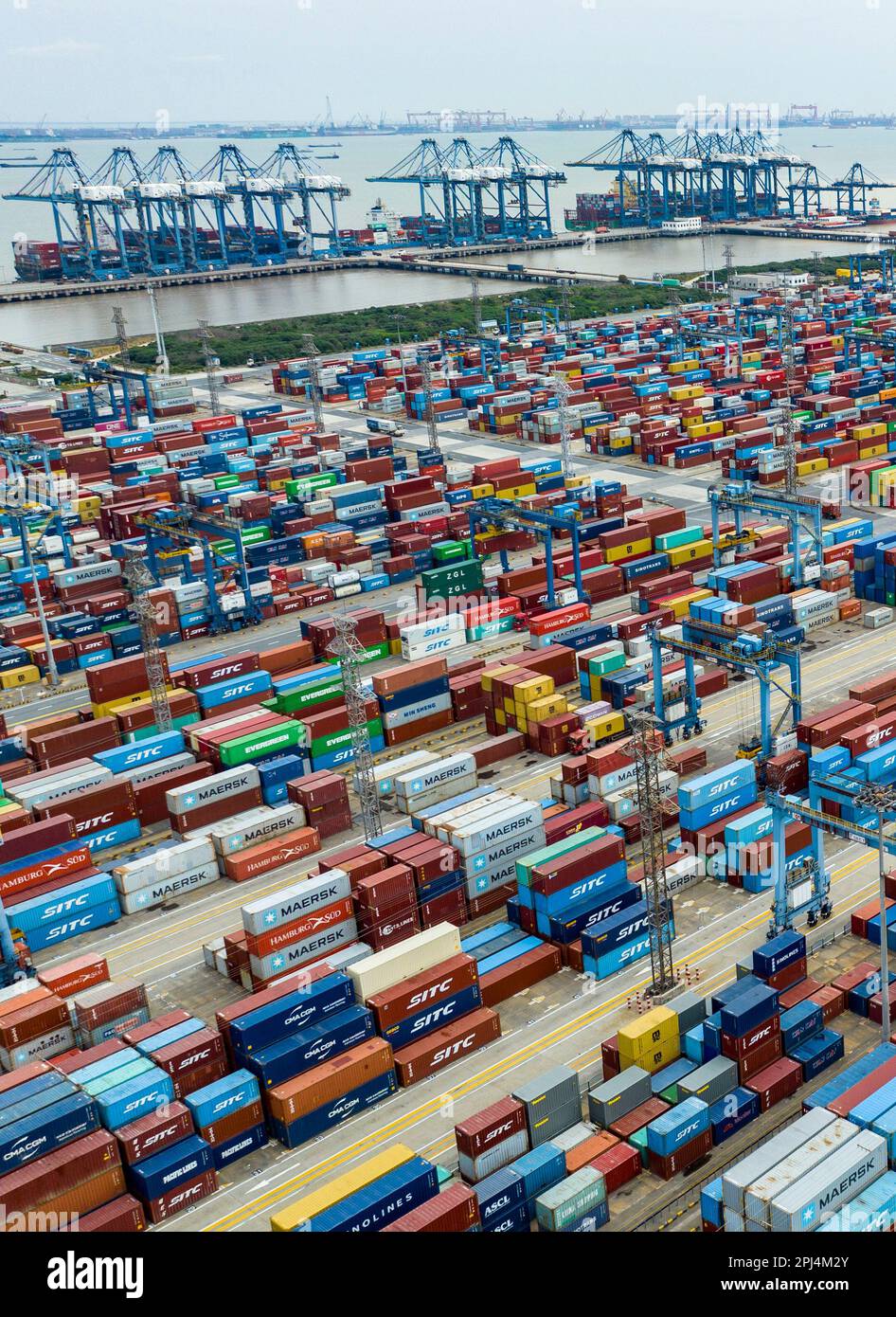
The CNBC report published on February 11, 2026, reveals a striking resilience in Chinese manufacturing and logistics sectors despite ongoing U.S.-China trade tensions [1]. Major ports across China experienced a significant surge in container handling activity, with the week ending February 1 showing a 40% increase in container throughput compared to the same period in the prior year—this represents the fastest year-over-year growth observed in over 12 months [1]. Ningbo, one of the world’s busiest container terminals operators, has suspended gate-in services for certain container categories as bookings exceed capacity by more than 20%, signaling extreme demand pressure [1].
The Shanghai Containerized Freight Index (SCFI), a key benchmark for global container shipping rates, has stabilized in the range of 1,400 to 1,656 points, which remains substantially above its 15-year historical average of 1,337 to 1,568 [1]. This elevated freight rate environment reflects multiple converging factors: the pre-holiday shipping rush associated with Lunar New Year celebrations, continued robust demand from U.S. consumers and businesses, and strategic front-loading behavior by importers seeking to secure inventory ahead of potential policy changes [1]. The SCFI peaked approximately three weeks earlier than typical seasonal patterns suggest, indicating that market participants are accelerating shipping activities in response to trade policy uncertainty [1].
The U.S. stock market’s reaction to these developments on February 11, 2026, revealed notable sector divergences that merit careful interpretation. The S&P 500 closed at 6,941.46 with a modest decline of 0.50%, while the NASDAQ dropped 0.91% to close at 23,066.47, and the Dow Jones Industrial Average slipped 0.24% to 50,121.41 [0]. The Russell 2000, often viewed as a barometer of domestic economic sentiment, declined by 1.14% to 2,669.47 [0].
Sector-level analysis reveals a compelling narrative about market expectations regarding global trade flows. The Industrials sector experienced the most pronounced weakness, falling 1.41% on the trading day—a reaction that may reflect investor concerns about potential disruptions to industrial supply chains or expectations of weaker export demand [0]. Conversely, the Basic Materials sector surged 1.77%, leading all sector gains, which aligns with the interpretation that robust manufacturing activity in China is supporting commodity demand globally [0]. Consumer Cyclical stocks declined marginally by 0.19%, potentially reflecting market concerns about tariff pass-through costs affecting retail pricing and consumer purchasing power [0].
Container shipping companies have emerged as direct beneficiaries of the elevated freight rate environment. ZIM Integrated Shipping Services (ZIM) closed at $21.14, representing a gain of 1.98% on the trading day, with the stock trading at a price-to-earnings ratio of just 2.54 and earnings per share (TTM) of $8.31 [0]. Matson, Inc. (MATX), a major container shipping and logistics company with significant Pacific trade routes, closed at $162.77—a gain of 1.31%—with the stock trading near its 52-week high of $169.20 [0]. These performances suggest that market participants are pricing in the expectation of continued strong shipping volumes and elevated freight rates in the near term.
The most significant insight from the current market dynamics is that U.S.-China trade tensions have not resulted in the collapse of Chinese manufacturing exports as some market observers anticipated [1]. China secured a one-year trade truce that has kept tariff rates lower than initially feared, providing a critical policy backstop for trade flows [1]. This truce, combined with adaptive supply chain strategies, has enabled Chinese factories to maintain export volumes while redirecting shipments through alternative channels.
The “China-plus-one” sourcing strategy—where multinational corporations diversify production across Southeast Asian nations including Vietnam, Thailand, and Indonesia—has accelerated in response to trade policy uncertainty [1]. However, the current data suggests that this diversification has not yet eroded Chinese manufacturing dominance to a meaningful degree. Many companies maintain significant production capacity in China while simultaneously establishing alternative sources, creating a dual-supply-chain structure that preserves China’s role in global manufacturing networks [1].
Analysis of export data reveals a significant geographic redistribution of Chinese trade rather than an overall reduction in export volumes [1]. While direct shipments to the United States have declined in 2025, Chinese exporters have successfully redirected products to Southeast Asian markets and European Union countries, maintaining aggregate export volumes [1]. This geographic diversification strategy demonstrates the adaptability of Chinese manufacturers and their ability to penetrate new markets when faced with traditional trade barriers.
Factory operators report that U.S. demand remains resilient, with American customers continuing to place orders despite tariff pressures [1]. Some U.S. buyers have even increased direct engagement with Chinese manufacturers, traveling to China for new product development and quality assurance purposes [1]. This hands-on approach suggests that the economic relationship between U.S. buyers and Chinese manufacturers remains fundamentally intact despite political tensions.
The China Beige Book, an independent economic survey, reported a pronounced jump in industrial output, orders, production, and earnings during January 2026 [1]. This private-sector data corroborates the official and semi-official statistics indicating that the world’s second-largest economy is maintaining meaningful momentum despite external trade pressures [1]. The convergence of multiple data sources—port throughput statistics, freight rate indices, and business surveys—strengthens confidence in the assessment that Chinese manufacturing activity remains robust.
The most significant risk factor identified in the current market dynamics is the aggressive front-loading of shipping activity ahead of potential policy changes [1]. The 80% surge in trucking rates and the early peak in the Shanghai Containerized Freight Index suggest that businesses are building inventory at an unsustainable pace [1]. If this front-loading represents peak demand, shipping companies may face meaningful headwinds in the first and second quarters of 2026 as inventory positions normalize and Lunar New Year factory closures reduce production volumes.
The post-holiday period, extending from late January through February, will be particularly informative for assessing the sustainability of current shipping volumes [1]. Container throughput comparisons between January’s exceptional levels and March’s post-holiday activity will provide critical insight into underlying demand trends versus temporary seasonal factors.
Despite the current trade truce, U.S.-China trade relations remain fundamentally fluid and subject to rapid change [1]. Any deterioration in diplomatic relations, imposition of additional tariff measures, or failure to extend the trade truce beyond its current terms could disrupt the current equilibrium in shipping volumes and freight rates [1]. Market participants should monitor trade policy announcements closely for indicators of potential shifts in the trade relationship.
The dependence of China’s export diversification strategy on Southeast Asian and European markets creates additional vulnerability [1]. If these alternative export destinations experience their own economic headwinds or implement trade barriers, the current redistribution of Chinese exports could face constraints that pressure overall volumes.
The elevated freight rate environment creates revenue and margin opportunities for shipping companies with exposure to Pacific trade routes [0]. Companies like ZIM and Matson that maintain strong operational presence in these lanes may continue to benefit from favorable pricing dynamics in the near term [0]. However, the sustainability of these rates depends on continued demand and the absence of significant capacity additions by shipping competitors.
For industrial and materials companies, robust Chinese manufacturing activity supports commodity demand and provides a stabilizing factor for global industrial production [0]. This demand source partially offsets weakness in other regional manufacturing centers and provides a floor for certain commodity prices.
The analysis indicates that Chinese factories and ports are demonstrating substantial resilience in the face of tariff pressures, with container volumes and freight rates remaining elevated ahead of the Lunar New Year holiday period [1]. The trade truce between the United States and China has been a critical factor in maintaining these trade flows, while adaptive supply chain strategies have enabled manufacturers to redirect exports to alternative markets [1].
The market appears to be pricing in a temporary resolution to trade tensions, with shipping-related equities showing strength while broader industrial indices reflect uncertainty about long-term sustainability [0]. Key indicators to monitor include post-holiday shipping volumes, SCFI trajectory, U.S. trade policy developments, and Chinese economic data for the first quarter of 2026 [1].
The sector divergence observed in U.S. markets—with Basic Materials advancing while Industrials declined—suggests that investors are interpreting the strong Chinese manufacturing data through multiple lenses, weighing commodity demand benefits against concerns about industrial demand sustainability [0]. The 40% year-over-year surge in container volumes at Chinese ports represents a meaningful acceleration that merits continued monitoring for signs of normalization or acceleration [1].
Insights are generated using AI models and historical data for informational purposes only. They do not constitute investment advice or recommendations. Past performance is not indicative of future results.
About us: Ginlix AI is the AI Investment Copilot powered by real data, bridging advanced AI with professional financial databases to provide verifiable, truth-based answers. Please use the chat box below to ask any financial question.