Toyota Industries Takeover Bid: Investment Implications and Strategic Rationale
Unlock More Features
Login to access AI-powered analysis, deep research reports and more advanced features
About us: Ginlix AI is the AI Investment Copilot powered by real data, bridging advanced AI with professional financial databases to provide verifiable, truth-based answers. Please use the chat box below to ask any financial question.
Related Stocks
Toyota Motor Corporation’s ¥6.1 trillion ($35-39 billion) hostile takeover bid for Toyota Industries Corp.—a leading forklift manufacturer and material handling equipment producer—represents one of Japan’s most significant contested M&A transactions in recent years. The bid, currently extended through February 2026, faces sustained opposition from Elliott Investment Management, which holds a 7.1% stake in the target company and argues the offer significantly undervalues the business [1][2].
Parameter |
Details |
|---|---|
Target Company |
Toyota Industries Corporation |
Bidder |
Toyota Motor Corporation |
Initial Offer |
¥16,300 per share (June 2025) |
Sweetened Offer |
¥18,800 per share (January 2026) |
Total Deal Value |
Approximately ¥6.1 trillion |
Current Market Price |
~¥20,000 (record high) |
Elliott’s Stated Fair Value |
¥26,134 per share |
Elliott’s Stake |
7.1% |
Toyota Motor’s Existing Stake |
24.66% |
Acceptance Threshold |
42.01% of minority shareholders |
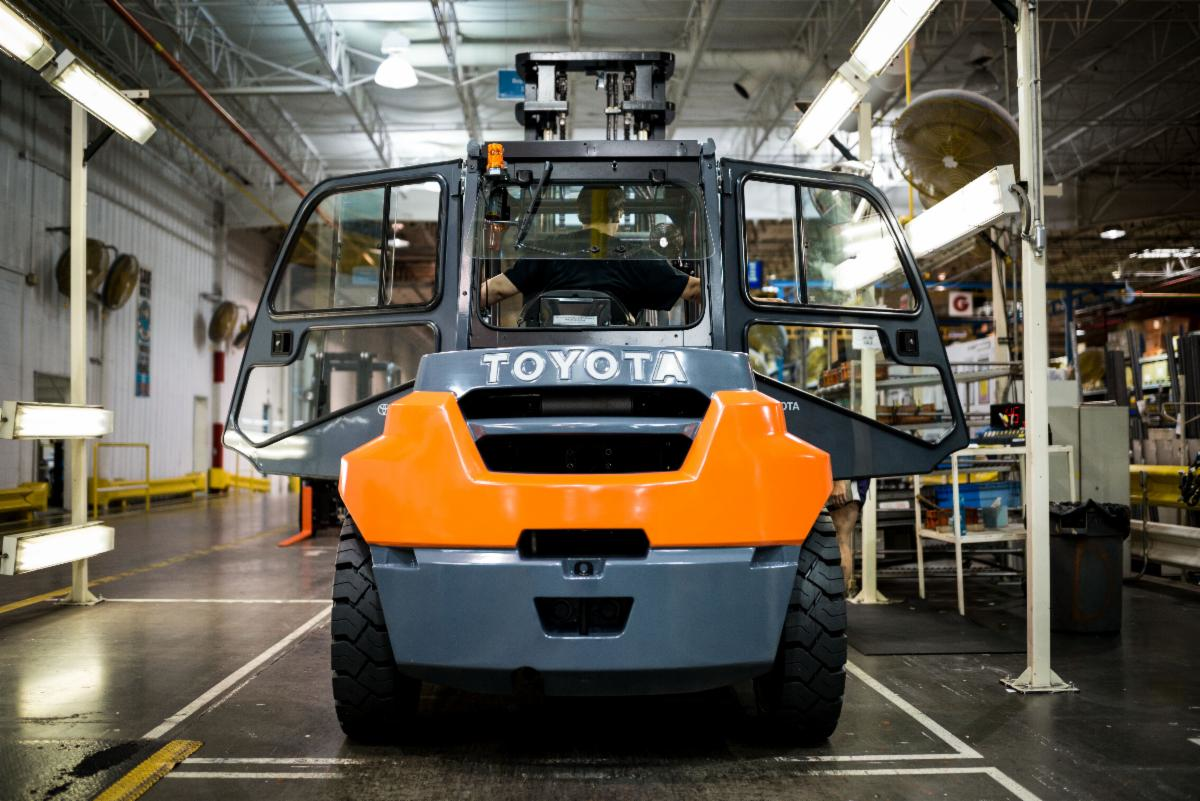
Toyota Industries is a cornerstone of the Toyota Group’s material handling and logistics ecosystem. The company manufactures forklifts and industrial equipment through a global network of production facilities—including the world’s highest-capacity forklift plant in Takahama, Japan, and major manufacturing operations in North America (Columbus, Indiana), China, Italy, and Brazil [3]. Taking Toyota Industries private would enable Toyota Motor to:
- Strengthen supply chain resilienceby directly controlling critical material handling equipment used in automotive manufacturing
- Integrate advanced manufacturing technologiesacross the group, including automated guided vehicles and robotics
- Create operational synergiesin logistics, production systems, and quality control methodologies
This bid aligns with Japan’s broader corporate governance reform movement. By consolidating the Toyota Group’s core industrial businesses:
- Eliminates potential conflicts of interestbetween publicly traded subsidiaries and the parent company
- Demonstrates Toyota’s commitment to shareholder-friendly corporate governancein an era of increased scrutiny on Japanese keiretsu structures
- Provides greater strategic flexibilityfor future restructuring initiatives within the Toyota ecosystem
For Chairman Akio Toyoda, this transaction represents a strategic move to solidify control over the extended Toyota Group ahead of generational leadership transitions. The consolidation would:
- Centralize decision-making authorityover the automotive and industrial equipment businesses
- Strengthen the Toyoda family’s influenceover the group’s strategic direction amid intensifying competition from Chinese automakers and EV disruptors
- Enable more aggressive long-term investmentsin next-generation mobility technologies without short-term market pressures
The global material handling equipment market, valued at over $90 billion, is experiencing structural growth driven by:
- E-commerce expansiondriving warehouse automation demand
- Reshoring manufacturing operationsglobally
- Increasing adoption of electric and autonomous material handling vehicles
Toyota Industries’ position as a market leader provides Toyota Motor with significant exposure to these secular growth trends.
Elliott Investment Management, which began building its 7.1% stake in Toyota Industries in 2024, has mounted a robust campaign against the bid on several grounds [2][4]:
Elliott contends that Toyota Industries is worth
- Hidden asset valueswithin Toyota Industries’ balance sheet
- Future growth potentialin the material handling and automation sectors
- Control premium considerationsfor a strategic acquirer
Elliott has criticized the transaction structure and negotiation process:
- Insufficient independent committee oversightin price negotiations
- Related-party transaction complexitiesgiven Toyota Motor’s existing 24.66% stake
- Inadequate engagement with minority shareholders
From Elliott’s perspective, the bid represents a
- A higher standalone valuationthat reflects the company’s intrinsic worth
- Potential alternative transactionsor strategic alternatives
- Enhanced shareholder democracyin the decision-making process
Factor |
Impact |
|---|---|
Deal Premium |
Paying ¥18,800 per share represents a ~15% increase from the initial offer; current market price (~¥20,000) suggests investors anticipate further concessions |
Balance Sheet Impact |
The ¥6.1 trillion deal includes ¥1 billion from Akio Toyoda personally and ~¥700 billion in non-voting preferred shares from Toyota Motor |
Synergy Potential |
Vertical integration could yield cost savings and revenue synergies, though quantifiable benefits remain uncertain |
Strategic Value |
Long-term control of material handling capabilities may prove valuable amid supply chain disruptions |
Consideration |
Analysis |
|---|---|
Offer Adequacy |
Elliott’s ¥26,134 target suggests ~39% upside from current offer; shareholders face a “hold or accept” decision |
Share Price Performance |
Toyota Industries shares hit record highs (~¥20,010) on bid extension news, indicating market confidence in higher valuations |
Squeeze-Out Mechanics |
If 42.01% of minority shareholders accept, Toyota Motor can execute a compulsory acquisition |
Alternative Scenarios |
Elliott’s opposition could force Toyota to either increase its offer or abandon the transaction |
This transaction serves as a
- Precedent for future contested M&Ainvolving Japanese corporate groups
- Benchmark for fair valuationof listed subsidiaries within keiretsu structures
- Signal to foreign investorsregarding the effectiveness of activist strategies in Japan
-
Deal Completion Uncertainty: Elliott’s sustained opposition may force Toyota to either sweeten the offer significantly or abandon the transaction entirely
-
Valuation Dispute: The gap between Toyota’s ¥18,800 offer and Elliott’s ¥26,134 fair value estimate (~39%) represents a substantial negotiation hurdle
-
Regulatory Considerations: Japanese regulatory approval and fairness opinion requirements could impact transaction timing and structure
-
Market Sentiment: Rising market expectations (reflected in the stock trading above the offer price) may constrain Toyota’s ability to complete the deal at current terms
Scenario |
Probability |
Implications |
|---|---|---|
Toyota Increases Offer |
Moderate (40-50%) | Deal completes at ¥22,000-24,000 range; Elliott likely exits position |
Toyota Holds at ¥18,800 |
Low (15-25%) | Risks losing bid; may force strategic alternative or breakup of transaction |
Elliott Accepts Compromise |
Moderate (25-35%) | Mid-priced settlement; Sets precedent for future Japanese M&A |
Deal Falls Through |
Low (10-15%) | Toyota Industries remains independent; Elliott may push for board representation |
Toyota’s contested takeover of Toyota Industries represents a pivotal moment for Japanese M&A and corporate governance. From an investment perspective, the transaction highlights the
- Valuation remains the central dispute—Elliott’s ¥26,134 target versus Toyota’s ¥18,800 offer represents a significant gap
- Market expectations have risen, with Toyota Industries shares trading above the offer price
- The outcome will set precedentsfor future activist campaigns in Japan and the valuation of listed subsidiaries
- Strategic rationale is compellingfor Toyota Motor, but the price remains contentious
The extended deadline through February 2026 provides additional time for negotiation, but given Elliott’s track record of successful activist campaigns—including recent engagements at PepsiCo, Southwest Airlines, and Hewlett Packard Enterprise—the resolution of this contested bid will be closely monitored by the global investment community [5].
[1] Channel News Asia, “Toyota extends bid for group forklift manufacturer after Elliott’s opposition,” February 2026 (https://www.channelnewsasia.com/business/toyota-extends-bid-group-forklift-manufacturer-after-elliotts-opposition-5925531)
[2] Bloomberg, “Elliott Maintains Opposition to Toyota Industries Buyout Price,” February 2026 (https://www.bloomberg.com/news/articles/2026-02-03/elliott-maintains-opposition-to-toyota-industries-buyout-price)
[3] Toyota Material Handling International, “About Us” (https://toyotamaterialhandling-international.com/about-us/who-we-are)
[4] Global Banking & Finance Review, “Toyota Industries shares hit record amid hopes for higher bid,” January 2026 (https://www.globalbankingandfinance.com/toyota-industries-shares-hit-record-market-hopes-higher/)
[5] Bloomberg, “Elliott’s $5.5 Billion Japan Shift Faces Test on Toyota Deadline,” February 2026 (https://www.bloomberg.com/news/articles/2026-02-11/elliott-s-5-5-billion-japan-shift-faces-test-on-toyota-deadline)
Insights are generated using AI models and historical data for informational purposes only. They do not constitute investment advice or recommendations. Past performance is not indicative of future results.
About us: Ginlix AI is the AI Investment Copilot powered by real data, bridging advanced AI with professional financial databases to provide verifiable, truth-based answers. Please use the chat box below to ask any financial question.