Fed Governor Stephen Miran Advocates for Aggressive Rate Cuts on "Kudlow" - Inflation Outlook and Policy Divergence
Unlock More Features
Login to access AI-powered analysis, deep research reports and more advanced features
About us: Ginlix AI is the AI Investment Copilot powered by real data, bridging advanced AI with professional financial databases to provide verifiable, truth-based answers. Please use the chat box below to ask any financial question.
Related Stocks
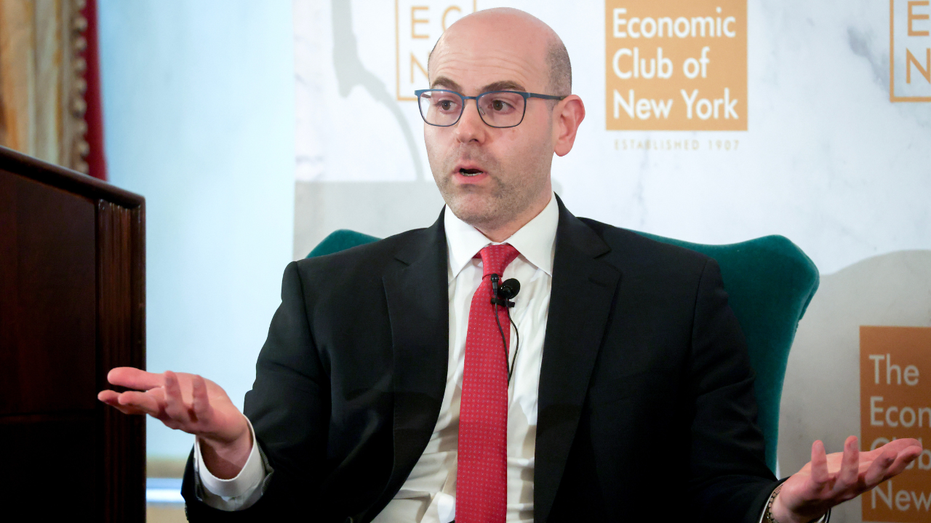
Federal Reserve Governor Stephen Miran appeared on Fox Business’s “Kudlow” program on February 11, 2026, to discuss the U.S. economic outlook, job growth dynamics, and monetary policy trajectory. This interview represents Miran’s continued public advocacy for a more dovish Fed stance, positioning him as the most consistent dissenter on the Federal Open Market Committee. His appearance follows the Fed’s January 28, 2026 policy decision to maintain the federal funds rate at 3.50-3.75%, which passed on a 10-2 vote with Miran and Governor Christopher Waller opposing the majority [1][2].
The timing of Miran’s comments is particularly significant given the recent release of the January 2026 jobs report, which showed payroll additions of 130,000—substantially exceeding the forecast of 70,000—while the unemployment rate declined to 4.3% [4]. This labor market strength has created an increasingly complex backdrop for rate-cut advocates like Miran, as stronger economic data typically supports the case for maintaining higher interest rates to ensure sustained inflation progress.
Governor Miran’s characterization of anticipated inflation trajectory as “dramatic” improvement in 2026 represents his signature bullish inflation view that has defined his dissent throughout 2025. His policy prescription of approximately 150 basis points of rate cuts for 2026 reflects a fundamental belief that inflation has sufficiently cooled to warrant meaningful monetary accommodation [3]. This position aligns with policy preferences expressed by the incoming Trump administration, though Miran has maintained that his views are data-driven rather than politically motivated.
The contrast between Miran’s inflation outlook and current market pricing highlights the policy debate within monetary policy circles. Following the robust January employment data, traders have adjusted expectations, with the probability of no rate cut in June rising from 25% pre-jobs data to approximately 40% [4]. Treasury yields increased in response to the jobs report, reflecting market participants’ reassessment of the Fed’s policy path [5].
Miran’s continued dissent places him alongside Governor Christopher Waller as the two most prominent advocates for deeper rate cuts within the Fed’s leadership. Notably, Kansas City Fed President Jeffrey Schmid has adopted a different perspective, attributing slower job growth to demographic factors rather than demand weakness, suggesting nuanced views on labor market conditions across the central bank’s regional presidents [4].
The composition of the FOMC is undergoing transition, with Chairman Jerome Powell’s term scheduled to conclude in May 2026. Kevin Warsh’s nomination as the potential successor introduces additional uncertainty regarding the future policy trajectory, as his confirmation hearings and Senate vote timeline will influence market expectations for mid-2026 monetary policy direction.
The divergence between Miran’s dovish advocacy and the stronger-than-expected economic data has created an environment of heightened policy uncertainty. Market participants are closely monitoring upcoming economic releases, particularly the PCE inflation data—the Federal Reserve’s preferred inflation metric—to assess the durability of price pressures and the appropriate policy response [4]. The Treasury market’s reaction to recent data suggests that investors are maintaining flexibility regarding rate cut expectations, with positioning adjusting rapidly in response to incoming information.
The analysis reveals several structural dynamics worth noting. First, Miran’s consistent dissent pattern demonstrates that even within a consensus-oriented institution like the Federal Reserve, meaningful policy disagreements persist and are publicly articulated. His presence as a voting member through at least early 2026 ensures that the dovish perspective will continue influencing FOMC discussions and potentially voting outcomes.
Second, the tension between labor market resilience and inflation concerns underscores the ongoing challenge facing monetary policymakers. The January jobs data complicates the case for aggressive rate cuts by suggesting economic growth remains sufficiently robust to sustain inflationary pressures without additional policy accommodation.
Third, the transitional leadership context—with Powell’s term ending and Warsh’s nomination pending—introduces additional uncertainty into the policy outlook. The interplay between confirmed officials, lame-duck status, and new appointments will likely characterize Fed communications through at least the second quarter of 2026.
The policy divergence between Miran’s inflation outlook and actual economic data presents calibration risk for market participants who may be over- or under-weighting various policy scenarios. The shifting probability of rate cuts—evidenced by the June cut probability adjustment from 25% to approximately 40%—indicates elevated volatility potential around FOMC decisions and major economic data releases [4].
Forward guidance uncertainty represents another consideration, as the combination of dissent within the current FOMC and impending leadership transition may result in less predictable policy communications. Market participants should anticipate potential inconsistencies between Fed officials’ public statements and actual committee decisions during this transitional period.
For those monitoring monetary policy developments, the upcoming release of February PCE inflation data and the February employment report will provide critical inputs for assessing the inflation trajectory that Miran has characterized as poised for “dramatic” improvement [4]. These data points will help calibrate expectations for the March 17-18 and May 6-7 FOMC meetings—the latter potentially featuring a new Fed chair.
The FOMC meeting minutes from the January decision, when released, will offer additional insight into the reasoning behind Miran and Waller’s dissent, potentially revealing committee deliberations that inform future policy expectations [2][3].
The Federal Reserve’s policy trajectory remains subject to competing pressures as robust labor market data coexists with ongoing inflation concerns and dovish advocacy from influential policymakers. Governor Stephen Miran’s February 11, 2026 appearance on “Kudlow” reaffirmed his commitment to aggressive rate cuts, with his expectation of “dramatic” inflation improvement in 2026 representing a notably optimistic assessment relative to consensus views. Market participants are advised to monitor upcoming economic data releases—particularly PCE inflation and employment figures—alongside leadership confirmation developments to assess the evolving policy landscape. The tension between Miran’s dovish stance and stronger-than-expected economic data suggests continued market volatility around monetary policy decisions through at least the second quarter of 2026.
Insights are generated using AI models and historical data for informational purposes only. They do not constitute investment advice or recommendations. Past performance is not indicative of future results.
About us: Ginlix AI is the AI Investment Copilot powered by real data, bridging advanced AI with professional financial databases to provide verifiable, truth-based answers. Please use the chat box below to ask any financial question.